
 中文
中文 English
 한국어
한국어 日本語
日本語 Español
 Français
 Русский


| Numéro de catalogue | HY546066 |
|---|---|
| Description |
Tusamitamab (HY546066) is a research-grade recombinant antibody targeting CD66. Produced in mammalian cells with native-like glycosylation.
Highlights
|
| Reactivité des espèces | Human |
| Applications | ELISA, Bioactivity: FACS, Functional assay, Research in vivo |
| Espèce hôte | Chimeric |
| Isotype | IgG1-Kappa |
| Système d'expression | Mammalian Cells |
| Clonalité | Monoclonal |
| Cible | Meconium antigen 100, CEACAM5, CEA, CD66e, Carcinoembryonic antigen-related cell adhesion molecule 5, Carcinoembryonic antigen |
| Niveau d'endotoxines | Please contact the lab for this information. |
| Pureté | >95% purity as determined by SDS-PAGE. |
| Purification | Protein A/G purified from cell culture supernatant. |
| Numéro d'accès | P06731 |
| Forme | Liquid |
| Tampon de stockage | 0.01M PBS, pH 7.4. Reférez-vous aux informations spécifiques sur le tampon dans la copie papier du datasheet ou dans le COA spécifique au lot. |
| Stabilité et stockage | Use a manual defrost freezer and avoid repeated freeze-thaw cycles. Store at 4°C for short-term storage (1-2 weeks). Store at -20°C for up to 12 months. For long-term storage, store at -80°C. |
| Noms alternatifs | SAR-408377, 2349294-95-5 |
| Contexte | Cell adhesion molecule CEACAM5 (CD66e) is a ~76 kDa protein. Cell surface glycoprotein that plays a role in cell adhesion, intracellular signaling and tumor progression. Mediates homophilic and heterophilic cell adhesion with other carcinoembryonic antigen-related cell adhesion molecules, such as CEACAM6. Plays a role as an oncogene by promoting tumor progression; induces resistance to anoikis of colorectal carcinoma cells. 1. Taheri, M. et al. (2000) The Journal of biological chemistry 275, 26935-43. PMID: 10864933 2. Ordoñez, C. et al. (2000) Cancer research 60, 3419-24. PMID: 10910050 3. Oikawa, S. et al. (1989) Biochemical and biophysical research communications 164, 39-45. PMID: 2803308 |
| Note | For research use only. Not suitable for clinical or therapeutic use. |
SEC-HPLC detection for Research Grade Tusamitamab.
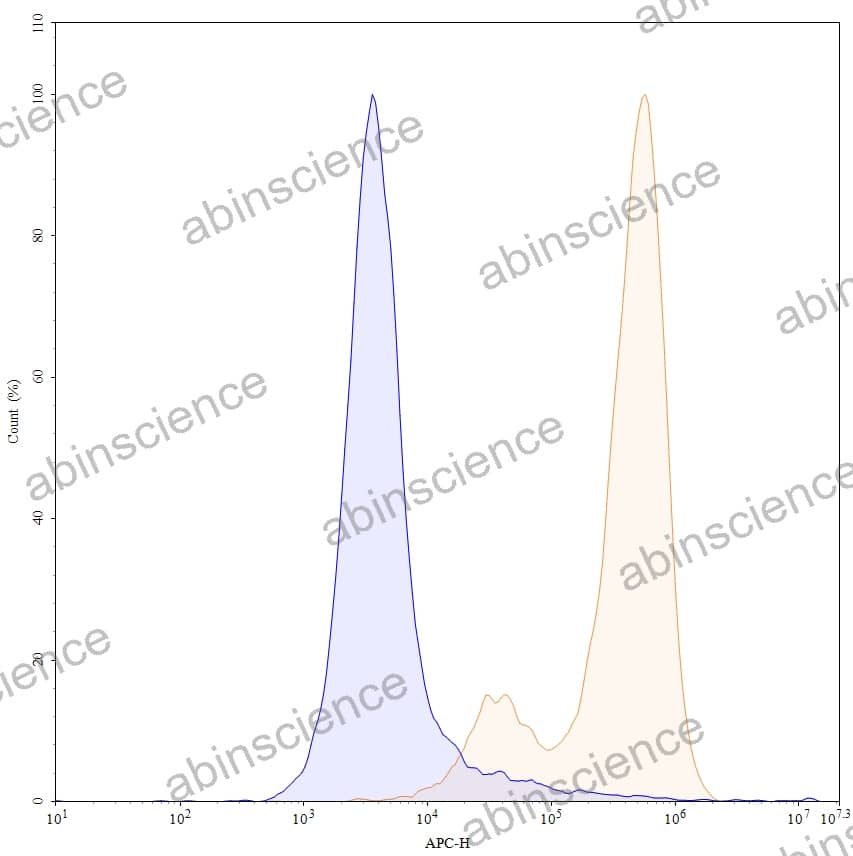
Flow-cytometry using APC anti-human CD66e antibody. HPAC cells were stained with an irrelevant antibody (Blue Histogram) or an APC anti-human CD66e monoclonal antibody (Catalog HY546066, Yellow Histogram) at a concentration of 5 µg/ml for 30 mins at RT. After washing, and cells analysed on a NovoCyte Flow Cytometer.
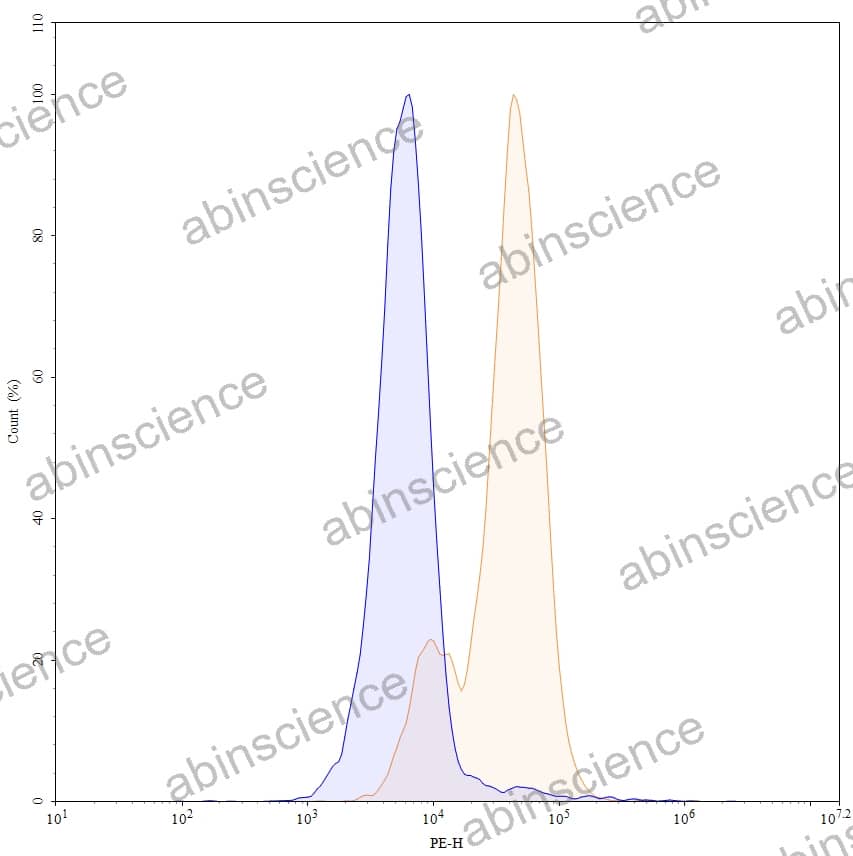
Flow-cytometry using PE anti-human CD66e antibody. HPAC cells were stained with an irrelevant antibody (Blue Histogram) or an PE anti-human CD66e monoclonal antibody (Catalog HY546066, Yellow Histogram) at a concentration of 5 µg/ml for 30 mins at RT. After washing, and cells analysed on a NovoCyte Flow Cytometer.
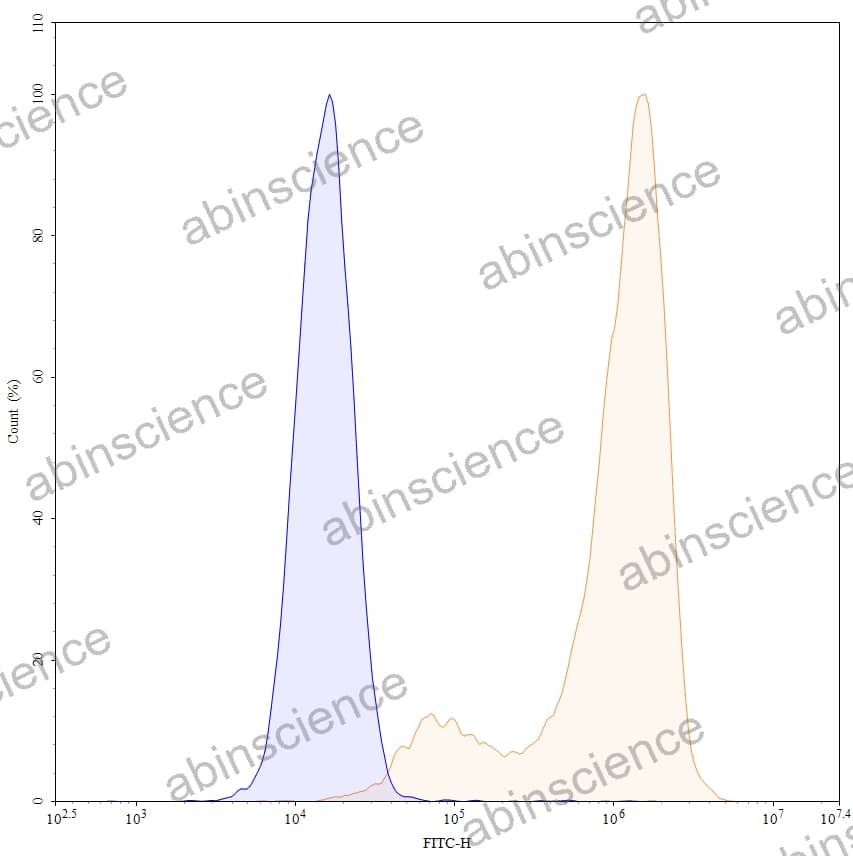
Flow-cytometry using FITC anti-human CD66e antibody. HPAC cells were stained with an irrelevant antibody (Blue Histogram) or an FITC anti-human CD66e monoclonal antibody (Catalog HY546066, Yellow Histogram) at a concentration of 5 µg/ml for 30 mins at RT. After washing, and cells analysed on a NovoCyte Flow Cytometer.
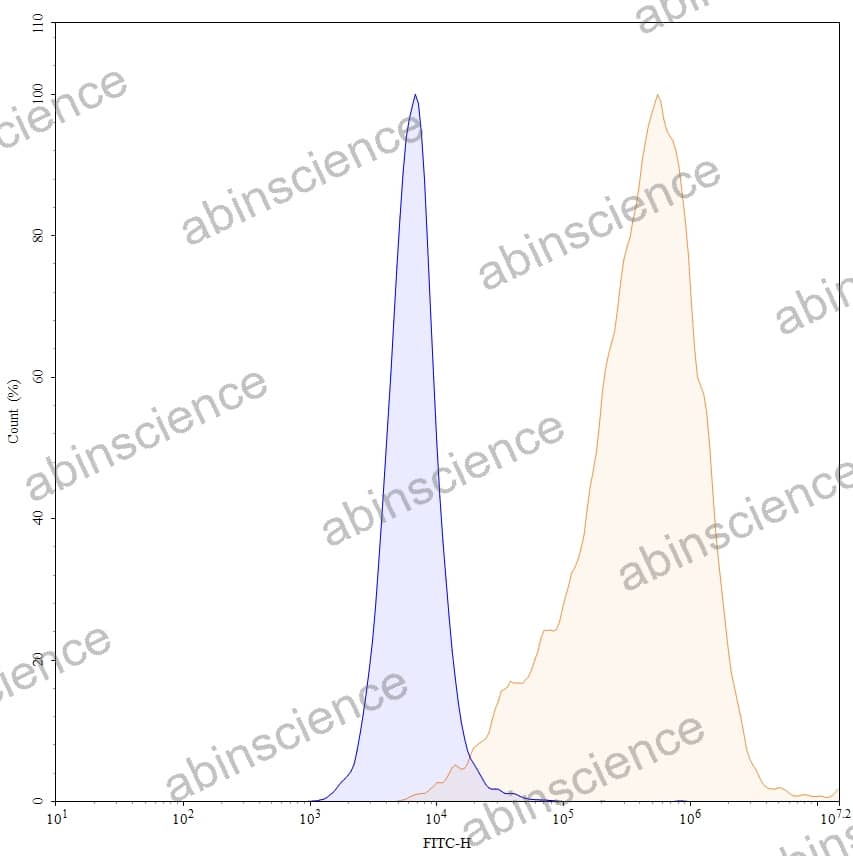
Flow-cytometry using anti-human CD66e antibody. HPAC cells were stained with an irrelevant antibody (Blue Histogram) or an anti-human CD66e monoclonal antibody (Catalog HY546066, Yellow Histogram) at a concentration of 5 µg/ml for 30 mins at RT. After washing, bound antibody was detected using a a Goat Anti-Human IgG H&L Polyclonal Antibody, FITC (abinScience: HF690414) and cells analysed on a NovoCyte Flow Cytometer.
Contactez-nous pour les devis personnalisés, les demandes en gros et tout autre problème.
Courrier : support@abinScience.com
+86-027-65523339
Bâtiment C, No. 666, Rue Shendunsi, Wuhan, 430206, Chine


