
 中文
中文 English
 한국어
한국어 日本語
日本語 Español
 Français
 Русский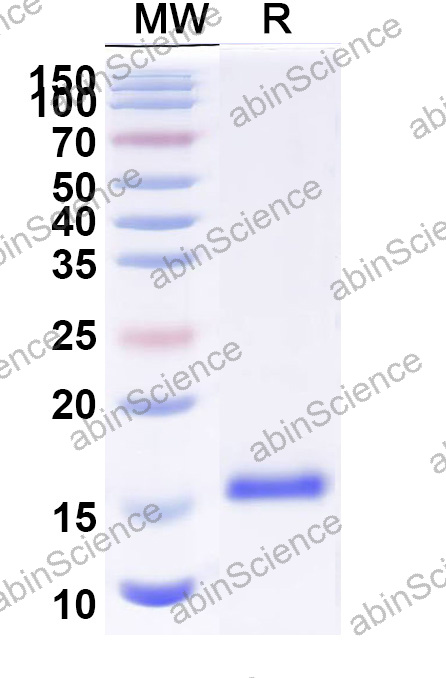
| Número de catálogo | JN888293 | ||||
|---|---|---|---|---|---|
| Descripción |
Anti-Clostridium botulinum botA/BoNT Nanobody (H7) [H3] (JN888293) is a alpaca monoclonal antibody detecting BoNT/A in ELISA.
|
||||
| Reactividad de especies | Clostridium botulinum | ||||
| Aplicaciones | ELISA | ||||
| Especie huésped | Alpaca | ||||
| Clonalidad | Monoclonal | ||||
| Isotipo | VHH-His | ||||
| ID de clon | H7 | ||||
| Objetivo | Botulinum neurotoxin type A, BoNT/A, Bontoxilysin-A, BOTOX, botA, bna | ||||
| Nivel de endotoxinas | Please contact with the lab for this information. | ||||
| Pureza | >95% as determined by SDS-PAGE. | ||||
| Purificación | Protein A/G purified from cell culture supernatant. | ||||
| Número de acceso | P0DPI0 | ||||
| Forma | Liquid | ||||
| Buffer de almacenamiento | 0.01M PBS pH 7.4 Consulte la información específica del buffer en la copia impresa del datasheet o en el COA específico del lote. |
||||
| Información de uso del producto |
| ||||
| Estabilidad y almacenamiento | Use a manual defrost freezer and avoid repeated freeze thaw cycles. Store at 2 to 8°C for frequent use. Store at -20 to -80°C for twelve months from the date of receipt. | ||||
| Fondo | Botulinum neurotoxin type A (botA) is a ~149 kDa protein. Botulinum toxin causes flaccid paralysis by inhibiting neurotransmitter (acetylcholine) release from the presynaptic membranes of nerve terminals of the eukaryotic host skeletal and autonomic nervous system, with frequent heart or respiratory failure. Precursor of botulinum neurotoxin A which has 2 coreceptors; complex polysialylated gangliosides found on neural tissue and specific membrane-anchored proteins of synaptic vesicles. Receptor proteins are exposed on host presynaptic cell membrane during neurotransmitter release, when the toxin heavy chain (HC) binds to them. Upon synaptic vesicle recycling the toxin is taken up via the endocytic pathway. When the pH of the toxin-containing endosome drops a structural rearrangement occurs so that the N-terminus of the HC forms pores that allows the light chain (LC) to translocate into the cytosol. 1. BURGEN, AS. et al. (1949) The Journal of physiology 109, 10-24. PMID: 15394302 2. Zhou, L. et al. (1995) Biochemistry 34, 15175-81. PMID: 7578132 3. Fischer, A. et al. (2007) The Journal of biological chemistry 282, 29604-11. PMID: 17666397 4. Fischer, A. et al. (2008) PLoS pathogens 4, e1000245. PMID: 19096517 5. Yowler, BC. et al. (2002) The Journal of biological chemistry 277, 32815-9. PMID: 12089155 6. Dong, M. et al. (2006) Science (New York, N.Y.) 312, 592-6. PMID: 16543415 7. Mahrhold, S. et al. (2006) FEBS letters 580, 2011-4. PMID: 16545378 8. Dong, M. et al. (2008) Molecular biology of the cell 19, 5226-37. PMID: 18815274 | ||||
| Nota | For research use only |
SDS-PAGE for Anti-Clostridium botulinum botA/BoNT Nanobody (H7)


Contáctenos para cotizaciones personalizadas, solicitudes en masa y cualquier otro problema.
Correo: [email protected]
+86-027-65523339
Edificio C, No. 666, Calle Shendunsi, Wuhan, 430206, China


