
 中文
中文 English
 한국어
한국어 日本語
日本語 Español
 Français
 Русский
| Numéro de catalogue | HF757013 | ||||
|---|---|---|---|---|---|
| Reactivité des espèces | Human | ||||
| Applications | ELISA, IF, IP, IP-MS | ||||
| Espèce hôte | Mouse | ||||
| Clonalité | Monoclonal | ||||
| Isotype | IgG2a, kappa | ||||
| ID de clone | SAA0192 | ||||
| Cible | Protein HUNK1, Bromodomain-containing protein 4, BRD4, HUNK1 | ||||
| Niveau d'endotoxines | Please contact with the lab for this information. | ||||
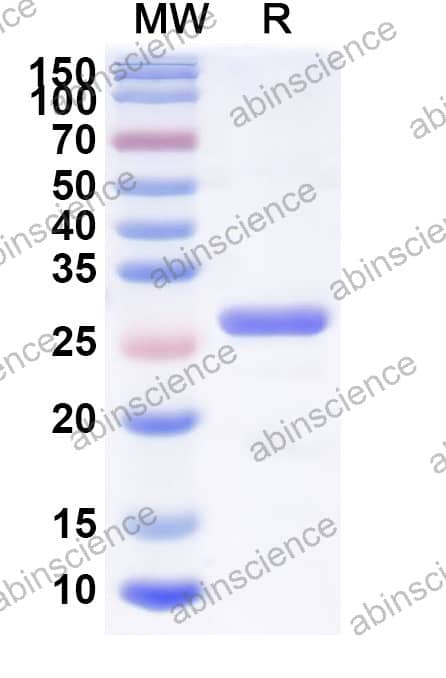
| Pureté | >95% as determined by SDS-PAGE. | ||||
| Purification | Protein A/G purified from cell culture supernatant. | ||||
| Numéro d'accès | O60885 | ||||
| RRID | Anti-Human BRD4 IP Antibody (SAA0192) (abinScience Cat# HF757013, RRID:AB_3729726) |
||||
| Forme | Liquid | ||||
| Tampon de stockage | 0.01M PBS pH 7.4 Reférez-vous aux informations spécifiques sur le tampon dans la copie papier du datasheet ou dans le COA spécifique au lot. |
||||
| Informations d'utilisation du produit |
| ||||
| Stabilité et stockage | Use a manual defrost freezer and avoid repeated freeze-thaw cycles. Store at 4°C short term (1-2 weeks). Store at -20°C 12 months. Store at -80°C long term. | ||||
| Contexte | Bromodomain-containing protein 4 (BRD4) is a ~152 kDa protein. Chromatin reader protein that recognizes and binds acetylated histones and plays a key role in transmission of epigenetic memory across cell divisions and transcription regulation. Remains associated with acetylated chromatin throughout the entire cell cycle and provides epigenetic memory for postmitotic G1 gene transcription by preserving acetylated chromatin status and maintaining high-order chromatin structure. During interphase, plays a key role in regulating the transcription of signal-inducible genes by associating with the P-TEFb complex and recruiting it to promoters. Also recruits P-TEFb complex to distal enhancers, so called anti-pause enhancers in collaboration with JMJD6. BRD4 and JMJD6 are required to form the transcriptionally active P-TEFb complex by displacing negative regulators such as HEXIM1 and 7SKsnRNA complex from P-TEFb, thereby transforming it into an active form that can then phosphorylate the C-terminal domain (CTD) of RNA polymerase II. 1. Filippakopoulos, P. et al. (2010) Nature 468, 1067-73. PMID: 20871596 2. Zhang, W. et al. (2012) The Journal of biological chemistry 287, 43137-55. PMID: 23086925 3. Wu, SY. et al. (2013) Molecular cell 49, 843-57. PMID: 23317504 4. Konuma, T. et al. (2017) Scientific reports 7, 16272. PMID: 29176719 5. Olley, G. et al. (2018) Nature genetics 50, 329-332. PMID: 29379197 6. Wang, R. et al. (2012) The Journal of biological chemistry 287, 10738-52. PMID: 22334664 7. Patel, MC. et al. (2013) Molecular and cellular biology 33, 2497-507. PMID: 23589332 8. Jang, MK. et al. (2005) Molecular cell 19, 523-34. PMID: 16109376 9. Yang, Z. et al. (2005) Molecular cell 19, 535-45. PMID: 16109377 | ||||
| Note | For research use only. |
SDS-PAGE for Anti-Human BRD4 IP Antibody (SAA0192).

Contactez-nous pour les devis personnalisés, les demandes en gros et tout autre problème.
Courrier : [email protected]
+86-027-65523339
Bâtiment C, No. 666, Rue Shendunsi, Wuhan, 430206, Chine


