
 中文
中文 English
 한국어
한국어 日本語
日本語 Español
 Français
 Русский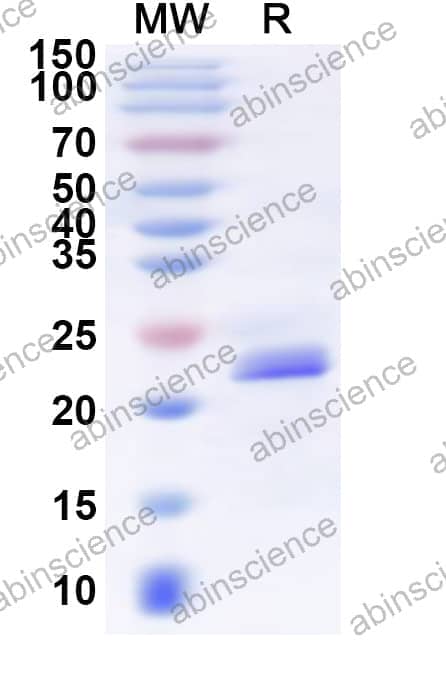

| カタログ番号 | HC037014 | ||||||||
|---|---|---|---|---|---|---|---|---|---|
| 説明 |
Anti-Human GPR39 Polyclonal Antibody (HC037014) is a rabbit polyclonal antibody detecting G-protein coupled receptor 39; GPR39 in ELISA, IHC, WB. Suitable for Human.
Highlights
|
||||||||
| 種反応性 | Human | ||||||||
| アプリケーション | ELISA, IHC, WB | ||||||||
| 宿主種 | Rabbit | ||||||||
| クローン性 | Polyclonal | ||||||||
| アイソタイプ | IgG | ||||||||
| 免疫原 | E. coli - derived recombinant human GPR39 (Ala173-Trp217&Thr345-Val453). | ||||||||
| ターゲット | G-protein coupled receptor 39; GPR39 | ||||||||
| エンドトキシンレベル | Please contact with the lab for this information. | ||||||||
| 精製 | Purified by antigen affinity column. | ||||||||
| アクセッション番号 | O43194 | ||||||||
| 形態 | Liquid | ||||||||
| 保存バッファー | 0.01M PBS, pH 7.4, 50% Glycerol, 0.05% Proclin 300. データシートのハードコピーまたはロット固有のCOAに記載された具体的なバッファー情報を参照してください。 |
||||||||
| 製品使用情報 |
| ||||||||
| 安定性と保存 | Use a manual defrost freezer and avoid repeated freeze thaw cycles. Store at 2 to 8°C for frequent use. Store at -20 to -80°C for twelve months from the date of receipt. | ||||||||
| 背景 | G-protein coupled receptor 39 (GPR39) is a ~51 kDa protein. Zinc-sensing receptor that can sense changes in extracellular Zn(2+), mediate Zn(2+) signal transmission, and participates in the regulation of numerous physiological processes including glucose homeostasis regulation, gastrointestinal mobility, hormone secretion and cell death. Activation by Zn(2+) in keratinocytes increases the intracellular concentration of Ca(2+) and activates the ERK/MAPK and PI3K/AKT signaling pathways leading to epithelial repair. Plays an essential role in normal wound healing by inducing the production of cytokines including the major inflammatory cytokine IL6 via the PKC/MAPK/CEBPB pathway. Regulates adipose tissue metabolism, especially lipolysis, and regulates the function of lipases, such as hormone-sensitive lipase and adipose triglyceride lipase. Plays a role in the inhibition of cell death and protects against oxidative, endoplasmic reticulum and mitochondrial stress by inducing secretion of the cytoprotective pigment epithelium-derived growth factor (PEDF) and probably other protective transcripts in a GNA13/RHOA/SRE-dependent manner. 1. Dittmer, S. et al. (2008) The Journal of biological chemistry 283, 7074-81. PMID: 18180304 2. Sharir, H. et al. (2010) The Journal of biological chemistry 285, 26097-106. PMID: 20522546 3. Tena-Campos, M. et al. (2015) Biochimica et biophysica acta 1852, 2585-92. PMID: 26365466 | ||||||||
| 注意事項 | For research use only |
+86-027-65523339
中国武漢市深敦寺路666号C棟、武漢、430206


