
 中文
中文 English
 한국어
한국어 日本語
日本語 Español
 Français
 Русский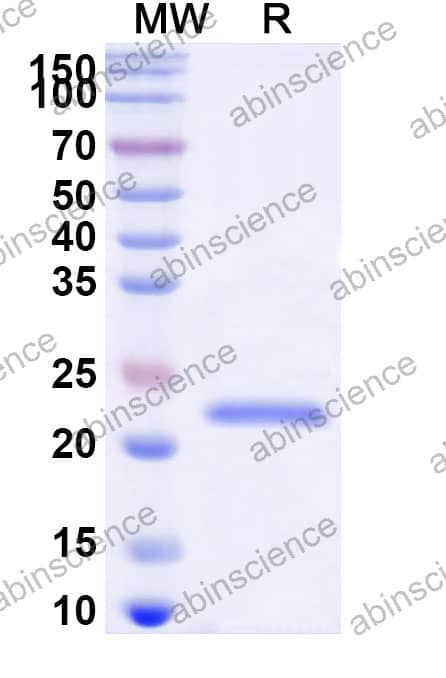

| カタログ番号 | HA057014 | ||||||||
|---|---|---|---|---|---|---|---|---|---|
| 説明 |
Anti-Human IRGM Polyclonal Antibody (HA057014) is a rabbit polyclonal antibody detecting IRGM in ELISA, IHC, WB. Suitable for Human.
Highlights
|
||||||||
| 種反応性 | Human | ||||||||
| アプリケーション | ELISA, IHC, WB | ||||||||
| 宿主種 | Rabbit | ||||||||
| クローン性 | Polyclonal | ||||||||
| アイソタイプ | IgG | ||||||||
| 免疫原 | E. coli - derived recombinant Human IRGM (Met1-Tyr181). | ||||||||
| ターゲット | Immunity-related GTPase family M protein, 3.6.5.-, Immunity-related GTPase family M protein 1, Interferon-inducible protein 1, LPS-stimulated RAW 264.7 macrophage protein 47 homolog, LRG-47, IRGM, IFI1, IRGM1, LRG47 | ||||||||
| 精製 | Purified by antigen affinity column. | ||||||||
| アクセッション番号 | A1A4Y4 | ||||||||
| 形態 | Liquid | ||||||||
| 保存バッファー | 0.01M PBS, pH 7.4, 50% Glycerol, 0.05% Proclin 300. データシートのハードコピーまたはロット固有のCOAに記載された具体的なバッファー情報を参照してください。 |
||||||||
| 製品使用情報 |
| ||||||||
| 安定性と保存 | Use a manual defrost freezer and avoid repeated freeze thaw cycles. Store at 2 to 8°C for frequent use. Store at -20 to -80°C for twelve months from the date of receipt. | ||||||||
| 背景 | Immunity-related GTPase family M protein (IRGM) is a ~20 kDa protein. Immunity-related GTPase that plays important roles in innate immunity and inflammatory response. Acts as a dynamin-like protein that binds to intracellular membranes and promotes remodeling and trafficking of those membranes. Required for clearance of acute protozoan and bacterial infections by interacting with autophagy and lysosome regulatory proteins, thereby promoting the fusion of phagosomes with lysosomes for efficient degradation of cargo including microbes. Regulates selective autophagy, including xenophagy and mitophagy, both directly and indirectly. Directly regulates autophagy by acting as a molecular adapter that promotes the coassembly of the core autophagy machinery to mediate antimicrobial defense: IRGM (1) activates AMPK, which in turn phosphorylates ULK1 and BECN1 to induce autophagy, (2) promotes the coassembly of ULK1 and BECN1, enhancing BECN1-interacting partners and (3) influences the composition of the BECN1 complex, by competing with the negative regulators BCL2 and RUBCN, to trigger autophagy. 1. Singh, SB. et al. (2006) Science (New York, N.Y.) 313, 1438-41. PMID: 16888103 2. McCarroll, SA. et al. (2008) Nature genetics 40, 1107-12. PMID: 19165925 3. Chauhan, S. et al. (2015) Molecular cell 58, 507-21. PMID: 25891078 4. Kumar, S. et al. (2018) The Journal of cell biology 217, 997-1013. PMID: 29420192 5. Guo, X. et al. (2020) FASEB journal : official publication of the Federation of American Societies for Experimental Biology 34, 14768-14779. PMID: 32939830 6. Kumar, S. et al. (2020) Nature cell biology 22, 973-985. PMID: 32753672 7. Mehto, S. et al. (2019) Molecular cell 73, 429-445.e7. PMID: 30612879 | ||||||||
| 注意事項 | For research use only. |
+86-027-65523339
中国武漢市深敦寺路666号C棟、武漢、430206


