
 中文
 English
 한국어
 日本語
 Español
 Français
 Русский
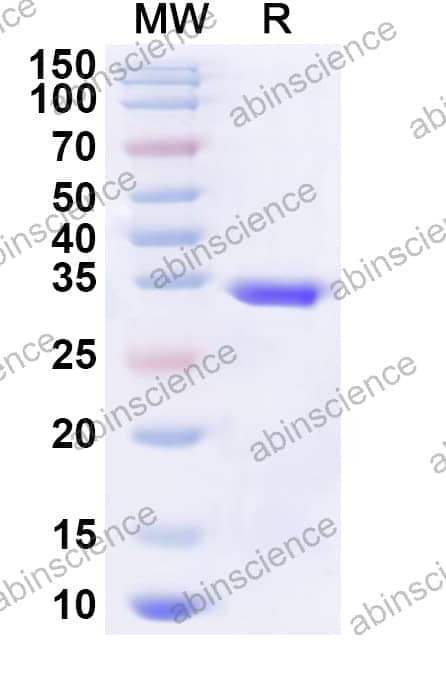

| カタログ番号 | HA758014 | ||||||||
|---|---|---|---|---|---|---|---|---|---|
| 説明 |
Anti-Human NUPR1 Polyclonal Antibody (HA758014) is a rabbit polyclonal antibody detecting Nuclear protein 1; Candidate of metastasis 1; Protein p8; NUPR1; COM1 in ELISA, IHC, WB. Suitable for Human.
Highlights
|
||||||||
| 種反応性 | Human | ||||||||
| アプリケーション | ELISA, IHC, WB | ||||||||
| 宿主種 | Rabbit | ||||||||
| クローン性 | Polyclonal | ||||||||
| アイソタイプ | IgG | ||||||||
| 免疫原 | E. coli - derived recombinant human NUPR1 (Ala2-Arg82). | ||||||||
| ターゲット | Nuclear protein 1; Candidate of metastasis 1; Protein p8; NUPR1; COM1 | ||||||||
| エンドトキシンレベル | Please contact with the lab for this information. | ||||||||
| 精製 | Purified by antigen affinity column. | ||||||||
| アクセッション番号 | O60356 | ||||||||
| 形態 | Liquid | ||||||||
| 保存バッファー | 0.01M PBS, pH 7.4, 50% Glycerol, 0.05% Proclin 300. データシートのハードコピーまたはロット固有のCOAに記載された具体的なバッファー情報を参照してください。 |
||||||||
| 製品使用情報 |
| ||||||||
| 安定性と保存 | Use a manual defrost freezer and avoid repeated freeze thaw cycles. Store at 2 to 8°C for frequent use. Store at -20 to -80°C for twelve months from the date of receipt. | ||||||||
| 背景 | Nuclear protein 1 (NUPR1) is a ~8 kDa protein. Transcription regulator that converts stress signals into a program of gene expression that empowers cells with resistance to the stress induced by a change in their microenvironment. Thereby participates in the regulation of many processes namely cell-cycle, apoptosis, autophagy and DNA repair responses. Controls cell cycle progression and protects cells from genotoxic stress induced by doxorubicin through the complex formation with TP53 and EP300 that binds CDKN1A promoter leading to transcriptional induction of CDKN1A. Protects pancreatic cancer cells from stress-induced cell death by binding the RELB promoter and activating its transcription, leading to IER3 transactivation. Negatively regulates apoptosis through interaction with PTMA. 1. Encinar, JA. et al. (2001) The Journal of biological chemistry 276, 2742-51. PMID: 11056169 2. Hoffmeister, A. et al. (2002) The Journal of biological chemistry 277, 22314-9. PMID: 11940591 3. Malicet, C. et al. (2006) Biochemical and biophysical research communications 339, 284-9. PMID: 16300740 4. Malicet, C. et al. (2006) Proceedings of the National Academy of Sciences of the United States of America 103, 2671-6. PMID: 16478804 5. Clark, DW. et al. (2008) Current cancer drug targets 8, 421-30. PMID: 18690848 6. Gironella, M. et al. (2009) Journal of cellular physiology 221, 594-602. PMID: 19650074 7. Sambasivan, R. et al. (2009) Journal of cell science 122, 3481-91. PMID: 19723804 8. Kong, DK. et al. (2010) Molecular biology of the cell 21, 1335-49. PMID: 20181828 9. Hamidi, T. et al. (2012) The Journal of clinical investigation 122, 2092-103. PMID: 22565310 10. Vincent, AJ. et al. (2012) FEBS letters 586, 3429-34. PMID: 22858377 | ||||||||
| 注意事項 | For research use only |
お問い合わせ
+86-027-65523339
中国武漢市深敦寺路666号C棟、武漢、430206


