
 中文
中文 English
 한국어
한국어 日本語
日本語 Español
 Français
 Русский


| カタログ番号 | HF853014 | ||||||||
|---|---|---|---|---|---|---|---|---|---|
| 説明 |
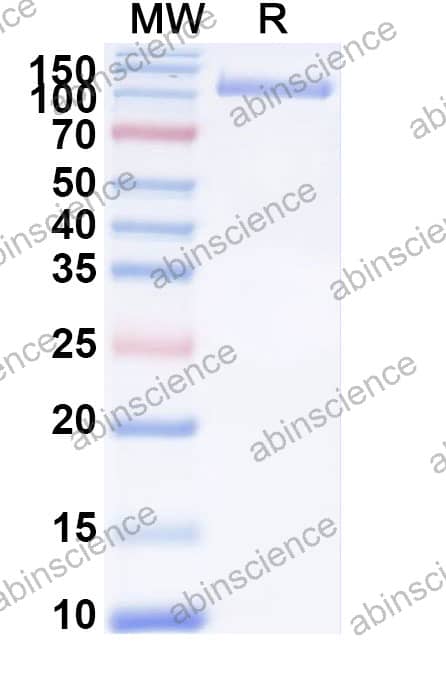
Anti-Human POLQ Polyclonal Antibody (HF853014) is a rabbit polyclonal antibody detecting POLQ in ELISA, IHC, WB. Suitable for Human.
Highlights
|
||||||||
| 種反応性 | Human | ||||||||
| アプリケーション | ELISA, IHC, WB | ||||||||
| 宿主種 | Rabbit | ||||||||
| クローン性 | Polyclonal | ||||||||
| アイソタイプ | IgG | ||||||||
| 免疫原 | E. coli - derived recombinant Human POLQ (Met1-Met894). | ||||||||
| ターゲット | POLH, DNA polymerase eta, DNA polymerase theta, POLQ | ||||||||
| 精製 | Purified by antigen affinity column. | ||||||||
| アクセッション番号 | O75417 | ||||||||
| 形態 | Liquid | ||||||||
| 保存バッファー | 0.01M PBS, pH 7.4, 50% Glycerol, 0.05% Proclin 300. データシートのハードコピーまたはロット固有のCOAに記載された具体的なバッファー情報を参照してください。 |
||||||||
| 製品使用情報 |
| ||||||||
| 安定性と保存 | Use a manual defrost freezer and avoid repeated freeze thaw cycles. Store at 2 to 8°C for frequent use. Store at -20 to -80°C for twelve months from the date of receipt. | ||||||||
| 背景 | DNA polymerase theta (POLQ) is a ~289 kDa protein. Low-fidelity DNA polymerase with a helicase activity that promotes microhomology-mediated end-joining (MMEJ), an alternative non-homologous end-joining (NHEJ) machinery required to repair double-strand breaks in DNA during mitosis. MMEJ is an error-prone repair pathway that produces deletions of sequences from the strand being repaired and promotes genomic rearrangements, such as telomere fusions, some of them leading to cellular transformation. MMEJ is required during mitosis to repair persistent double-strand breaks that originate in S-phase. Although error-prone, MMEJ protects against chromosomal instability and tumorigenesis. The polymerase acts by binding directly the 2 ends of resected double-strand breaks, allowing microhomologous sequences in the overhangs to form base pairs. 1. Seki, M. et al. (2003) Nucleic acids research 31, 6117-26. PMID: 14576298 2. Arana, ME. et al. (2008) Nucleic acids research 36, 3847-56. PMID: 18503084 3. Yoon, JH. et al. (2014) The Journal of biological chemistry 289, 13177-85. PMID: 24648516 4. Ceccaldi, R. et al. (2015) Nature 518, 258-62. PMID: 25642963 5. Kent, T. et al. (2015) Nature structural & molecular biology 22, 230-7. PMID: 25643323 6. Zahn, KE. et al. (2015) Nature structural & molecular biology 22, 304-11. PMID: 25775267 7. Newman, JA. et al. (2015) Structure (London, England : 1993) 23, 2319-2330. PMID: 26636256 8. Kent, T. et al. (2016) eLife 5. PMID: 27311885 9. Kent, T. et al. (2016) Nucleic acids research 44, 9381-9392. PMID: 27591252 10. Wang, Z. et al. (2019) The Journal of biological chemistry 294, 3909-3919. PMID: 30655289 | ||||||||
| 注意事項 | For research use only. |
+86-027-65523339
中国武漢市深敦寺路666号C棟、武漢、430206


