
 中文
 English
 한국어
 日本語
 Español
 Français
 Русский

| Numéro de catalogue | HB254014 | ||||||||
|---|---|---|---|---|---|---|---|---|---|
| Description |
Anti-Human PRKCA Polyclonal Antibody (HB254014) is a rabbit polyclonal antibody detecting PRKCA in ELISA, IHC, WB. Suitable for Human.
Highlights
|
||||||||
| Reactivité des espèces | Human, Mouse, Rat | ||||||||
| Applications | ELISA, IHC, WB | ||||||||
| Espèce hôte | Rabbit | ||||||||
| Clonalité | Polyclonal | ||||||||
| Isotype | IgG | ||||||||
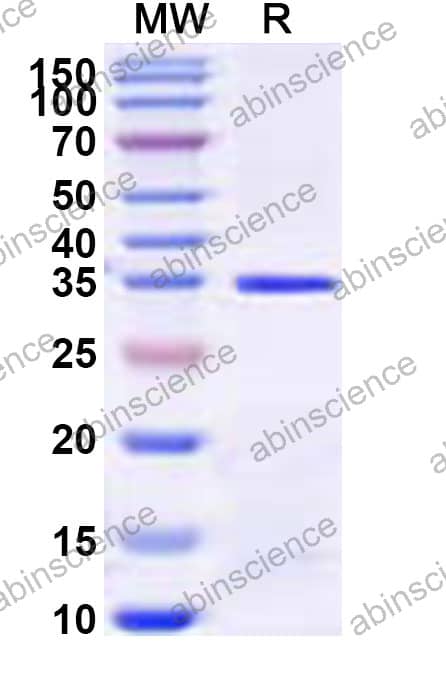
| Immunogène | E. coli - derived recombinant Human PRKCA (Asn30-Gly311). | ||||||||
| Cible | Protein kinase C alpha type, PKC-A, PKC-alpha, 2.7.11.13, PRKCA, PKCA, PRKACA | ||||||||
| Purification | Purified by antigen affinity column. | ||||||||
| Numéro d'accès | P17252 | ||||||||
| Forme | Liquid | ||||||||
| Tampon de stockage | 0.01M PBS, pH 7.4, 50% Glycerol, 0.05% Proclin 300. Reférez-vous aux informations spécifiques sur le tampon dans la copie papier du datasheet ou dans le COA spécifique au lot. |
||||||||
| Informations d'utilisation du produit |
| ||||||||
| Stabilité et stockage | Use a manual defrost freezer and avoid repeated freeze thaw cycles. Store at 2 to 8°C for frequent use. Store at -20 to -80°C for twelve months from the date of receipt. | ||||||||
| Contexte | Protein kinase C alpha type (PRKCA) is a ~76 kDa protein. Calcium-activated, phospholipid- and diacylglycerol (DAG)-dependent serine/threonine-protein kinase that is involved in positive and negative regulation of cell proliferation, apoptosis, differentiation, migration and adhesion, tumorigenesis, cardiac hypertrophy, angiogenesis, platelet function and inflammation, by directly phosphorylating targets such as RAF1, BCL2, CSPG4, TNNT2/CTNT, or activating signaling cascade involving MAPK1/3 (ERK1/2) and RAP1GAP. Involved in cell proliferation and cell growth arrest by positive and negative regulation of the cell cycle. Can promote cell growth by phosphorylating and activating RAF1, which mediates the activation of the MAPK/ERK signaling cascade, and/or by up-regulating CDKN1A, which facilitates active cyclin-dependent kinase (CDK) complex formation in glioma cells. In intestinal cells stimulated by the phorbol ester PMA, can trigger a cell cycle arrest program which is associated with the accumulation of the hyper-phosphorylated growth-suppressive form of RB1 and induction of the CDK inhibitors CDKN1A and CDKN1B. Exhibits anti-apoptotic function in glioma cells and protects them from apoptosis by suppressing the p53/TP53-mediated activation of IGFBP3, and in leukemia cells mediates anti-apoptotic action by phosphorylating BCL2. 1. Xu, X. et al. (2017) The Journal of experimental medicine 214, 209-226. PMID: 28028151 2. Shibata, S. et al. (2014) Proceedings of the National Academy of Sciences of the United States of America 111, 15556-61. PMID: 25313067 3. Malik, AU. et al. (2022) The Biochemical journal 479, 1941-1965. PMID: 36040231 | ||||||||
| Note | For research use only. |
Western blot analysis was performed using anti-PRKCA polyclonal antibody at 1ug/mL on various samples.
Lane 1: Jurkat cell lysate
Lane 2: K562 cell lysate
Contactez-nous pour les devis personnalisés, les demandes en gros et tout autre problème.
Courrier : [email protected]
Contactez-nous
+86-027-65523339
Bâtiment C, No. 666, Rue Shendunsi, Wuhan, 430206, Chine


