
 中文
 English
 한국어
 日本語
 Español
 Français
 Русский
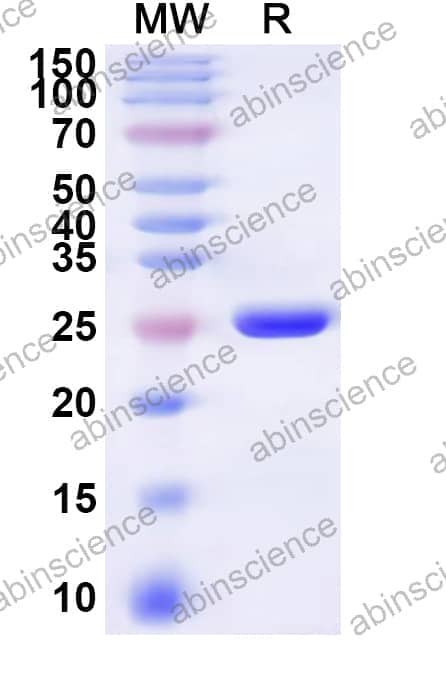

| カタログ番号 | HB405014 | ||||||||
|---|---|---|---|---|---|---|---|---|---|
| 説明 |
Anti-Human SLC13A3 Polyclonal Antibody (HB405014) is a rabbit polyclonal antibody detecting Na(+)/dicarboxylate cotransporter 3; NaDC-3; hNaDC3; Na(+)-coupled carboxylate transporter 3; NaC3; Sodium-dependent high-affinity dicarboxylate transporter 2; Solute carrier family 13 member 3; SLC13A3; SLC13A3; NADC3; SDCT2 in ELISA, IHC, WB. Suitable for Human.
Highlights
|
||||||||
| 種反応性 | Human | ||||||||
| アプリケーション | ELISA, IHC, WB | ||||||||
| 宿主種 | Rabbit | ||||||||
| クローン性 | Polyclonal | ||||||||
| アイソタイプ | IgG | ||||||||
| 免疫原 | E. coli - derived recombinant human SLC13A3 (Ile158-Ile230). | ||||||||
| ターゲット | Na(+)/dicarboxylate cotransporter 3; NaDC-3; hNaDC3; Na(+)-coupled carboxylate transporter 3; NaC3; Sodium-dependent high-affinity dicarboxylate transporter 2; Solute carrier family 13 member 3; SLC13A3; SLC13A3; NADC3; SDCT2 | ||||||||
| エンドトキシンレベル | Please contact with the lab for this information. | ||||||||
| 精製 | Purified by antigen affinity column. | ||||||||
| アクセッション番号 | Q8WWT9 | ||||||||
| 形態 | Liquid | ||||||||
| 保存バッファー | 0.01M PBS, pH 7.4, 50% Glycerol, 0.05% Proclin 300. データシートのハードコピーまたはロット固有のCOAに記載された具体的なバッファー情報を参照してください。 |
||||||||
| 製品使用情報 |
| ||||||||
| 安定性と保存 | Use a manual defrost freezer and avoid repeated freeze thaw cycles. Store at 2 to 8°C for frequent use. Store at -20 to -80°C for twelve months from the date of receipt. | ||||||||
| 背景 | Na(+)/dicarboxylate cotransporter 3 (SLC13A3) is a ~66 kDa protein. High-affinity sodium-dicarboxylate cotransporter that accepts a range of substrates with 4-6 carbon atoms, such as the citric acid cycle intermediates succinate and alpha-ketoglutarate (2-oxoglutarate), as well as other compounds including N-acetyl-L-aspartate. Transports the dicarboxylate into the cell with a probable stoichiometry of 3 Na(+) for 1 divalent dicarboxylate, rendering the process electrogenic. Can transport citrate in a Na(+)-dependent manner, recognizing the divalent form of citrate rather than the trivalent form which is normally found in blood. Imports itaconate in hepatocytes leading to activation of TFEB-dependent lysosomal biogenesis involved in antibacterial innate immune response. 1. Wang, H. et al. (2000) American journal of physiology. Cell physiology 278, C1019-30. PMID: 10794676 2. Huang, W. et al. (2000) The Journal of pharmacology and experimental therapeutics 295, 392-403. PMID: 10992006 3. Burckhardt, BC. et al. (2005) American journal of physiology. Renal physiology 288, F792-9. PMID: 15561973 4. Stellmer, F. et al. (2007) Journal of molecular medicine (Berlin, Germany) 85, 763-70. PMID: 17356845 5. Bai, XY. et al. (2007) FASEB journal : official publication of the Federation of American Societies for Experimental Biology 21, 2409-17. PMID: 17426067 6. Schorbach, L. et al. (2013) Nephron. Physiology 124, 1-5. PMID: 24247155 7. Dewulf, JP. et al. (2019) Annals of neurology 85, 385-395. PMID: 30635937 8. Li, Y. et al. (2025) Nature structural & molecular biology 32, 502-512. PMID: 39622972 9. Chen, C. et al. (2024) Developmental cell 59, 2807-2817.e8. PMID: 39116875 | ||||||||
| 注意事項 | For research use only |
お問い合わせ
+86-027-65523339
中国武漢市深敦寺路666号C棟、武漢、430206


