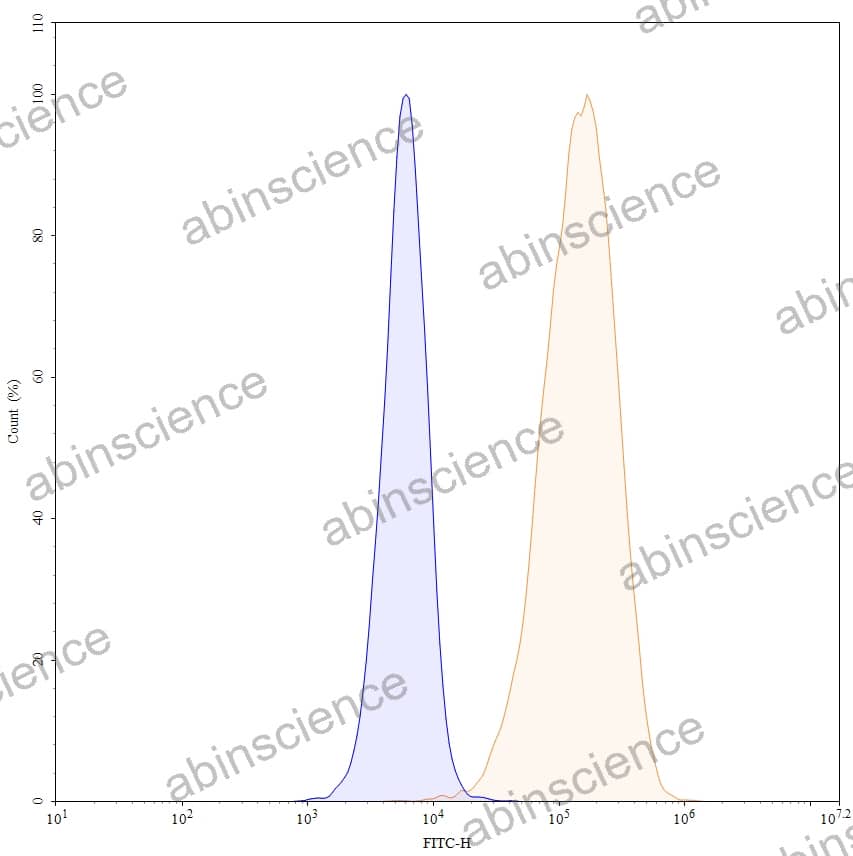
Recombinant Human CD371/CLEC12A Protein, N-Fc (HV493021) expressed in Mammalian Cells, spanning Thr67-Ala265. Purity: >90% by SDS-PAGE.
Highlights
●Fc Fusion — Enhanced stability with Protein A/G purification compatibility.
●Mammalian Expression — Proper folding and native glycosylation.
●High Purity — >90% purity verified by SDS-PAGE.
Sistema de expresión
Mammalian cells
Número de acceso
Q5QGZ9
Longitud de proteína
Thr67-Ala265
Aplicaciones
ELISA, Immunogen, SDS-PAGE, WB, Bioactivity testing in progress
Especies
Homo sapiens (Human)
Naturaleza
Recombinant
Nivel de endotoxinas
Please contact with the lab for this information.
Pureza
>90% as determined by SDS-PAGE.
Peso molecular predicho
51.33 kDa
Forma
Lyophilized
Buffer de almacenamiento
Lyophilized from a solution in PBS pH 7.4, 1 mM EDTA, 4% Trehalose, 1% Mannitol.
Consulte la información específica del buffer en la copia impresa del datasheet o en el COA específico del lote.
Reconstitución
Reconstitute in sterile water for a stock solution. A copy of datasheet will be provided with the products, please refer to it for details.
Envío
In general, proteins are provided as lyophilized powder/frozen liquid. They are shipped out with dry ice/blue ice unless customers require otherwise.
Estabilidad y almacenamiento
Use a manual defrost freezer and avoid repeated freeze thaw cycles. Store at 2 to 8°C for frequent use. Store at -20 to -80°C for twelve months from the date of receipt.
C-type lectin domain family 12 member A is a ~30 kDa protein. Myeloid inhibitory C-type lectin receptor that acts as a negative regulator of myeloid cell activation. Myeloid cell inhibition is required to limit proinflammatory pathways and protect against excessive inflammation. Specifically recognizes and binds various structures, such as neutrophil extracellular traps (NETs) or monosodium urate crystals. Also acts as a pattern-recognition receptor for pathogen-associated molecules, such as plasmodium hemozoin or mycobacterial micolic acid. Ligand-binding induces phosphorylation of its ITIM motif, followed by recruitment of tyrosine-protein phosphatases PTPN6 and PTPN11, which counteract tyrosine-protein kinase SYK, thereby preventing myeloid cell activation.
1. Marshall, AS. et al. (2004) The Journal of biological chemistry 279, 14792-802. PMID: 14739280
2. Han, Y. et al. (2004) Blood 104, 2858-66. PMID: 15238421

 中文
中文 English
 한국어
한국어 日本語
日本語 Español
 Français
 Русский