
 中文
中文 English
 한국어
한국어 日本語
日本語 Español
 Français
 Русский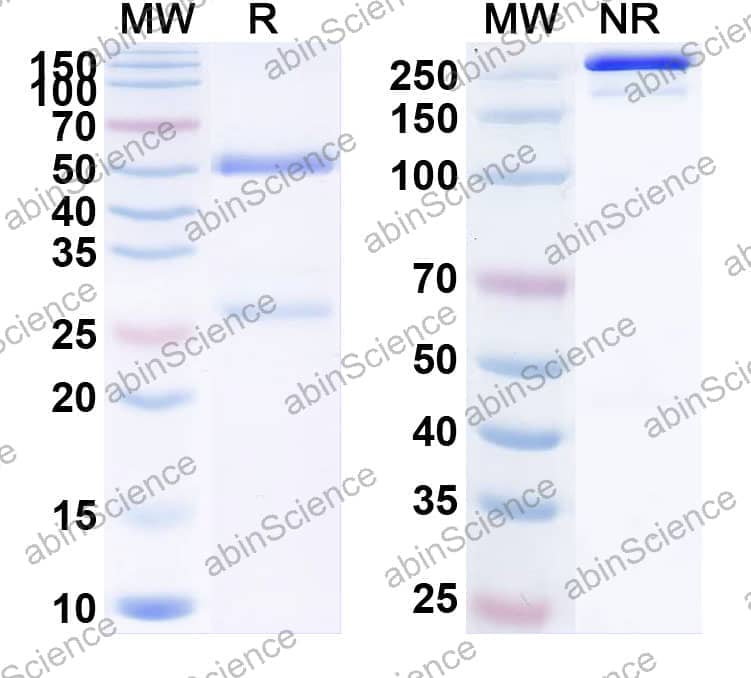
| Número de catálogo | HV275116 |
|---|---|
| Reactividad de especies | Human |
| Aplicaciones | ELISA, Bioactivity: FCM, Functional assay, Research in vivo |
| Especie huésped | Human |
| Clonalidad | Monoclonal |
| Isotipo | IgG |
| ID de clon | ALD306 |
| Objetivo | EC:3.4.21.-, NARC-1, NARC1, Neural apoptosis-regulated convertase 1, PC9, PCSK9, Proprotein convertase 9, Proprotein convertase subtilisin/kexin type 9, Subtilisin/kexin-like protease PC9 |
| Nivel de endotoxinas | < 10 EU/mg |
| Pureza | >95% as determined by SDS-PAGE. |
| Purificación | Protein A/G purified from cell culture supernatant. |
| Número de acceso | Q8NBP7 |
| Forma | Liquid |
| Buffer de almacenamiento | 0.01M PBS pH 7.4. Consulte la información específica del buffer en la copia impresa del datasheet o en el COA específico del lote. |
| Estabilidad y almacenamiento | Use a manual defrost freezer and avoid repeated freeze thaw cycles. Store at 2 to 8°C for frequent use. Store at -20 to -80°C for twelve months from the date of receipt. |
| Nombres alternativos | ALD306 |
| Fondo | Proprotein convertase subtilisin/kexin type 9 (PCSK9) is a ~74 kDa protein. Crucial player in the regulation of plasma cholesterol homeostasis. Binds to low-density lipid receptor family members: low density lipoprotein receptor (LDLR), very low density lipoprotein receptor (VLDLR), apolipoprotein E receptor (LRP1/APOER) and apolipoprotein receptor 2 (LRP8/APOER2), and promotes their degradation in intracellular acidic compartments. Acts via a non-proteolytic mechanism to enhance the degradation of the hepatic LDLR through a clathrin LDLRAP1/ARH-mediated pathway. May prevent the recycling of LDLR from endosomes to the cell surface or direct it to lysosomes for degradation. Can induce ubiquitination of LDLR leading to its subsequent degradation. PCSK9 is the therapeutic target of evolocumab (Repatha). 1. Poirier, S. et al. (2008) The Journal of biological chemistry 283, 2363-72. PMID: 18039658 2. Nassoury, N. et al. (2007) Traffic (Copenhagen, Denmark) 8, 718-32. PMID: 17461796 3. Fan, D. et al. (2008) Biochemistry 47, 1631-9. PMID: 18197702 4. Mayer, G. et al. (2008) The Journal of biological chemistry 283, 31791-801. PMID: 18799458 5. Chen, Y. et al. (2011) Biochemical and biophysical research communications 415, 515-8. PMID: 22074827 6. Jonas, MC. et al. (2008) EMBO reports 9, 916-22. PMID: 18660751 |
| Referencias | 1. Pederson S, et al. Clinical Immunogenicity Evaluation of Eptinezumab, a Therapeutic Humanized Monoclonal Antibody Targeting Calcitonin Gene-Related Peptide (CGRP) for the Preventive Treatment of Migraine. Front Immunol. 2021 Oct 25;12:765822. [HV275116] |
| Nota | For research use only. Not suitable for clinical or therapeutic use. |
SDS-PAGE for Research Grade Anti-Human PCSK9 (ALD306)


Contáctenos para cotizaciones personalizadas, solicitudes en masa y cualquier otro problema.
Correo: [email protected]
+86-027-65523339
Edificio C, No. 666, Calle Shendunsi, Wuhan, 430206, China


