
 中文
中文 English
 한국어
한국어 日本語
日本語 Español
 Français
 Русский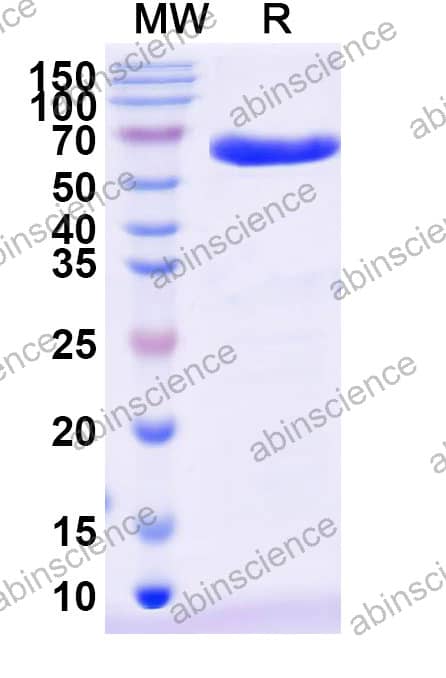

| カタログ番号 | ZA222014 | ||||||||
|---|---|---|---|---|---|---|---|---|---|
| 説明 |
Anti-Honeybee Api m 11/MRJP1 Polyclonal Antibody (ZA222014) is a rabbit polyclonal antibody detecting MRJP1 in ELISA, IHC, WB.
Highlights
|
||||||||
| 種反応性 | Apis mellifera (Honeybee) | ||||||||
| アプリケーション | ELISA, IHC, WB | ||||||||
| 宿主種 | Rabbit | ||||||||
| クローン性 | Polyclonal | ||||||||
| アイソタイプ | IgG | ||||||||
| 免疫原 | E. coli - derived recombinant Honeybee Api m 11/MRJP1 (Asn20-Leu432). | ||||||||
| ターゲット | Major royal jelly protein 1, MRJP-1, MRJP1, 56-kDa protein 4, p56kP-4, Apalbumin 1, Apisin subunit MRJP1, Bee-milk protein, Royalactin, Jellein-1, Jelleine-I, Jellein-2, Jelleine-II, Jellein-4, Jelleine-IV, MRJP1 | ||||||||
| 精製 | Purified by antigen affinity column. | ||||||||
| アクセッション番号 | O18330 | ||||||||
| 形態 | Liquid | ||||||||
| 保存バッファー | 0.01M PBS, pH 7.4, 50% Glycerol, 0.05% Proclin 300. データシートのハードコピーまたはロット固有のCOAに記載された具体的なバッファー情報を参照してください。 |
||||||||
| 製品使用情報 |
| ||||||||
| 安定性と保存 | Use a manual defrost freezer and avoid repeated freeze thaw cycles. Store at 2 to 8°C for frequent use. Store at -20 to -80°C for twelve months from the date of receipt. | ||||||||
| 背景 | Major royal jelly protein 1 (Api m 11/MRJP1) is a ~48 kDa protein. Most abundant protein component of royal jelly, a substance produced in the hypopharyngeal gland containing proteins, free amino acids, fatty acids, sugars and other nutrients, which is fed to developing larvae by worker nurse bees. Major royal jelly proteins (Mrjps) are high in essential amino acids and probably have a nutritional function in larval food. All larvae are fed some royal jelly (also known as worker jelly) early in their development but it forms the principal source of nutrition for larvae destined to become queen bees (Probable). Induces the differentiation of honey bee larvae into queens through an Egfr-mediated signaling pathway. Promotes body size increase by activating p70 S6 kinase, stimulates ovary development by augmenting the titer of vitellogenin (Vg) and juvenile hormone, and reduces developmental time by increasing the activity of mitogen-activated protein kinase and inducing 20-hydroxyecdysone (ecdysterone, 20E) production. 1. Santos, KS. et al. (2005) Insect biochemistry and molecular biology 35, 85-91. PMID: 15607658 2. Tamura, S. et al. (2009) Proteomics 9, 5534-43. PMID: 20017154 3. Kamakura, M. (2011) Nature 473, 478-83. PMID: 21516106 4. Dobritzsch, D. et al. (2019) Ecology and evolution 9, 8771-8782. PMID: 31410279 5. Schmitzová, J. et al. (1998) Cellular and molecular life sciences : CMLS 54, 1020-30. PMID: 9791542 6. Buttstedt, A. et al. (2018) Current biology : CB 28, 1095-1100.e3. PMID: 29551410 | ||||||||
| 注意事項 | For research use only. |
+86-027-65523339
中国武漢市深敦寺路666号C棟、武漢、430206


