
 中文
 English
 한국어
 日本語
 Español
 Français
 Русский


| カタログ番号 | HY200025 |
|---|---|
| 説明 |
Anti-Human HMGB1 Monoclonal Antibody (1A068) [1A068] (HY200025) is a mouse monoclonal antibody detecting HMGB1 in ELISA, IHC, WB. Suitable for Human.
Highlights
|
| 種反応性 | Human |
| アプリケーション | ELISA, IHC, WB |
| 宿主種 | Mouse |
| クローン性 | Monoclonal |
| アイソタイプ | IgG1 |
| クローンID | 1A068 |
| 免疫原 | Mammalian cells - derived recombinant Human HMGB1 (Met1-Glu215). |
| ターゲット | High mobility group protein B1, HMGB1, HMG1, HMG-1, High mobility group protein 1, |
| エンドトキシンレベル | Please contact with the lab for this information. |
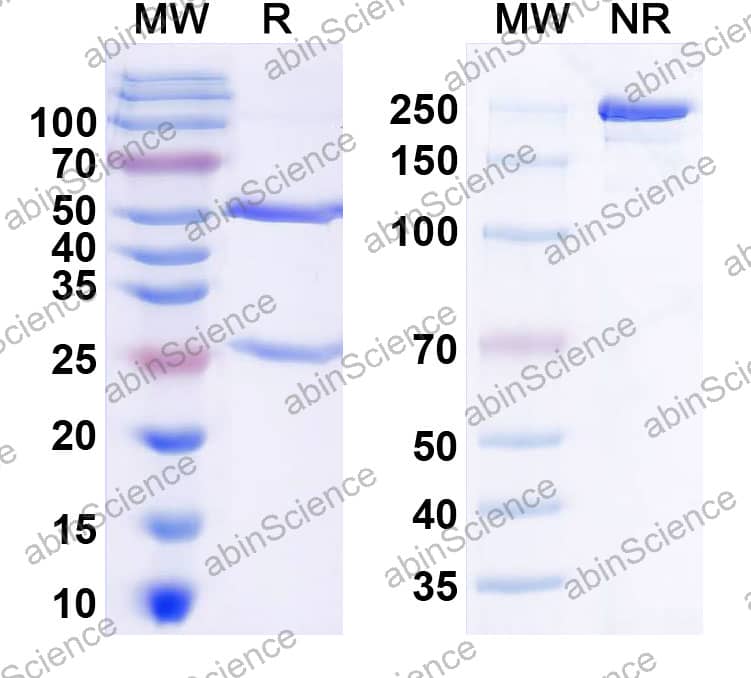
| 純度 | >95% as determined by SDS-PAGE. |
| 精製 | Protein A/G purified from cell culture supernatant. |
| アクセッション番号 | P09429 |
| 形態 | Liquid |
| 保存バッファー | 0.01M PBS pH 7.4. データシートのハードコピーまたはロット固有のCOAに記載された具体的なバッファー情報を参照してください。 |
| 安定性と保存 | Use a manual defrost freezer and avoid repeated freeze thaw cycles. Store at 2 to 8°C for frequent use. Store at -20 to -80°C for twelve months from the date of receipt. |
| 背景 | High mobility group protein B1 (HMGB1) is a ~24 kDa protein. Multifunctional redox sensitive protein with various roles in different cellular compartments. In the nucleus is one of the major chromatin-associated non-histone proteins and acts as a DNA chaperone involved in replication, transcription, chromatin remodeling, V(D)J recombination, DNA repair and genome stability. Proposed to be an universal biosensor for nucleic acids. Promotes host inflammatory response to sterile and infectious signals and is involved in the coordination and integration of innate and adaptive immune responses. In the cytoplasm functions as a sensor and/or chaperone for immunogenic nucleic acids implicating the activation of TLR9-mediated immune responses, and mediates autophagy. 1. Wei, J. et al. (2021) Cell 184, 76-91.e13. PMID: 33147444 2. Avgousti, DC. et al. (2016) Nature 535, 173-7. PMID: 27362237 3. Wang, G. et al. (2021) Cell death discovery 7, 337. PMID: 34743181 4. Yang, H. et al. (2013) Journal of leukocyte biology 93, 865-73. PMID: 23446148 5. Li, G. et al. (2013) Frontiers in immunology 4, 68. PMID: 23519706 6. Li, G. et al. (2013) Seminars in cancer biology 23, 380-90. PMID: 23994764 7. Lee, SA. et al. (2014) Yonsei medical journal 55, 1165-76. PMID: 25048472 8. Min, HJ. et al. (2013) Journal of immunology (Baltimore, Md. : 1950) 190, 1797-806. PMID: 23303669 9. Lee, LC. et al. (2014) PloS one 9, e115809. PMID: 25549101 |
| 注意事項 | For research use only. |
SDS-PAGE for Anti-Human HMGB1 Monoclonal Antibody (1A068)
お問い合わせ
+86-027-65523339
中国武漢市深敦寺路666号C棟、武漢、430206


