
 中文
 English
 한국어
 日本語
 Español
 Français
 Русский
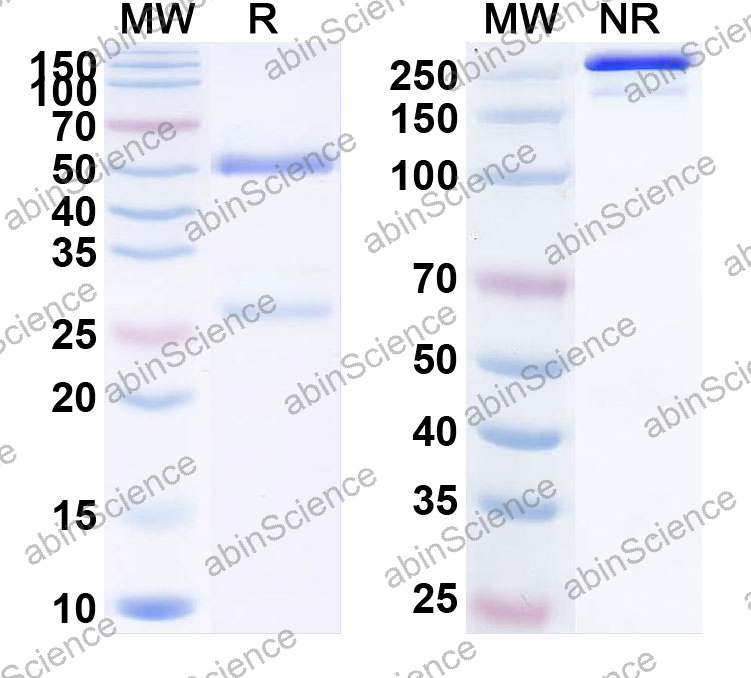


| カタログ番号 | HP187014 | ||||||||
|---|---|---|---|---|---|---|---|---|---|
| 説明 |
Anti-Human NEU3/Sialidase-3 Polyclonal Antibody (HP187014) is a rabbit polyclonal antibody detecting Sialidase-3 in ELISA, IHC, WB. Suitable for Human.
Highlights
|
||||||||
| 種反応性 | Human | ||||||||
| アプリケーション | ELISA, IHC, WB | ||||||||
| 宿主種 | Rabbit | ||||||||
| クローン性 | Polyclonal | ||||||||
| アイソタイプ | IgG | ||||||||
| 免疫原 | E. coli - derived recombinant Human NEU3/Sialidase-3 (Met1-Asn428). | ||||||||
| ターゲット | N-acetyl-alpha-neuraminidase 3, NEU3, Sialidase-3, Ganglioside sialidasedis, Membrane sialidase | ||||||||
| 精製 | Purified by antigen affinity column. | ||||||||
| アクセッション番号 | Q9UQ49 | ||||||||
| 形態 | Liquid | ||||||||
| 保存バッファー | 0.01M PBS, pH 7.4, 50% Glycerol, 0.05% Proclin 300. データシートのハードコピーまたはロット固有のCOAに記載された具体的なバッファー情報を参照してください。 |
||||||||
| 製品使用情報 |
| ||||||||
| 安定性と保存 | Use a manual defrost freezer and avoid repeated freeze thaw cycles. Store at 2 to 8°C for frequent use. Store at -20 to -80°C for twelve months from the date of receipt. | ||||||||
| 背景 | Sialidase-3 (NEU3) is a ~48 kDa protein. Exo-alpha-sialidase that catalyzes the hydrolytic cleavage of the terminal sialic acid (N-acetylneuraminic acid, Neu5Ac) of a glycan moiety in the catabolism of glycolipids, glycoproteins and oligosacharides. Displays high catalytic efficiency for gangliosides including alpha-(2->3)-sialylated GD1a and GM3 and alpha-(2->8)-sialylated GD3. Plays a role in the regulation of transmembrane signaling through the modulation of ganglioside content of the lipid bilayer and by direct interaction with signaling receptors, such as EGFR. Desialylates EGFR and activates downstream signaling in proliferating cells. Contributes to clathrin-mediated endocytosis by regulating sorting of endocytosed receptors to early and recycling endosomes. 1. Wada, T. et al. (1999) Biochemical and biophysical research communications 261, 21-7. PMID: 10405317 2. Monti, E. et al. (2000) The Biochemical journal 349, 343-51. PMID: 10861246 3. Wang, Y. et al. (2001) European journal of biochemistry 268, 2201-8. PMID: 11298736 4. Wang, Y. et al. (2002) The Journal of biological chemistry 277, 26252-9. PMID: 12011038 5. Yamaguchi, K. et al. (2005) The Biochemical journal 390, 85-93. PMID: 15847605 6. Albohy, A. et al. (2010) Glycobiology 20, 1127-38. PMID: 20511247 7. Rodriguez-Walker, M. et al. (2017) Scientific reports 7, 4167. PMID: 28646141 8. Wada, T. et al. (2007) Oncogene 26, 2483-90. PMID: 17334392 9. Mozzi, A. et al. (2015) Glycobiology 25, 855-68. PMID: 25922362 | ||||||||
| 注意事項 | For research use only. |
お問い合わせ
+86-027-65523339
中国武漢市深敦寺路666号C棟、武漢、430206


