
 中文
 English
 한국어
 日本語
 Español
 Français
 Русский
| Número de catálogo | HC155025 |
|---|---|
| Descripción |
Anti-Human SLC22A2/OCT2 Monoclonal Antibody (1A710) [1A710] (HC155025) is a mouse monoclonal antibody detecting SLC22A2 in ELISA, IHC, WB. Suitable for Human.
Highlights
|
| Reactividad de especies | Human |
| Aplicaciones | ELISA, IHC, WB |
| Especie huésped | Mouse |
| Clonalidad | Monoclonal |
| Isotipo | IgG |
| ID de clon | 1A710 |
| Inmunógeno | E. coli - derived recombinant human SLC22A2/OCT2 (Gly44-Asp150). |
| Objetivo | Solute carrier family 22 member 2, Organic cation transporter 2, hOCT2, SLC22A2 |
| Nivel de endotoxinas | Please contact with the lab for this information. |
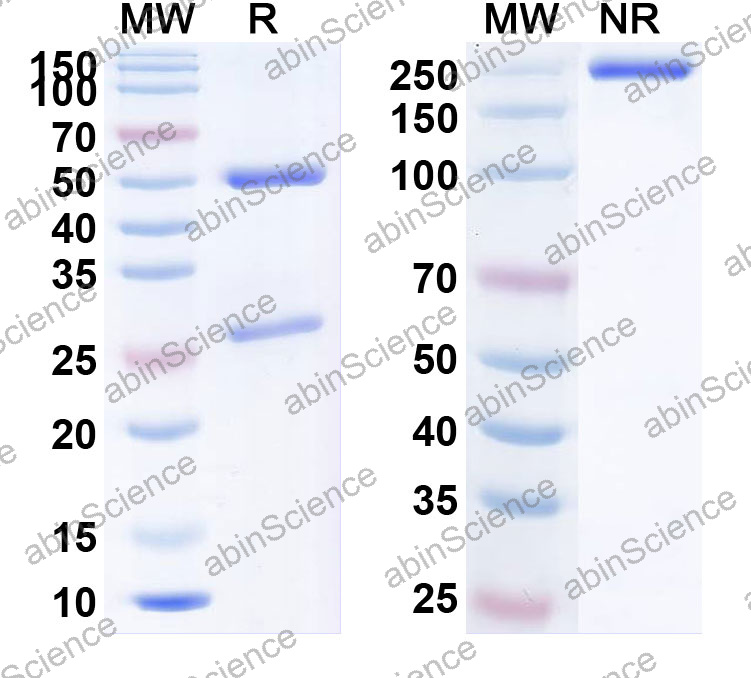
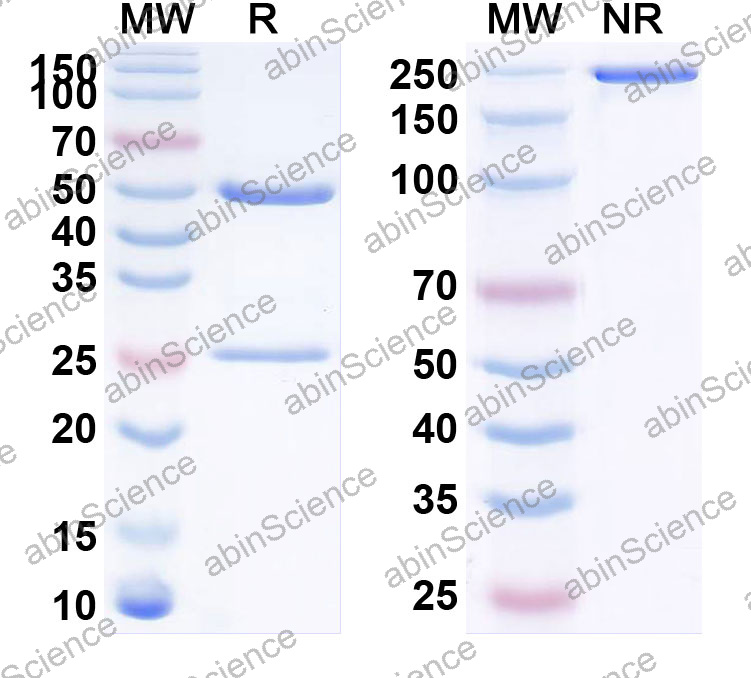
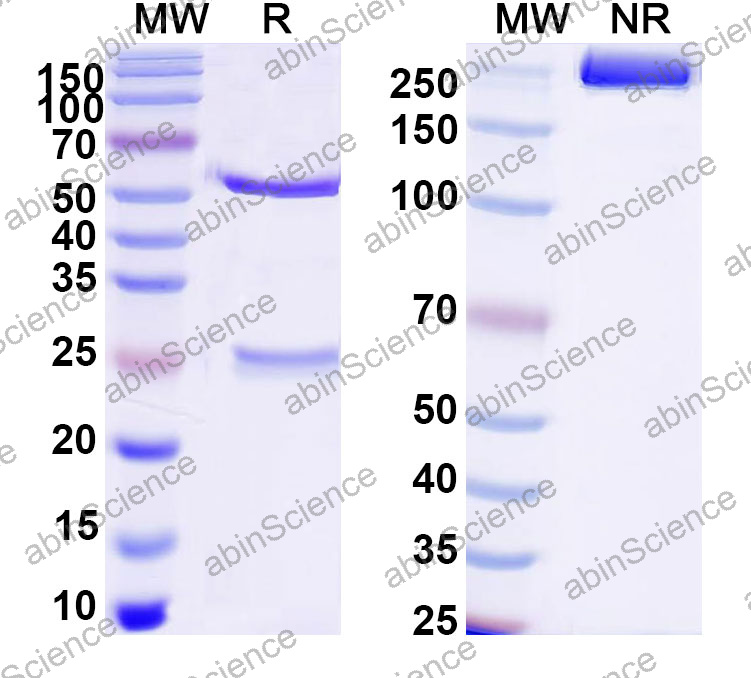
| Pureza | >95% as determined by SDS-PAGE. |
| Purificación | Protein A/G purified from cell culture supernatant. |
| Número de acceso | O15244 |
| Forma | Liquid |
| Buffer de almacenamiento | 0.01M PBS pH 7.4. Consulte la información específica del buffer en la copia impresa del datasheet o en el COA específico del lote. |
| Estabilidad y almacenamiento | Use a manual defrost freezer and avoid repeated freeze thaw cycles. Store at 2 to 8°C for frequent use. Store at -20 to -80°C for twelve months from the date of receipt. |
| Fondo | Solute carrier family 22 member 2 (SLC22A2/OCT2) is a ~62 kDa protein. Electrogenic voltage-dependent transporter that mediates the transport of a variety of organic cations such as endogenous bioactive amines, cationic drugs and xenobiotics. Functions as a Na(+)-independent, bidirectional uniporter. Cation cellular uptake or release is driven by the electrochemical potential, i.e. membrane potential and concentration gradient. However, may also engage electroneutral cation exchange when saturating concentrations of cation substrates are reached. 1. Gorboulev, V. et al. (1997) DNA and cell biology 16, 871-81. PMID: 9260930 2. Busch, AE. et al. (1998) Molecular pharmacology 54, 342-52. PMID: 9687576 3. Winter, TN. et al. (2011) Molecular pharmaceutics 8, 133-42. PMID: 21128598 4. Urakami, Y. et al. (2004) Pharmaceutical research 21, 976-81. PMID: 15212162 5. Kimura, N. et al. (2005) Pharmaceutical research 22, 255-9. PMID: 15783073 6. Amphoux, A. et al. (2006) Neuropharmacology 50, 941-52. PMID: 16581093 7. Taubert, D. et al. (2007) PloS one 2, e385. PMID: 17460754 |
| Nota | For research use only. |
SDS-PAGE for Anti-Human SLC22A2/OCT2 Monoclonal Antibody (1A710)

Contáctenos para cotizaciones personalizadas, solicitudes en masa y cualquier otro problema.
Correo: [email protected]
Contáctenos
+86-027-65523339
Edificio C, No. 666, Calle Shendunsi, Wuhan, 430206, China


