
 中文
中文 English
 한국어
한국어 日本語
日本語 Español
 Français
 Русский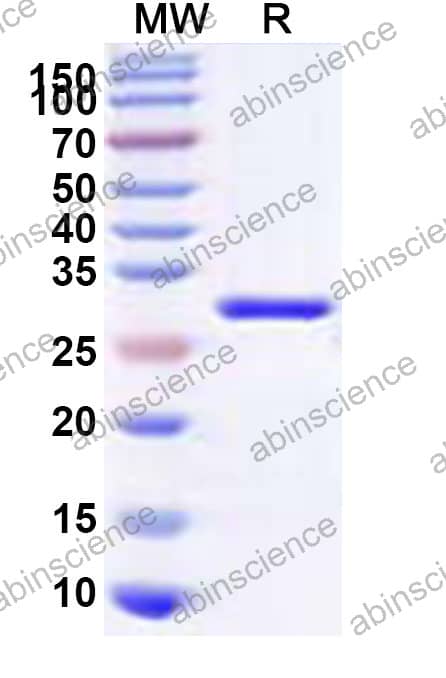

| カタログ番号 | JN854014 | ||||||||
|---|---|---|---|---|---|---|---|---|---|
| 説明 |
Anti-Pseudomonas fluorescens estF/Arylesterase Polyclonal Antibody (JN854014) is a rabbit polyclonal antibody detecting Arylesterase in ELISA, IHC, WB.
Highlights
|
||||||||
| 種反応性 | Pseudomonas fluorescens | ||||||||
| アプリケーション | ELISA, IHC, WB | ||||||||
| 宿主種 | Rabbit | ||||||||
| クローン性 | Polyclonal | ||||||||
| アイソタイプ | IgG | ||||||||
| 免疫原 | E. coli - derived recombinant Pseudomonas fluorescens estF/Arylesterase (Met1-Arg272). | ||||||||
| ターゲット | Arylesterase, 3.1.1.2, Aryl-ester hydrolase, Carboxylic acid perhydrolase, PFE, Putative bromoperoxidase, 1.-.-.-, estF | ||||||||
| 精製 | Purified by antigen affinity column. | ||||||||
| アクセッション番号 | P22862 | ||||||||
| 形態 | Liquid | ||||||||
| 保存バッファー | 0.01M PBS, pH 7.4, 50% Glycerol, 0.05% Proclin 300. データシートのハードコピーまたはロット固有のCOAに記載された具体的なバッファー情報を参照してください。 |
||||||||
| 製品使用情報 |
| ||||||||
| 安定性と保存 | Use a manual defrost freezer and avoid repeated freeze thaw cycles. Store at 2 to 8°C for frequent use. Store at -20 to -80°C for twelve months from the date of receipt. | ||||||||
| 背景 | Arylesterase (estF) is a ~30 kDa protein. Hydrolyzes phenolic esters, such as phenyl acetate, nitrophenyl acetate and naphtyl acetate. Can act on a wide range of esters, but reaction rate and enantioselectivity differ significantly depending on the substrate. Shows a preference for esters with small acyl groups. Also shows low perhydrolase activity, and catalyzes the reversible formation of peroxycarboxylic acids from carboxylic acids and hydrogen peroxide. In vitro, enzyme-generated peracetic acid oxidizes bromide ion to bromonium, which reacts with monochlorodimedone to form bromochlorodimedone. 1. Choi, KD. et al. (1990) Agricultural and biological chemistry 54, 2039-45. PMID: 1368608 2. Bernhardt, P. et al. (2005) Angewandte Chemie (International ed. in English) 44, 2742-2746. PMID: 15803517 3. Pelletier, I. et al. (1995) Microbiology (Reading, England) 141 ( Pt 2), 459-68. PMID: 7704276 4. Krebsfänger, N. et al. (1998) Journal of biotechnology 60, 105-11. PMID: 9571805 5. Cheeseman, JD. et al. (2004) Acta crystallographica. Section D, Biological crystallography 60, 1237-43. PMID: 15213385 6. Yin, DL. et al. (2010) Biochemistry 49, 1931-42. PMID: 20112920 7. Yin, DT. et al. (2012) Chemistry (Weinheim an der Bergstrasse, Germany) 18, 8130-9. PMID: 22618813 | ||||||||
| 注意事項 | For research use only. |
+86-027-65523339
中国武漢市深敦寺路666号C棟、武漢、430206


