
 中文
中文 English
 한국어
한국어 日本語
日本語 Español
 Français
 Русский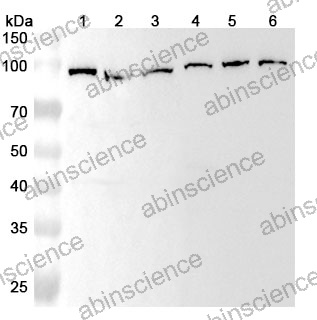

| カタログ番号 | HD617012 |
|---|---|
| 説明 |
Recombinant Human KPNB1 Protein, N-His (HD617012) expressed in E. coli. Purity: >90% as determined by SDS-PAGE..
Highlights
|
| 発現システム | E. coli |
| アクセッション番号 | Q14974 |
| タンパク質長 | Met1-Ala442 |
| アプリケーション | ELISA, Immunogen, SDS-PAGE, WB, Bioactivity testing in progress |
| 種 | Homo sapiens (Human) |
| 性質 | Recombinant |
| エンドトキシンレベル | Please contact with the lab for this information. |
| 純度 | >90% as determined by SDS-PAGE. |
| 形態 | Lyophilized |
| 保存バッファー | Lyophilized from a solution in PBS pH 7.4, 1 mM EDTA, 4% Trehalose, 1% Mannitol. データシートのハードコピーまたはロット固有のCOAに記載された具体的なバッファー情報を参照してください。 |
| 再構成 | Reconstitute in sterile water for a stock solution. A copy of datasheet will be provided with the products, please refer to it for details. |
| 発送 | In general, proteins are provided as lyophilized powder/frozen liquid. They are shipped out with dry ice/blue ice unless customers require otherwise. |
| 安定性と保存 | Use a manual defrost freezer and avoid repeated freeze thaw cycles. Store at 2 to 8°C for frequent use. Store at -20 to -80°C for twelve months from the date of receipt. |
| 別名 | Importin subunit beta-1, Importin-90, KPNB1, Karyopherin subunit beta-1, NTF97, Nuclear factor p97, PTAC97, Pore targeting complex 97 kDa subunit |
| 背景 | Importin subunit beta-1 is a ~97 kDa protein. Functions in nuclear protein import, either in association with an adapter protein, like an importin-alpha subunit, which binds to nuclear localization signals (NLS) in cargo substrates, or by acting as autonomous nuclear transport receptor. Acting autonomously, serves itself as NLS receptor. Docking of the importin/substrate complex to the nuclear pore complex (NPC) is mediated by KPNB1 through binding to nucleoporin FxFG repeats and the complex is subsequently translocated through the pore by an energy requiring, Ran-dependent mechanism. At the nucleoplasmic side of the NPC, Ran binds to importin-beta and the three components separate and importin-alpha and -beta are re-exported from the nucleus to the cytoplasm where GTP hydrolysis releases Ran from importin. The directionality of nuclear import is thought to be conferred by an asymmetric distribution of the GTP- and GDP-bound forms of Ran between the cytoplasm and nucleus. 1. Jäkel, S. et al. (1999) The EMBO journal 18, 2411-23. PMID: 10228156 2. Dean, KA. et al. (2001) Journal of cell science 114, 3479-85. PMID: 11682607 3. White, WO. et al. (2002) Journal of cellular biochemistry 85, 42-53. PMID: 11891849 4. Mingot, JM. et al. (2009) Journal of cell science 122, 1452-60. PMID: 19386897 5. Pawłowski, R. et al. (2010) The EMBO journal 29, 3448-58. PMID: 20818336 6. Choi, S. et al. (2014) Acta crystallographica. Section D, Biological crystallography 70, 1050-60. PMID: 24699649 7. Chi, NC. et al. (1995) The Journal of cell biology 130, 265-74. PMID: 7615630 8. Jäkel, S. et al. (1998) The EMBO journal 17, 4491-502. PMID: 9687515 |
| 注意事項 | For research use only |
+86-027-65523339
中国武漢市深敦寺路666号C棟、武漢、430206


