
 中文
中文 English
 한국어
한국어 日本語
日本語 Español
 Français
 Русский

| Numéro de catalogue | HS925021 |
|---|---|
| Description |
Recombinant Human RAGE/AGER Protein, C-His (HS925021) expressed in Mammalian Cells, spanning Met1-Ala344.
Highlights
|
| Système d'expression | Mammalian cells |
| Numéro d'accès | Q15109 |
| Longueur de protéine | Met1-Ala344 |
| Applications | ELISA, Immunogen, SDS-PAGE, WB, Bioactivity testing in progress |
| Espèces | Homo sapiens (Human) |
| Nature | Recombinant |
| Niveau d'endotoxines | Please contact with the lab for this information. |
| Pureté | >95% as determined by SDS-PAGE. |
| Masse moléculaire prédite | 37.24 kDa |
| Forme | Lyophilized |
| Tampon de stockage | Lyophilized from a solution in PBS pH 7.4, 1 mM EDTA, 4% Trehalose, 1% Mannitol. Reférez-vous aux informations spécifiques sur le tampon dans la copie papier du datasheet ou dans le COA spécifique au lot. |
| Reconstitution | Reconstitute in sterile water for a stock solution. Adjust the volume of sterile water so that, after reconstitution, the final stock concentration matches the value indicated on the product label or datasheet. RECONSTITUTION PROTOCOL 1. Allow the product to be reconstituted and the reconstitution diluent to reach room temperature. 2. Tap or briefly centrifuge the product vial before opening to dislodge any lyophilized material that may be dispersed on the wall or cap of the vial. 3. Use the diluent and stock concentration recommended in the product datasheet. If preparing a stock concentration higher than recommended, contact Technical Service. 4. After adding the diluent, re-cap the vial and invert gently by hand or place on a slow rocking platform to allow the reconstitution diluent to coat all the surfaces inside the vial. Note: Do not mix by vortexing or by pipetting the material up and down. 5. Allow the vial to sit at room temperature with gentle agitation for at least 15 minutes before aliquotting or using. 6. Store the reconstituted material in single use aliquots in polypropylene or siliconized tubes. Aliquots of 10 μL or larger are recommended. |
| Expédition | In general, proteins are provided as lyophilized powder/frozen liquid. They are shipped out with dry ice/blue ice unless customers require otherwise. |
| Stabilité et stockage | Use a manual defrost freezer and avoid repeated freeze thaw cycles. Store at 2 to 8°C for frequent use. Store at -20 to -80°C for twelve months from the date of receipt. |
| Noms alternatifs | Advanced glycosylation end product-specific receptor, Receptor for advanced glycosylation end products, AGER, RAGE |
| Contexte | Advanced glycosylation end product-specific receptor is a ~42 kDa protein. Cell surface pattern recognition receptor that senses endogenous stress signals with a broad ligand repertoire including advanced glycation end products, S100 proteins, high-mobility group box 1 protein/HMGB1, amyloid beta/APP oligomers, nucleic acids, histones, phospholipids and glycosaminoglycans. Advanced glycosylation end products are nonenzymatically glycosylated proteins which accumulate in vascular tissue in aging and at an accelerated rate in diabetes. These ligands accumulate at inflammatory sites during the pathogenesis of various diseases including diabetes, vascular complications, neurodegenerative disorders and cancers, and RAGE transduces their binding into pro-inflammatory responses. Upon ligand binding, uses TIRAP and MYD88 as adapters to transduce the signal ultimately leading to the induction of inflammatory cytokines IL6, IL8 and TNFalpha through activation of NF-kappa-B. Interaction with S100A12 on endothelium, mononuclear phagocytes, and lymphocytes triggers cellular activation, with generation of key pro-inflammatory mediators. 1. Shang, D. et al. (2016) Scientific reports 6, 32180. PMID: 27572515 2. Evankovich, J. et al. (2017) FASEB journal : official publication of the Federation of American Societies for Experimental Biology 31, 3894-3903. PMID: 28515150 3. Wang, G. et al. (2021) Cell death discovery 7, 337. PMID: 34743181 4. Yang, Y. et al. (2022) Communications biology 5, 824. PMID: 35974093 5. Sirois, CM. et al. (2013) The Journal of experimental medicine 210, 2447-63. PMID: 24081950 6. Xue, J. et al. (2011) Structure (London, England : 1993) 19, 722-32. PMID: 21565706 7. Sakaguchi, M. et al. (2011) PloS one 6, e23132. PMID: 21829704 8. Yan, Z. et al. (2021) Nature communications 12, 308. PMID: 33436632 9. Moroz, OV. et al. (2009) BMC biochemistry 10, 11. PMID: 19386136 10. Fang, F. et al. (2010) FASEB journal : official publication of the Federation of American Societies for Experimental Biology 24, 1043-55. PMID: 19906677 |
| Note | For research use only |
Detected by Anti-RAGE/AGER monoclonal antibody (Catalog No: HS925013)
Detected by Anti-RAGE/AGER monoclonal antibody (Catalog No: HS925030)
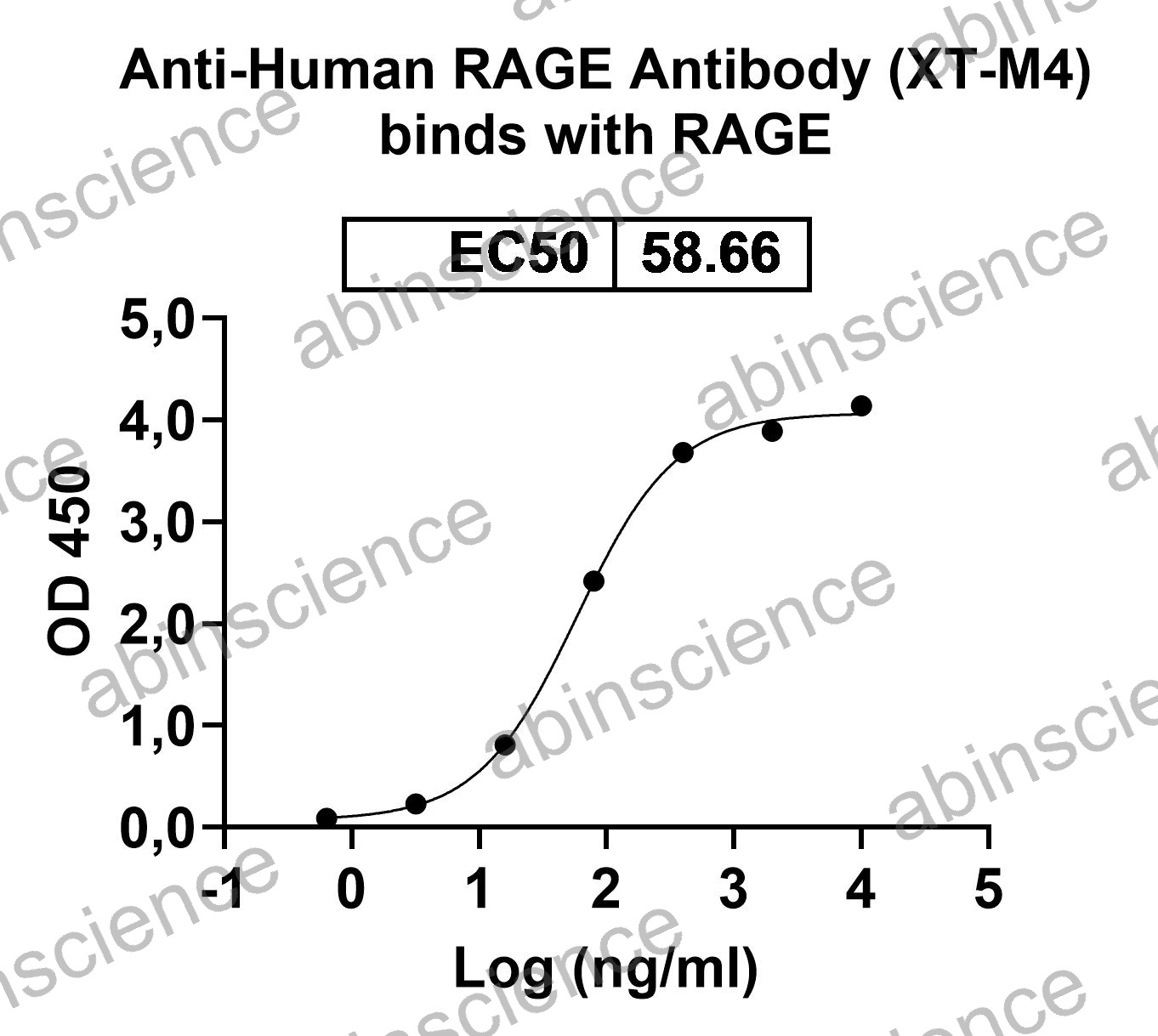
Detected by XT-M4 (Catalog No: HS925013) in indirect ELISA.
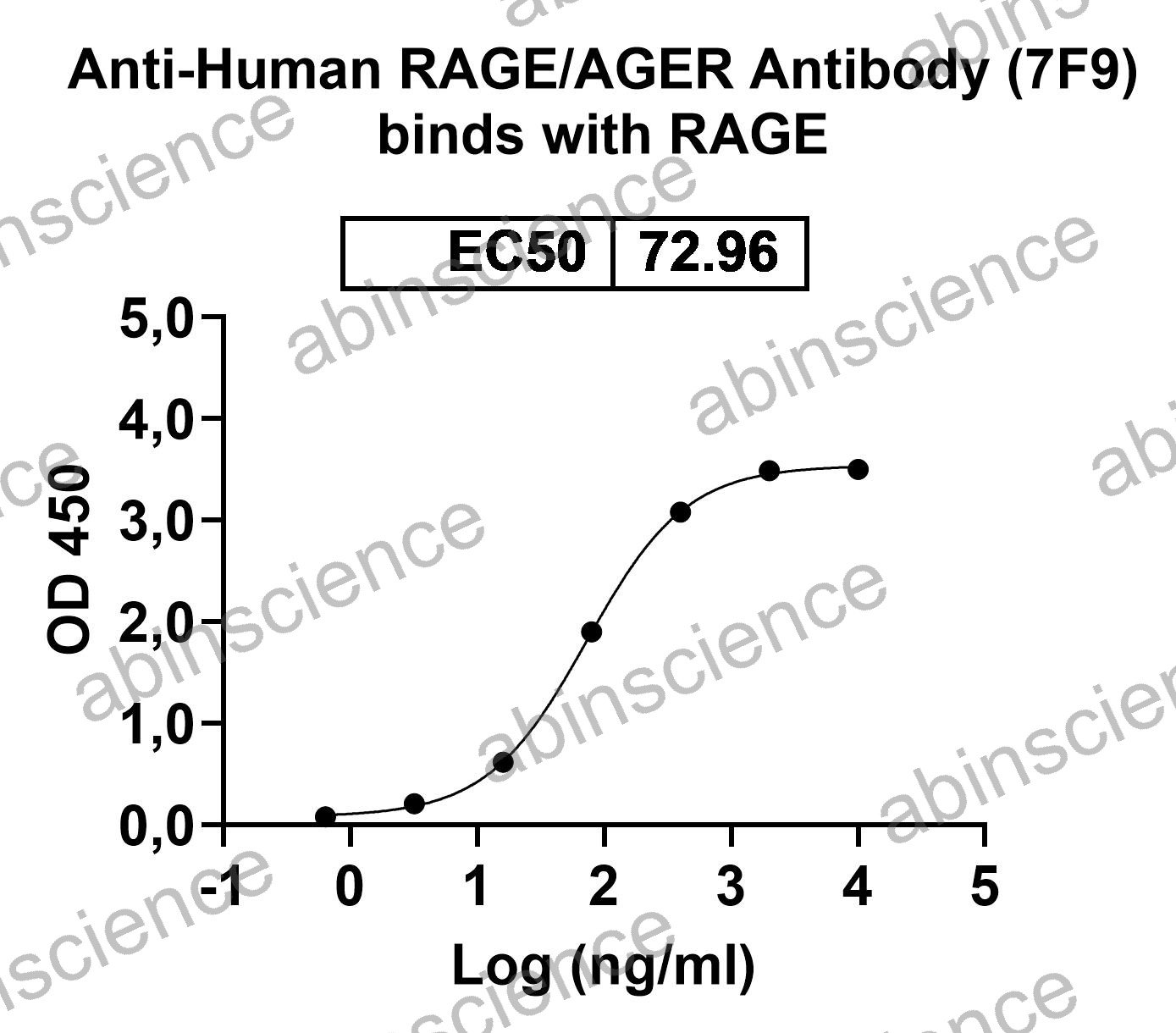
Detected by 7F9 (Catalog No: HS925010) in indirect ELISA.


Contactez-nous pour les devis personnalisés, les demandes en gros et tout autre problème.
Courrier : [email protected]
+86-027-65523339
Bâtiment C, No. 666, Rue Shendunsi, Wuhan, 430206, Chine


