With the rapid advancement of global pathogen surveillance technologies and molecular biology, an increasing number of viruses featuring distinct biological traits have entered systematic research. Elucidating viral genome organization, structural protein functions, and virus-host interactions serves as a fundamental cornerstone for understanding the viral life cycle and advancing basic virological research.
Severe Fever with Thrombocytopenia Syndrome Virus (SFTSV) is a tick-borne, negative-sense RNA virus first identified and reported in 2009. It belongs to the order Bunyavirales, family Phenuiviridae, and genus Bandavirus. Since its initial discovery, SFTSV has emerged as a major focus in virology and immunology due to its unique genomic architecture, complex life cycle, and intricate host cell interaction mechanisms.
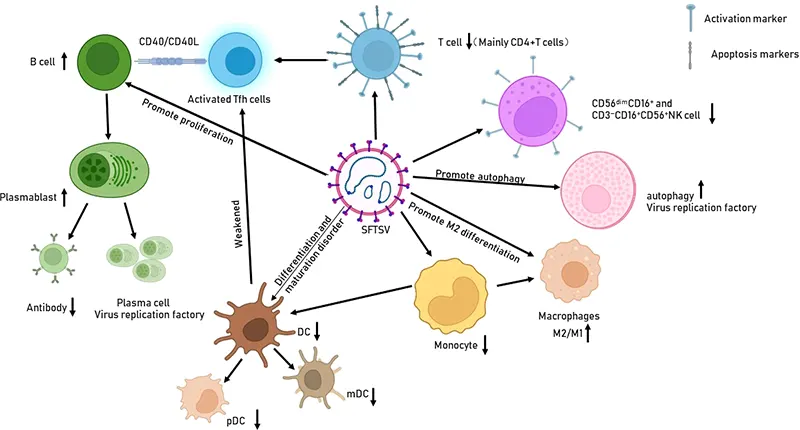
Figure 1. Impact of SFTSV infection on immune cells (DOI: 10.3389/fimmu.2022.937684)
Currently, there are no approved vaccines or targeted antiviral therapeutics for SFTSV. Consequently, in-depth characterization of its genomic composition, structural protein functions, and replication cycle is critical to driving foundational research and fostering the development of effective intervention strategies.
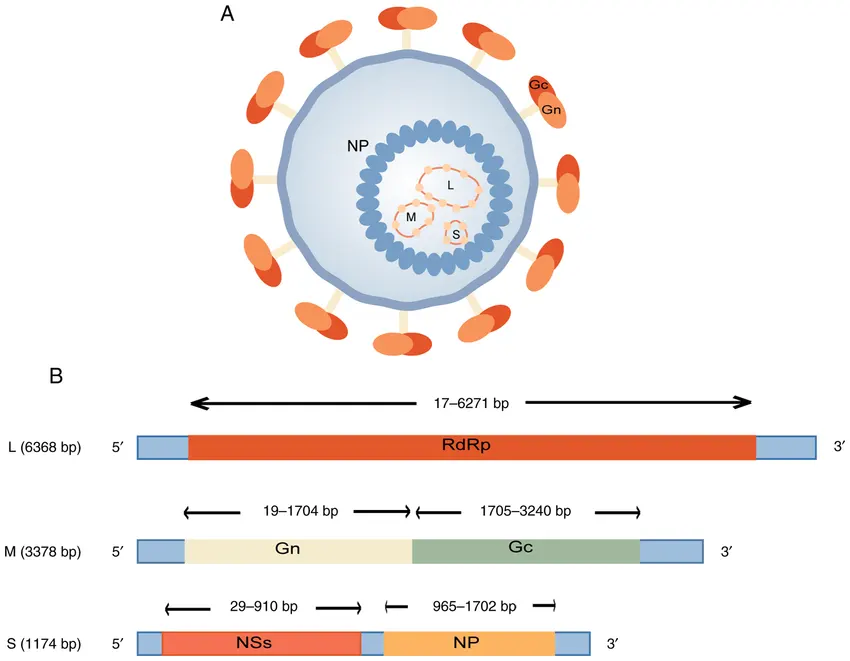
Figure 2. Structure and genome of SFTSV (DOI: 10.3892/ijmm.2025.5610)
SFTSV is an enveloped virus whose outer lipid envelope, derived from the host cell membrane, is embedded with viral-encoded glycoprotein spikes. Its genetic material consists of single-stranded negative-sense RNA (ssRNA−) organized in a segmented genome. This segmented nature endows the virus with potential genetic variation via reassortment and imposes distinct regulatory mechanisms on its replication and transcription.
The SFTSV genome comprises three distinct RNA segments—L, M, and S—each encoding specific viral proteins that collectively sustain the complete viral life cycle:
| Genomic Segment | Core Protein Encoded | Primary Biological Function |
|---|---|---|
| L Segment | RNA-dependent RNA polymerase (RdRp) | Responsible for viral genomic RNA replication and mRNA transcription; acts as the central catalytic component of the viral replicase complex. |
| M Segment | Glycoprotein precursor (Mgp1) | Cleaved by host proteases to generate mature Gn and Gc glycoproteins, which mediate envelope construction and viral entry. |
| S Segment | Nucleoprotein (NP) | Binds viral RNA to form ribonucleoprotein complexes (RNPs), serving as the principal structural scaffold for the viral genome. |
The nucleoprotein (NP), glycoprotein precursor (Mgp1), and M-segment-derived Gn and Gc glycoproteins represent the primary structural and functional targets in SFTSV research, spanning critical stages including viral entry, replication, and assembly.
Structural proteins provide the functional baseline for viral entry, replication, assembly, and release, making them primary entry points for molecular virology studies. The four core structural protein categories encoded by SFTSV feature unique structural characteristics and functional roles that together orchestrate the complete viral life cycle.
Structural Profile: NP forms oligomers in solution via domain-domain interactions. It adopts a canonical Phlebovirus nucleoprotein fold, containing a positively charged core domain responsible for RNA binding and terminal regulatory regions involved in protein-protein interactions.
RNA Binding and Genome Encapsidation: NP non-specifically binds viral RNA via its positively charged internal pockets, encapsidates full-length viral genomic RNA via sequential monomer assembly to form highly ordered vRNPs. This architecture shields the genome from host nucleases while providing an optimal template conformation for RdRp-mediated transcription and replication.
Role in Replication and Packaging: Beyond its structural role, NP dynamically interacts with RdRp and host regulatory factors to tune replication and transcription efficiency. During assembly, mature vRNPs are selectively targeted to budding sites for packaging into progeny virions.
Immunological and Research Utility: Due to its high sequence conservation and abundant expression during active infection, NP serves as a prime biomarker for monitoring viral replication, protein-protein interaction screens, and host immune recognition studies.
Mgp1 is the full-length glycoprotein precursor encoded by the M segment. Proteolytic processing of Mgp1 is a critical regulatory step in the formation of the mature viral envelope.
Synthesized in the host endoplasmic reticulum (ER), Mgp1 translocates to the secretory pathway guided by its signal peptide. It is subsequently cleaved by host proteases (e.g., furin-like proteases) to yield N-terminal Gn and C-terminal Gc glycoproteins. Following cleavage, Gn and Gc undergo folding, glycosylation, and heterodimerization within the ER-Golgi network before trafficking to viral budding sites. The processing efficiency and post-translational modification status of Mgp1 dictate the proper folding and functionality of mature glycoproteins, marking it as a key node in regulating viral infectivity.
Gn is a major transmembrane glycoprotein embedded in the viral envelope. Together with Gc, it forms the surface spikes essential for virus-host interactions.
Envelope Assembly: Comprising an ectodomain, transmembrane region, and cytosolic tail, Gn interacts directly with the viral nucleoprotein complex via its cytoplasmic domain. This recruits and targets vRNPs to the budding membrane, acting as a master regulator of particle assembly.
Virion Morphogenesis: Through self-oligomerization and interactions with Gc, Gn drives membrane curvature and budding, directly governing the structural maturation of progeny virions.
Host Interaction Utility: Emerging evidence highlights Gn as the key mediator of host cell surface receptor recognition, dictating tissue tropism and host range. Furthermore, Gn carries major neutralizing epitopes, making it a critical target for entry mechanism studies and neutralizing antibody screening.
The Gc glycoprotein (also referred to as G2) is the primary fusion protein of SFTSV. Co-existing as a heterodimer with Gn on the envelope surface, Gc executes host cell entry.
Upon endocytosis into host cells, endosomal acidification triggers an irreversible conformational rearrangement in Gc. This exposes its hydrophobic fusion loop, which inserts into the endosomal membrane to mediate viral-host membrane fusion, ultimately releasing the vRNP into the cytoplasm to initiate the replication cycle. As a class II viral fusion protein, Gc exhibits structural and mechanistic conservation across the Bunyavirales order, serving as a model for understanding entry across related viral families.
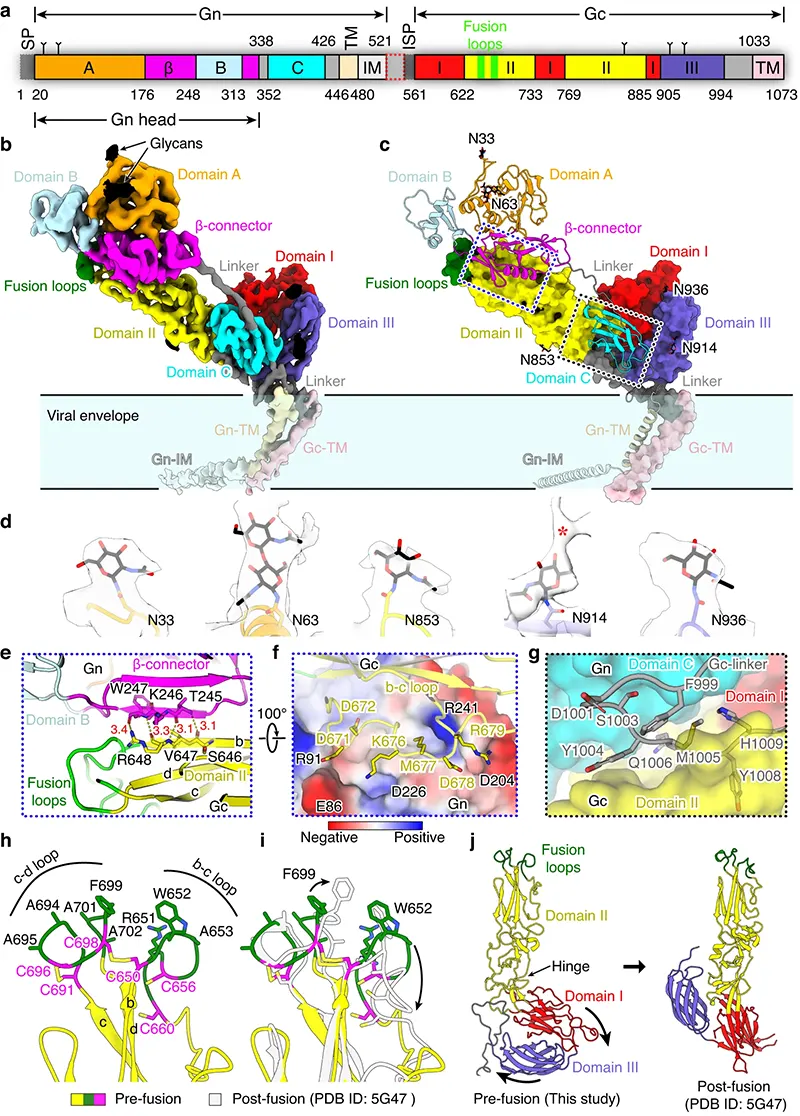
Figure 3. Structure of the SFTSV Gn/Gc heterodimer (DOI: 10.1038/s41467-023-41804-7)
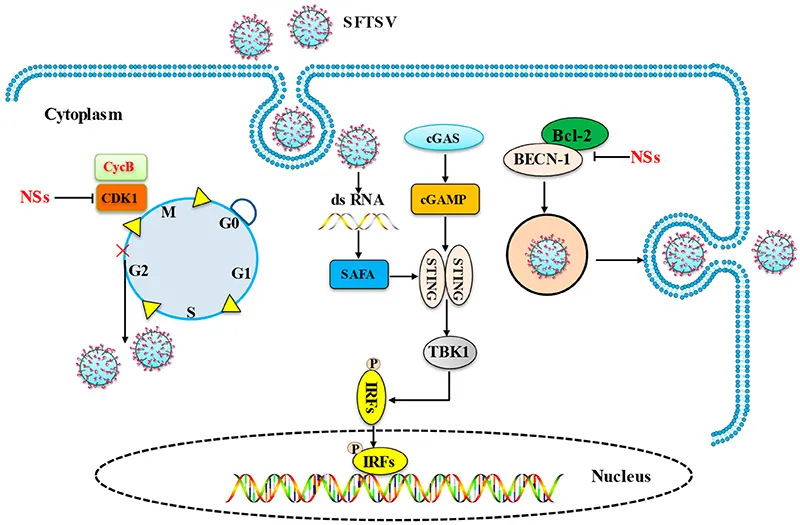
Figure 4. SFTSV achieves immune evasion by regulating the cell cycle, apoptosis, and the cGAS-STING pathway (DOI: 10.3390/v15040940)
Functional and mechanistic studies centered on SFTSV structural proteins not only reveal the virus's fundamental biological properties, but also significantly advance basic research and therapeutic strategies across the broader Bunyavirales order.
The SFTSV life cycle encompasses viral entry, genome replication/transcription, assembly, and budding. Key structural proteins like NP, Gn, and Gc are the molecular drivers of each stage. Structural elucidation and functional validation of these targets offer a refined roadmap of the viral life cycle, serving as a classical model for segmented negative-sense RNA virus biology.
Host-pathogen interactions span the entire course of infection, with viral structural proteins serving as primary interfaces. In-depth research on viral proteins can reveal interaction rules from multiple dimensions: high-resolution structural analysis of glycoprotein ectodomains helps identify host receptors and entry pathways. Furthermore, mapping host interactomes associated with NP and the cytosolic tail of Gn sheds light on how SFTSV subverts host cellular pathways and evades innate immunity (e.g., cGAS-STING regulation). Characterizing these antigenic epitopes also provides research targets for understanding the recognition and response mechanisms of host adaptive immunity.
As a representative emerging tick-bunyavirus, insights gained from SFTSV provide important references for research on related viruses within the same family and genus. Pseudotyped virus and replicon systems constructed around these key structural proteins are pivotal tools for dissecting viral entry mechanisms and screening small-molecule or antibody inhibitors. Pinpointing functional hot spots within these proteins lays the theoretical groundwork for discovering new antiviral targets and designing prophylactic vaccines, bridging basic research and translational application.
To support basic and translational research in the SFTSV field, abinScience offers a portfolio of research-grade antibodies and recombinant proteins directed against core structural targets, including NP, Mgp1, Gn, and Gc. These tools are validated across diverse experimental applications, such as protein expression analysis, interactome mapping, viral localization, and immunogen preparation.
| Catalog No. | Product Name |
|---|---|
| VK662043 | Anti-SFTSV glycoprotein Gn Recombinant Antibody (Ab10) |
| VK702014 | Anti-SFTSV NP/Nucleoprotein Polyclonal Antibody |
| VK662063 | Anti-SFTSV glycoprotein Gn Recombinant Antibody (S2A5) |
| VK662073 | Anti-SFTSV glycoprotein Gn Recombinant Antibody (N1D10) |
| VK662083 | Anti-SFTSV glycoprotein Gn Recombinant Antibody (B1G11) |
| VK662013 | Anti-SFTSV glycoprotein Gn Recombinant Antibody (Mab4-5) |
| VK662033 | Anti-SFTSV glycoprotein Gn Recombinant Antibody (JK-8) |
| VK662023 | Anti-SFTSV glycoprotein Gn Recombinant Antibody (JK-12) |
| VK662053 | Anti-SFTSV glycoprotein Gn Recombinant Antibody (40C10) |
| VK662011 | SFTSV Mgp1/membrane glycoprotein polyprotein Recombinant Protein (C-His) |
| VK702012 | SFTSV NP/Nucleoprotein Recombinant Protein (N-His) |
| VK702022 | SFTSV NP/Nucleoprotein Recombinant Protein (N-His) |
| VK702013 | Anti-SFTSV NP/Nucleoprotein Recombinant Antibody (SAA2671) |
| VK662010 | InVivoMAb Anti-SFTSV glycoprotein Gn Antibody (Iv0276) |
| VK662093 | Anti-SFTSV glycoprotein Gn Recombinant Nanobody (SAA3001) |
| VK662014 | Anti-SFTSV glycoprotein Gn Polyclonal Antibody |
+86-027-65523339
中国武漢市深敦寺路666号C棟、武漢、430206


 中文
中文 English
 한국어
한국어 日本語
日本語 Español
 Français
 Русский