In tumor immunology research, the polyfunctional characteristics of T cells directly influence anti-tumor responses and the efficacy of immunotherapy. While traditional theory suggests that tumor-specific T cells maintain functional coordination through a Th1/Th2 balance, growing evidence indicates that actual immune responses are more complex, involving coordinated expression and cross-regulation of multiple cytokines. OMIP-008 enables in-depth analysis of tumor-reactive T cell function through multi-color flow cytometry.
The OMIP-008 panel integrates Th1/Th2 cytokines and key surface markers, allowing simultaneous assessment of multiple cytokine expressions at the single-cell level. This design overcomes the limitations of conventional methods that only analyze a single cytokine profile, providing a more comprehensive tool for tumor immune monitoring and immunotherapy.
Through innovative antibody screening, blocking experiments, and Boolean matrix analysis, OMIP-008 enables quantification of T cell polyfunctionality. The panel is not only suitable for fundamental tumor immunology studies but also offers robust technical support for clinical immune monitoring and immunotherapy response evaluation.
In tumor immunology, the functional diversity of T cells directly determines anti-tumor efficacy and immunotherapy outcomes. Although traditional models describe tumor-specific T cells in terms of Th1/Th2 balance, immune responses in reality are more intricate, often involving synergistic expression and cross-regulation of multiple cytokines. By integrating Th1/Th2 cytokines and essential surface markers, OMIP-008 achieves polyfunctional T cell analysis at the single-cell level, capturing this complex functional immune profile. It serves as an efficient and practical tool for clinical samples and tumor immune monitoring studies.
| Target | Fluorochrome | Function | abinScience Recommendation |
|---|---|---|---|
| Live/Dead | ViViD | Exclude dead cells, B cells, monocytes, macrophages | — |
| CD14 | PacBlu | View CD14 antibodies | |
| CD19 | eFluor450 | View CD19 antibodies | |
| CD3 | Alexa 700 | T-cell lineage marker | View CD3 antibodies |
| CD4 | APC-Cy7 | View CD4 antibodies | |
| CD8 | QD605 | View CD8 antibodies | |
| IL-2 | PerCP-Cy5.5 | Cytokines | View IL-2 antibodies |
| IL-4 | Alexa 488 | View IL-4 antibodies | |
| IL-10 | PE | View IL-10 antibodies | |
| IFN-γ | APC | View IFN-γ antibodies | |
| TNF-α | PE-Cy7 | View TNF-α antibody |
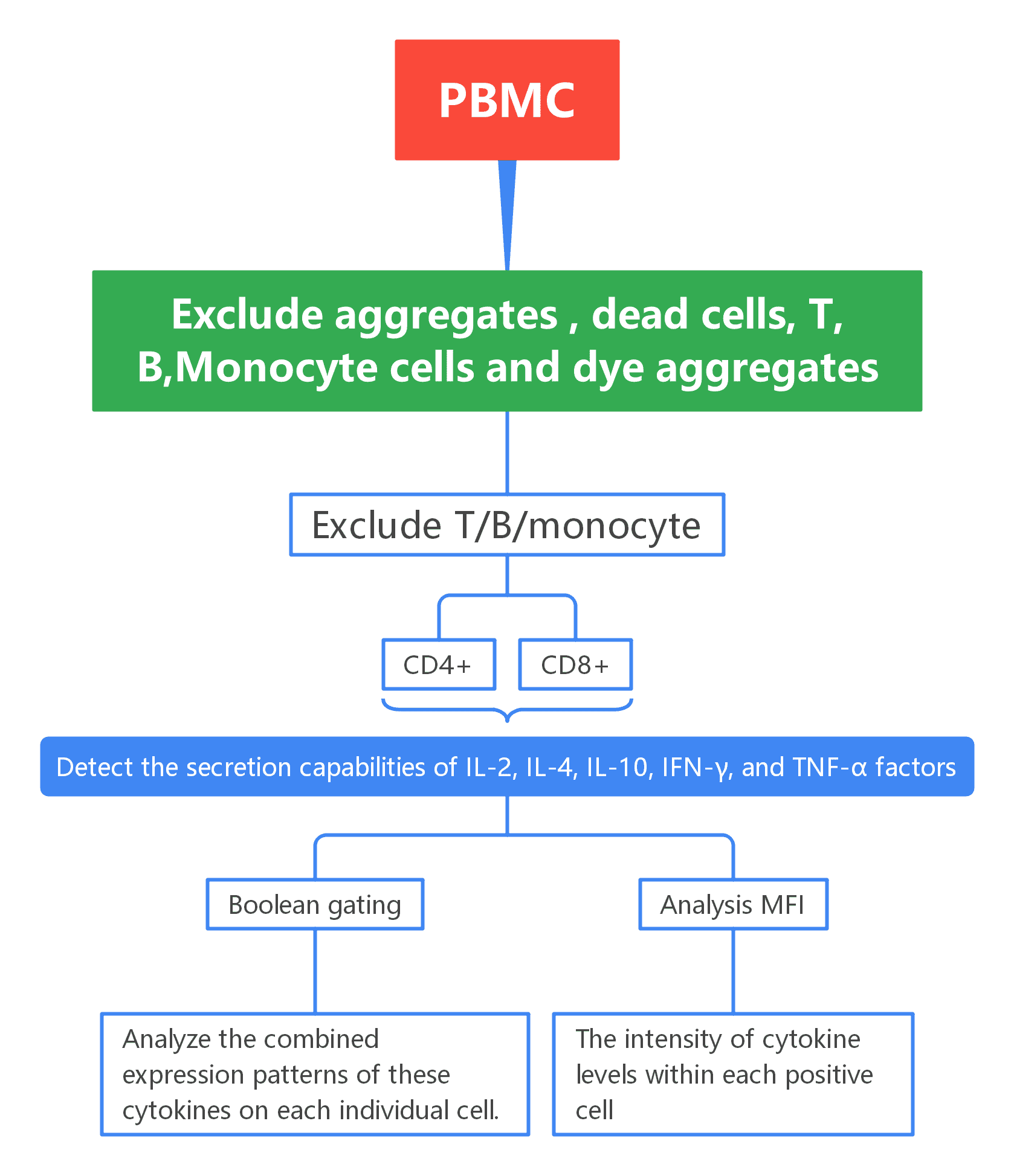
Figure 1. Overview of OMIP-008 Gating Strategy
Cell aggregates, dead cells, monocytes, and B cells were excluded, and the CD3+ T cell population was gated. Subsequently, CD4 and CD8 markers were used to discriminate CD4+ and CD8+ T cell subsets.
Analyze the expression levels of individual cytokines through specific labeling with IL-2, IL-4, IL-10, IFN-γ, and TNF-α.
Employ Boolean analysis and visually display the functional breadth and response intensity of T cells via SPICE graphics.
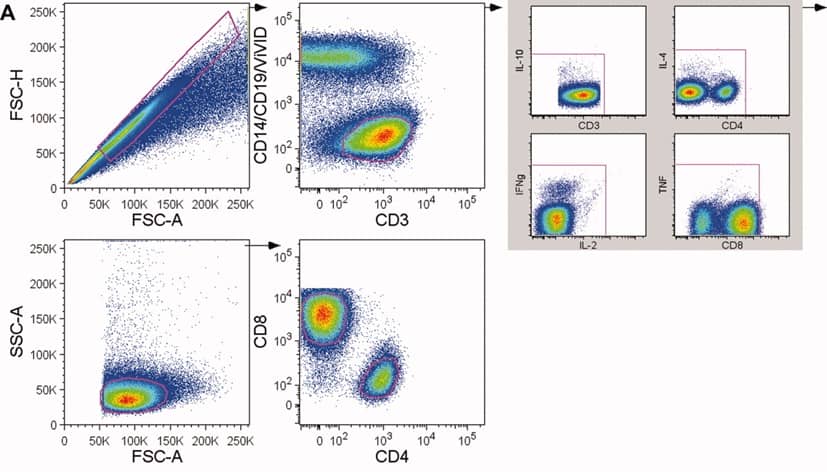
1). Aggregates were first removed using FSC-A/H. Viable CD3+ T cells were then identified by excluding CD14, CD19, and ViViD signals (CD3+ViViD-CD14- CD19-). Because dye aggregation may generate highly fluorescent particulates, these events were subsequently excluded. Lymphocytes were gated using FSC/SSC, followed by the separation of CD4+CD8- and CD4-CD8+ subsets.
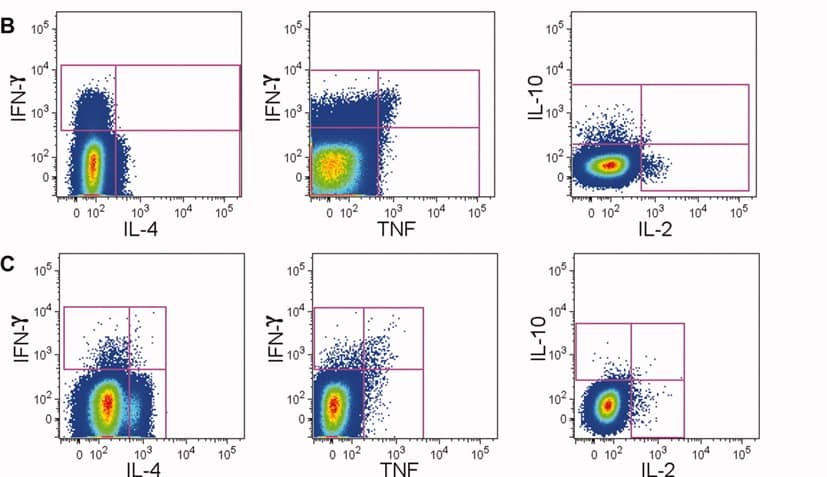
2). Cytokine secretion profiles of CD4+ T-cell from melanoma patients.
4.1 Integrated Th1/Th2 functional assessment in a single tube
OMIP-008 expands upon OMIP-001 by incorporating IL-4 and IL-10, enabling concurrent detection of Th1-type cytokines (IL-2, IFN-γ, TNF-α) and Th2-type cytokines (IL-4, IL-10) within one tube. This allows precise identification of T-cell subsets exhibiting mixed cytokine profiles, such as tumour-associated regulatory T cells or IL-10+ CD8+ T cells. This design transcends the limitations of single-axis functional assays and provides a refined tool for examining the dual roles of T cells in tumour immunity.
4.2 Innovative blocking strategy for accurate definition of negative thresholds
To establish cytokine-positive gates, OMIP-008 employs a blocking-based approach. This involves either neutralising fluorochrome-conjugated antibodies with recombinant cytokines or pre-blocking the target epitopes using purified antibodies of the same clone.These steps reduce cytokine signals to background levels, providing clear and reliable thresholds for each cytokine. This strategy requires only fully stained and blocked samples, minimising cell consumption while improving assay specificity and reproducibility—particularly important for limited clinical samples.
4.3 Optimised clone/fluorochrome pairing ensures stable CD4 detection in activated cells
PMA/ionomycin stimulation typically downregulates CD4, affecting subset discrimination. OMIP-008 addresses this by systematically screening antibody clones and fluorochrome combinations, ultimately selecting RPA-T4–APC-Cy7, which maintains robust CD4 resolution even in highly activated cells. This ensures consistent T-cell subset identification without compromising functional channel allocation.
4.4 Boolean matrix for quantifying multifunctional T-cell responses
The panel enables integrated analysis of IL-2, IL-4, IL-10, IFN-γ and TNF-α using Boolean gating to generate a 25-combination positive/negative matrix. This approach identifies single-, dual- and multi-cytokine-expressing populations, providing a measure of functional ‘breadth’. Median fluorescence intensity (MFI) of each positive subset further reflects the ‘magnitude’ of cytokine expression. Together, these metrics establish a multidimensional framework for quantifying T-cell responses and characterising multifunctionality in tumour-reactive T cells.
OMIP-008 integrates high-content cytokine profiling, an innovative threshold-defining strategy, and multidimensional analytical methods to deliver a systematic characterisation of tumour-reactive T-cell function. By balancing Th1/Th2 coverage, sample efficiency, and operational practicality, this panel is suited to both clinical immunomonitoring and fundamental tumour-immunology research. It provides a reliable framework for profiling T-cell polyfunctionality and evaluating responses to immunotherapy.
abinScience provides validated Flow Cytometry Antibodies covering key targets in this panel, supporting your cytokines research
[1] Zuleger CL, Albertini MR. OMIP-008: measurement of Th1 and Th2 cytokine polyfunctionality of human T cells. Cytometry A. 2012;81(6):450-452.

As a strategic venture of AtaGenix (established 2011), abinScience was founded in 2023 to deliver premium life science reagents that accelerate discovery. Our flow cytometry antibody products cover commonly used detection markers, with a wide variety to meet the research needs of multiple species (Human/Mouse/Rat/Dog/Hamster/Monkey, etc.). We provide stable and reliable support for scientific research.
+86-027-65523339
중국 우한시 심둔사로 666번지 C동, 우한, 430206


 中文
中文 English
 한국어
한국어 日本語
日本語 Español
 Français
 Русский