
 中文
 English
 한국어
 日本語
 Español
 Français
 Русский

| 카탈로그 번호 | MB997014 | ||||||
|---|---|---|---|---|---|---|---|
| 설명 |
Anti-Mouse IL-10 Polyclonal Antibody (MB997014) is a rabbit polyclonal antibody detecting IL-10 in ELISA, IHC, WB. Suitable for Mouse.
Highlights
|
||||||
| 종 반응성 | Mouse | ||||||
| 응용 분야 | ELISA, IHC, WB | ||||||
| 숙주 종 | Rabbit | ||||||
| 클론성 | Polyclonal | ||||||
| 이소타입 | IgG | ||||||
| 면역원 | E. coli - derived recombinant Mouse IL10 (Ser19-Ser178). | ||||||
| 타겟 | CSIF, Cytokine synthesis inhibitory factor, IL-10, IL10, Interleukin-10 | ||||||
| 내독소 수준 | Please contact with the lab for this information. | ||||||
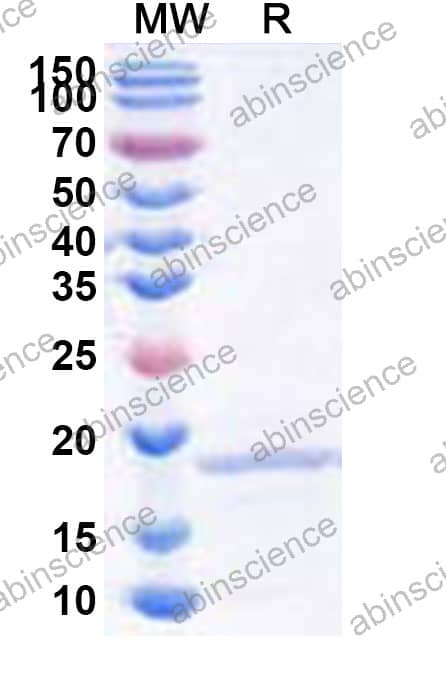
| 순도 | >90% as determined by SDS-PAGE. | ||||||
| 정제 | Purified by antigen affinity column. | ||||||
| 등록번호 | P18893 | ||||||
| 형태 | Liquid | ||||||
| 저장 완충액 | 0.01M PBS, pH 7.4, 50% glycerol, 0.05% Proclin 300. 데이터시트 인쇄본 또는 로트별 COA에 기재된 구체적인 완충액 정보를 참조하세요. |
||||||
| 배송 | In general, proteins are provided as lyophilized powder/frozen liquid. They are shipped out with dry ice/blue ice unless customers require otherwise. | ||||||
| 제품 사용 정보 |
| ||||||
| 안정성 및 저장 | Use a manual defrost freezer and avoid repeated freeze thaw cycles. Store at 2 to 8°C for frequent use. Store at -20 to -80°C for twelve months from the date of receipt. | ||||||
| 배경 | Interleukin-10 (IL10) is a ~20 kDa protein. Major immune regulatory cytokine that acts on many cells of the immune system where it has profound anti-inflammatory functions, limiting excessive tissue disruption caused by inflammation. Mechanistically, IL10 binds to its heterotetrameric receptor comprising IL10RA and IL10RB leading to JAK1 and STAT2-mediated phosphorylation of STAT3. In turn, STAT3 translocates to the nucleus where it drives expression of anti-inflammatory mediators. Targets antigen-presenting cells (APCs) such as macrophages and monocytes and inhibits their release of pro-inflammatory cytokines including granulocyte-macrophage colony-stimulating factor /GM-CSF, granulocyte colony-stimulating factor/G-CSF, IL-1 alpha, IL-1 beta, IL-6, IL-8 and TNF. Also interferes with antigen presentation by reducing the expression of MHC-class II and co-stimulatory molecules, thereby inhibiting their ability to induce T cell activation. 1. Yoon, SI. et al. (2006) The Journal of biological chemistry 281, 35088-96. PMID: 16982608 2. El Kasmi, KC. et al. (2007) Journal of immunology (Baltimore, Md. : 1950) 179, 7215-9. PMID: 18025162 3. Hashimoto, SI. et al. (2001) Journal of immunology (Baltimore, Md. : 1950) 167, 3619-25. PMID: 11564774 4. de Waal Malefyt, R. et al. (1991) The Journal of experimental medicine 174, 1209-20. PMID: 1940799 5. Willems, F. et al. (1994) European journal of immunology 24, 1007-9. PMID: 7512027 6. Frei, K. et al. (1994) Journal of immunology (Baltimore, Md. : 1950) 152, 2720-8. PMID: 8144879 | ||||||
| 참고사항 | For research use only. |
문의하기
+86-027-65523339
중국 우한시 심둔사로 666번지 C동, 우한, 430206


