The WNT signaling pathway is a highly conserved network that regulates embryonic development, tissue homeostasis, and stem cell self-renewal. In the canonical (WNT/β-catenin) branch, WNT ligands bind Frizzled receptors and LRP5/6 co-receptors, leading to Dishevelled-mediated inhibition of the β-catenin destruction complex (APC/Axin/GSK-3β/CK1). Stabilized β-catenin accumulates and translocates to the nucleus, where it partners with TCF/LEF transcription factors to activate target genes including MYC, CCND1, and AXIN2. Non-canonical branches — WNT/PCP (planar cell polarity) and WNT/Ca2+ — regulate cytoskeletal dynamics and cell migration independently of β-catenin. Hyperactivation of WNT signaling through APC loss-of-function or β-catenin gain-of-function mutations is a primary driver of colorectal cancer, and WNT pathway dysregulation is also implicated in hepatocellular carcinoma, breast cancer, and skeletal disorders.
Research Use Only (RUO)Not intended for diagnostic or therapeutic procedures.
abinScience provides recombinant proteins and antibodies for key WNT signaling targets — ligands, receptors, destruction complex components, and pathway modulators. Available in His-tag, Fc-tag, and biotin-conjugated formats. All products are manufactured by our parent company AtaGenix Laboratories under ISO quality systems. Browse products below or contact us for custom development.
WNT3A — The most widely used canonical WNT ligand for in vitro pathway activation. Recombinant WNT3A drives β-catenin stabilization, TCF/LEF reporter assays (TOPFlash), and intestinal organoid culture. WNT3A-conditioned medium is a standard component of stem cell and organoid growth protocols.
→ Browse WNT3A antibodies & proteins
WNT5A — A prototypical non-canonical WNT ligand that activates the PCP and Ca2+ pathways. WNT5A promotes cell migration and invasion and can act as either an oncogene or tumor suppressor depending on receptor context. Elevated WNT5A expression is associated with aggressive melanoma and gastric cancer.
→ Browse WNT5A antibodies & proteins
WNT1 — The founding member of the WNT family, originally identified as the Int-1 proto-oncogene in mouse mammary tumors. WNT1 is a potent activator of canonical signaling and is used in studies of neural crest development and mammary tumorigenesis.
→ Browse WNT1 antibodies & proteins
Frizzled (FZD) — A family of seven-transmembrane receptors (FZD1–10) that bind WNT ligands via their cysteine-rich domain (CRD). FZD receptors determine branch specificity — canonical versus non-canonical — depending on co-receptor availability and ligand identity. Recombinant FZD-CRD-Fc fusion proteins are used in WNT ligand-binding and competition assays.
→ Browse Frizzled antibodies & proteins
LRP6 — A single-pass transmembrane co-receptor essential for canonical WNT/β-catenin signaling. WNT-induced phosphorylation of the LRP6 intracellular domain recruits Axin to the membrane and disrupts the destruction complex. LRP6 phosphorylation (Ser1490, Thr1572) is a widely used proximal readout of canonical pathway activation.
→ Browse LRP6 antibodies & proteins
ROR2 — A receptor tyrosine kinase that functions as an alternative WNT receptor for non-canonical signaling, particularly in the WNT5A/PCP axis. ROR2 regulates convergent extension, limb development, and tumor cell invasion. Loss-of-function mutations in ROR2 cause brachydactyly type B and Robinow syndrome.
→ Browse ROR2 antibodies & proteins
β-Catenin (CTNNB1) — The central effector of canonical WNT signaling. In the absence of WNT, β-catenin is constitutively phosphorylated by the APC/Axin/GSK-3β/CK1 destruction complex and targeted for proteasomal degradation. WNT stimulation stabilizes β-catenin, enabling nuclear accumulation and TCF/LEF-dependent transcription. Gain-of-function mutations in CTNNB1 exon 3 are found in hepatoblastoma, desmoid tumors, and a subset of hepatocellular carcinomas.
→ Browse β-Catenin antibodies & proteins
GSK-3β — A serine/threonine kinase that phosphorylates β-catenin within the destruction complex, priming it for ubiquitination and degradation. GSK-3β also participates in glycogen metabolism, insulin signaling, and neurodegeneration. Small-molecule GSK-3β inhibitors (e.g., CHIR99021, LiCl) are standard tools for activating canonical WNT signaling in stem cell maintenance and reprogramming protocols.
→ Browse GSK-3β antibodies & proteins
DKK1 (Dickkopf-1) — A secreted antagonist that blocks canonical WNT signaling by binding LRP5/6 and promoting its internalization via the Kremen co-receptor. DKK1 is a negative regulator of bone formation and is elevated in multiple myeloma-associated osteolytic lesions. Recombinant DKK1 is used as a pathway inhibitor control in WNT reporter assays and osteogenesis studies.
→ Browse DKK1 antibodies & proteins
R-spondin (RSPO) — A family of secreted WNT agonists (RSPO1–4) that potentiate canonical signaling by neutralizing the transmembrane E3 ligases RNF43/ZNRF3, which otherwise promote Frizzled receptor turnover. R-spondins are essential growth factors in intestinal organoid culture systems. RSPO fusions and RNF43 loss-of-function mutations are emerging oncogenic drivers in colorectal and other cancers.
→ Browse R-spondin antibodies & proteins
1. Nusse R, Clevers H. Wnt/β-catenin signaling, disease, and emerging therapeutic modalities. Cell. 2017;169(6):985-999. DOI
2. Clevers H, Nusse R. Wnt/β-catenin signaling and disease. Cell. 2012;149(6):1192-1205. DOI
3. de Lau W, et al. The R-spondin/Lgr5/Rnf43 module: regulator of Wnt signal strength. Genes Dev. 2014;28(4):305-316. DOI
4. Kinzler KW, Vogelstein B. Lessons from hereditary colorectal cancer. Cell. 1996;87(2):159-170. DOI


Human
ELISA
Human
Monoclonal
VHH-hFc
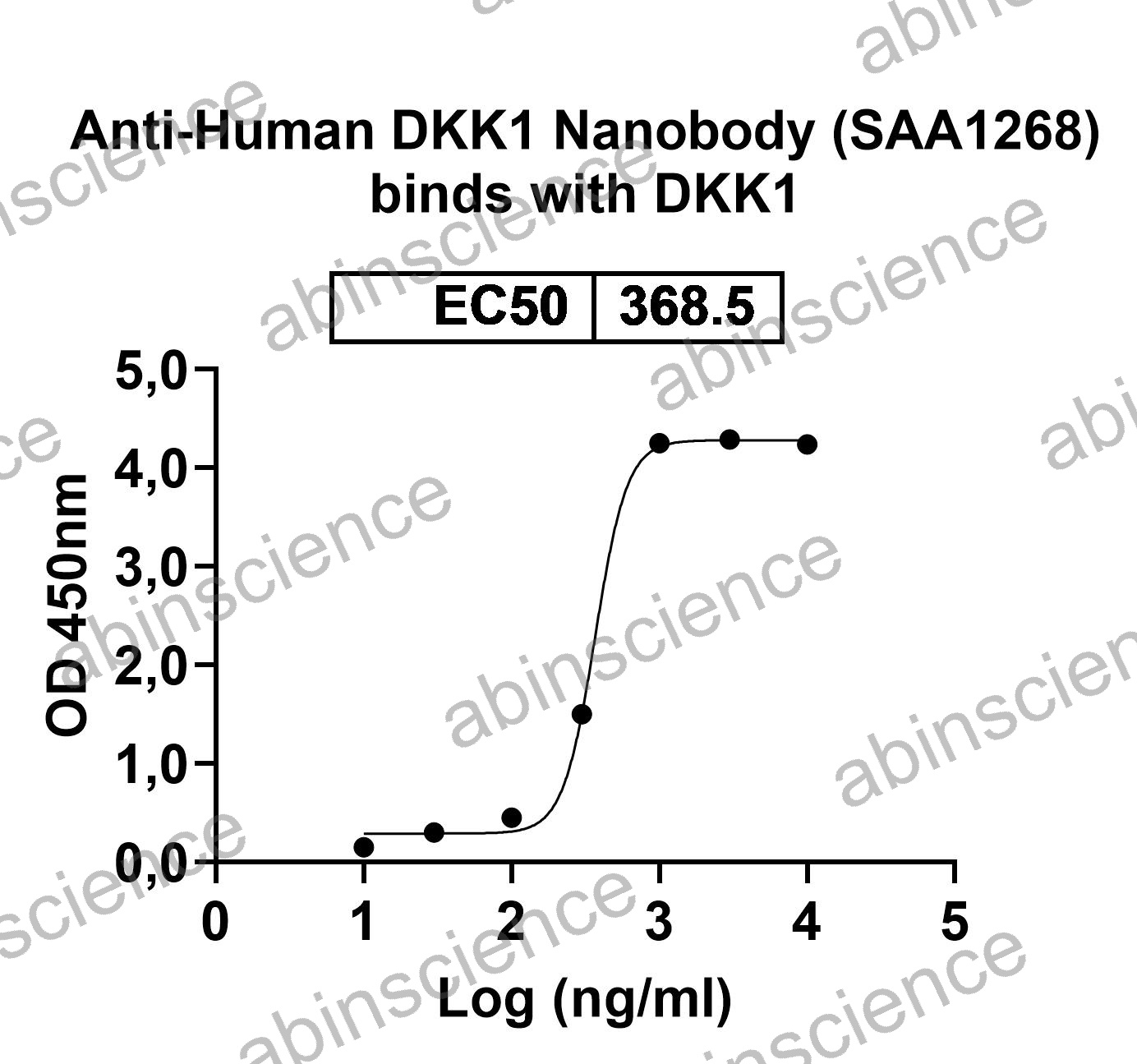
SAA1268

Human
FCM
Human
Monoclonal
IgG2, lambda
SAA0167


Human
ELISA, Bioactivity: FACS, Functional assay, Research in vivo
Human
Monoclonal
IgG2-lambda


Human
ELISA, Neutralization
Mouse
Monoclonal
IgG1, kappa
SAA2072

Human
FCM
Mouse
Monoclonal
IgG1, kappa
5017#
PE


Human
FCM
Mouse
Monoclonal
IgG1, kappa
5017#


Mammalian cells
O94907
Met1-His266
ELISA, Immunogen, SDS-PAGE, WB, Bioactivity testing in progress
Homo sapiens (Human)

Mammalian cells
O75084
Met1-Leu185
ELISA, Immunogen, SDS-PAGE, WB, Bioactivity testing in progress
Homo sapiens (Human)


Mammalian cells
Q9ULV1
Met1-Glu180
ELISA, Immunogen, SDS-PAGE, WB, Bioactivity testing in progress
Homo sapiens (Human)

E. coli
P49841
Met1-Thr420
ELISA, Immunogen, SDS-PAGE, WB, Bioactivity testing in progress
Homo sapiens (Human)
+86-027-65523339
중국 우한시 심둔사로 666번지 C동, 우한, 430206


 中文
中文 English
 한국어
한국어 日本語
日本語 Español
 Français
 Русский