
 中文
 English
 한국어
 日本語
 Español
 Français
 Русский


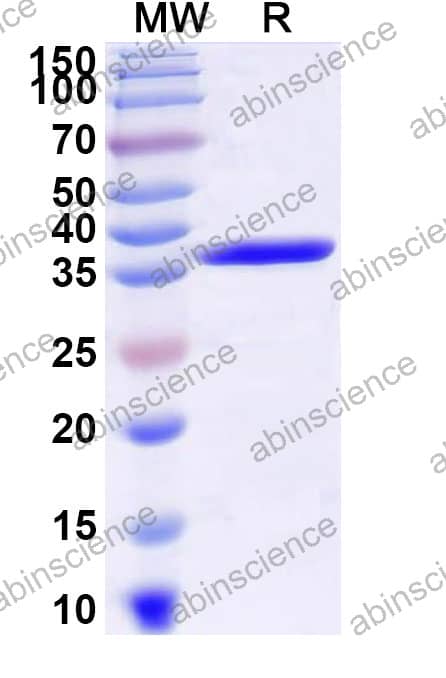

| 카탈로그 번호 | HC510014 | ||||||||
|---|---|---|---|---|---|---|---|---|---|
| 설명 |
Anti-EP300 Polyclonal Antibody (HC510014) is a rabbit polyclonal antibody detecting EP300 in ELISA, IHC, WB. Suitable for Mouse and Human.
Highlights
|
||||||||
| 종 반응성 | Human, Mouse | ||||||||
| 응용 분야 | ELISA, IHC, WB | ||||||||
| 숙주 종 | Rabbit | ||||||||
| 클론성 | Polyclonal | ||||||||
| 이소타입 | IgG | ||||||||
| 면역원 | E. coli - derived recombinant Human EP300 (His2283-His2414). | ||||||||
| 타겟 | Histone crotonyltransferase p300, Protein lactyltransferas p300, Protein propionyltransferase p300, Histone acetyltransferase p300, Protein 2-hydroxyisobutyryltransferase p300, EP300, p300 HAT, Histone butyryltransferase p300, P300, E1A-associated protein p300 | ||||||||
| 정제 | Purified by antigen affinity column. | ||||||||
| 등록번호 | Q09472 | ||||||||
| 형태 | Liquid | ||||||||
| 저장 완충액 | 0.01M PBS, pH 7.4, 50% Glycerol, 0.05% Proclin 300. 데이터시트 인쇄본 또는 로트별 COA에 기재된 구체적인 완충액 정보를 참조하세요. |
||||||||
| 제품 사용 정보 |
| ||||||||
| 안정성 및 저장 | Use a manual defrost freezer and avoid repeated freeze thaw cycles. Store at 2 to 8°C for frequent use. Store at -20 to -80°C for twelve months from the date of receipt. | ||||||||
| 배경 | Histone acetyltransferase p300 (EP300) is a ~264 kDa protein. Functions as a histone acetyltransferase and regulates transcription via chromatin remodeling. Acetylates all four core histones in nucleosomes. Histone acetylation gives an epigenetic tag for transcriptional activation. Mediates acetylation of histone H3 at 'Lys-122' (H3K122ac), a modification that localizes at the surface of the histone octamer and stimulates transcription, possibly by promoting nucleosome instability. Mediates acetylation of histone H3 at 'Lys-18' and 'Lys-27' (H3K18ac and H3K27ac, respectively). 1. Tropberger, P. et al. (2013) Cell 152, 859-72. PMID: 23415232 2. Delvecchio, M. et al. (2013) Nature structural & molecular biology 20, 1040-6. PMID: 23934153 3. Tian, Y. et al. (2025) Nature 641, 779-787. PMID: 40240600 4. Ogryzko, VV. et al. (1996) Cell 87, 953-9. PMID: 8945521 5. Jin, Q. et al. (2011) The EMBO journal 30, 249-62. PMID: 21131905 6. Hatzi, K. et al. (2013) Cell reports 4, 578-88. PMID: 23911289 8. Iioka, T. et al. (2003) Journal of bone and mineral research : the official journal of the American Society for Bone and Mineral Research 18, 1419-29. PMID: 12929931 9. Yuan, ZL. et al. (2005) Science (New York, N.Y.) 307, 269-73. PMID: 15653507 10. Ray, S. et al. (2005) Gastroenterology 129, 1616-32. PMID: 16285960 | ||||||||
| 참고사항 | For research use only. |
+86-027-65523339
중국 우한시 심둔사로 666번지 C동, 우한, 430206


