
 中文
 English
 한국어
 日本語
 Español
 Français
 Русский
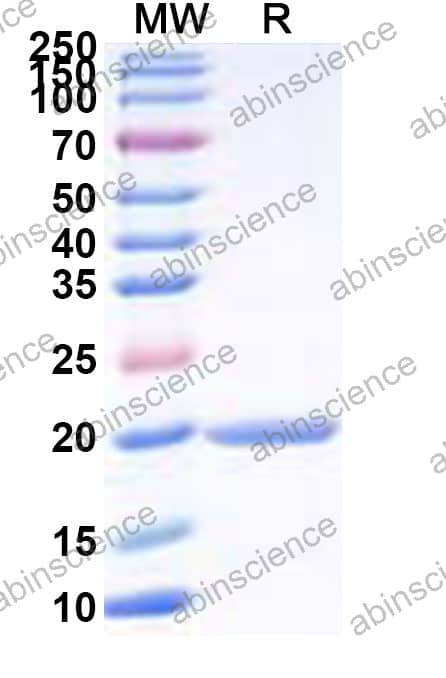

| 카탈로그 번호 | HX918014 | ||||||||
|---|---|---|---|---|---|---|---|---|---|
| 설명 |
Anti-Human RAN Polyclonal Antibody (HX918014) is a rabbit polyclonal antibody detecting RAN in ELISA, IHC, WB. Suitable for Human.
Highlights
|
||||||||
| 종 반응성 | Human, Mouse, Rat | ||||||||
| 응용 분야 | ELISA, IHC, WB | ||||||||
| 숙주 종 | Rabbit | ||||||||
| 클론성 | Polyclonal | ||||||||
| 이소타입 | IgG | ||||||||
| 면역원 | E. coli - derived recombinant Human RAN (Met1-Asp171). | ||||||||
| 타겟 | GTP-binding nuclear protein Ran, 3.6.5.-, Androgen receptor-associated protein 24, GTPase Ran, Ras-like protein TC4, Ras-related nuclear protein, RAN, ARA24, OK/SW-cl.81 | ||||||||
| 정제 | Purified by antigen affinity column. | ||||||||
| 등록번호 | P62826 | ||||||||
| 형태 | Liquid | ||||||||
| 저장 완충액 | 0.01M PBS, pH 7.4, 50% Glycerol, 0.05% Proclin 300. 데이터시트 인쇄본 또는 로트별 COA에 기재된 구체적인 완충액 정보를 참조하세요. |
||||||||
| 제품 사용 정보 |
| ||||||||
| 안정성 및 저장 | Use a manual defrost freezer and avoid repeated freeze thaw cycles. Store at 2 to 8°C for frequent use. Store at -20 to -80°C for twelve months from the date of receipt. | ||||||||
| 배경 | GTP-binding nuclear protein Ran is a ~24 kDa protein. GTPase involved in nucleocytoplasmic transport, participating both to the import and the export from the nucleus of proteins and RNAs. Switches between a cytoplasmic GDP- and a nuclear GTP-bound state by nucleotide exchange and GTP hydrolysis. Nuclear import receptors such as importin beta bind their substrates only in the absence of GTP-bound RAN and release them upon direct interaction with GTP-bound RAN, while export receptors behave in the opposite way. Thereby, RAN controls cargo loading and release by transport receptors in the proper compartment and ensures the directionality of the transport. Interaction with RANBP1 induces a conformation change in the complex formed by XPO1 and RAN that triggers the release of the nuclear export signal of cargo proteins. 1. Hsiao, PW. et al. (1999) The Journal of biological chemistry 274, 20229-34. PMID: 10400640 2. Yamashita, D. et al. (2007) The Journal of biological chemistry 282, 7563-75. PMID: 17209048 3. Rudack, T. et al. (2015) The Journal of biological chemistry 290, 24079-90. PMID: 26272610 4. Aksu, M. et al. (2016) Nature communications 7, 11952. PMID: 27306458 5. Melchior, F. et al. (1993) The Journal of cell biology 123, 1649-59. PMID: 8276887 6. Palacios, I. et al. (1996) The Journal of cell biology 133, 485-94. PMID: 8636225 7. Moroianu, J. et al. (1996) Proceedings of the National Academy of Sciences of the United States of America 93, 7059-62. PMID: 8692944 8. Görlich, D. et al. (1996) The EMBO journal 15, 5584-94. PMID: 8896452 9. Izaurralde, E. et al. (1997) The EMBO journal 16, 6535-47. PMID: 9351834 10. Bischoff, FR. et al. (1997) FEBS letters 419, 249-54. PMID: 9428644 | ||||||||
| 참고사항 | For research use only. |
문의하기
+86-027-65523339
중국 우한시 심둔사로 666번지 C동, 우한, 430206


