
 中文
中文 English
 한국어
한국어 日本語
日本語 Español
 Français
 Русский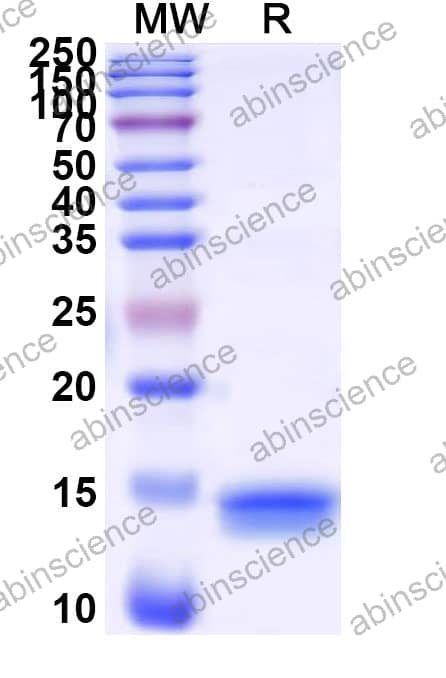

| 카탈로그 번호 | MA498014 | ||||||||
|---|---|---|---|---|---|---|---|---|---|
| 설명 |
Anti-Mouse PTN/Pleiotrophin Polyclonal Antibody (MA498014) is a rabbit polyclonal antibody detecting PTN/Pleiotrophin in ELISA, IHC, WB. Suitable for Mus musculus, Human, Xenopus laevis, Sus scrofa, and Gallus gallus.
Highlights
|
||||||||
| 종 반응성 | Human, Mouse, Rat | ||||||||
| 응용 분야 | ELISA, IHC, WB | ||||||||
| 숙주 종 | Rabbit | ||||||||
| 클론성 | Polyclonal | ||||||||
| 이소타입 | IgG | ||||||||
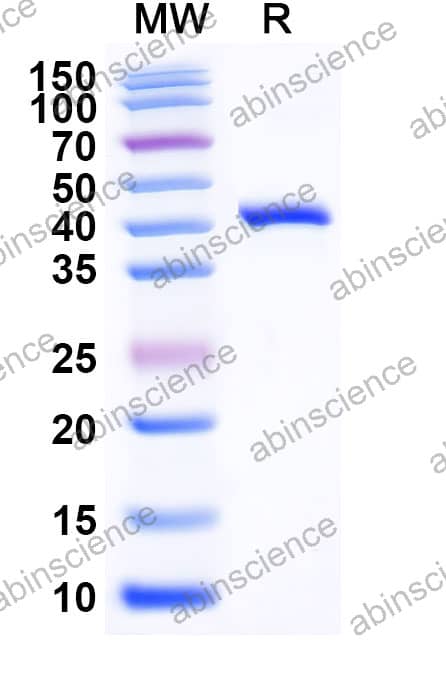
| 면역원 | E. coli - derived recombinant Mouse PTN/Pleiotrophin (Gly60-Gly142). | ||||||||
| 타겟 | PTN/Pleiotrophin | ||||||||
| 정제 | Purified by antigen affinity column. | ||||||||
| 등록번호 | P63089 | ||||||||
| 형태 | Liquid | ||||||||
| 저장 완충액 | 0.01M PBS, pH 7.4, 50% Glycerol, 0.05% Proclin 300. 데이터시트 인쇄본 또는 로트별 COA에 기재된 구체적인 완충액 정보를 참조하세요. |
||||||||
| 제품 사용 정보 |
| ||||||||
| 안정성 및 저장 | Use a manual defrost freezer and avoid repeated freeze thaw cycles. Store at 2 to 8°C for frequent use. Store at -20 to -80°C for twelve months from the date of receipt. | ||||||||
| 대체 이름 | Pleiotrophin, PTN, Heparin-binding brain mitogen, HBBM, Heparin-binding growth factor 8, HBGF-8, Heparin-binding growth-associated molecule, HB-GAM, Heparin-binding neutrophic factor, HBNF, Osteoblast-specific factor 1, OSF-1, Ptn | ||||||||
| 배경 | Pleiotrophin (PTN) is a ~18 kDa protein. Secreted growth factor that mediates its signal through cell-surface proteoglycan and non-proteoglycan receptors. Binds cell-surface proteoglycan receptor via their chondroitin sulfate (CS) groups. Thereby regulates many processes like cell proliferation, cell survival, cell growth, cell differentiation and cell migration in several tissues namely neuron and bone. Also plays a role in synaptic plasticity and learning-related behavior by inhibiting long-term synaptic potentiation. Binds PTPRZ1, leading to neutralization of the negative charges of the CS chains of PTPRZ1, inducing PTPRZ1 clustering, thereby causing the dimerization and inactivation of its phosphatase activity leading to increased tyrosine phosphorylation of each of the PTPRZ1 substrates like ALK or AFAP1L2 in order to activate the PI3K-AKT pathway. 1. Hienola, A. et al. (2004) Molecular and cellular neurosciences 26, 75-88. PMID: 15121180 2. Imai, S. et al. (2009) Bone 44, 785-94. PMID: 19442624 3. Kuboyama, K. et al. (2016) The Journal of biological chemistry 291, 18117-28. PMID: 27445335 4. Tang, C. et al. (2019) Neuron 101, 32-44.e6. PMID: 30497772 5. Amet, LE. et al. (2001) Molecular and cellular neurosciences 17, 1014-24. PMID: 11414790 6. Krellman, JW. et al. (2014) PloS one 9, e100597. PMID: 25000129 | ||||||||
| 참고사항 | For research use only. |
+86-027-65523339
중국 우한시 심둔사로 666번지 C동, 우한, 430206


