Snakebite envenoming is a formally designated Neglected Tropical Disease (NTD) by the World Health Organization (WHO), representing a persistent and critical public health challenge in tropical and subtropical regions globally. Statistics show that approximately 5.4 million snakebites occur annually worldwide, resulting in 1.8 to 2.7 million clinical cases of envenomation and over 100,000 combined cases of death and permanent disability.
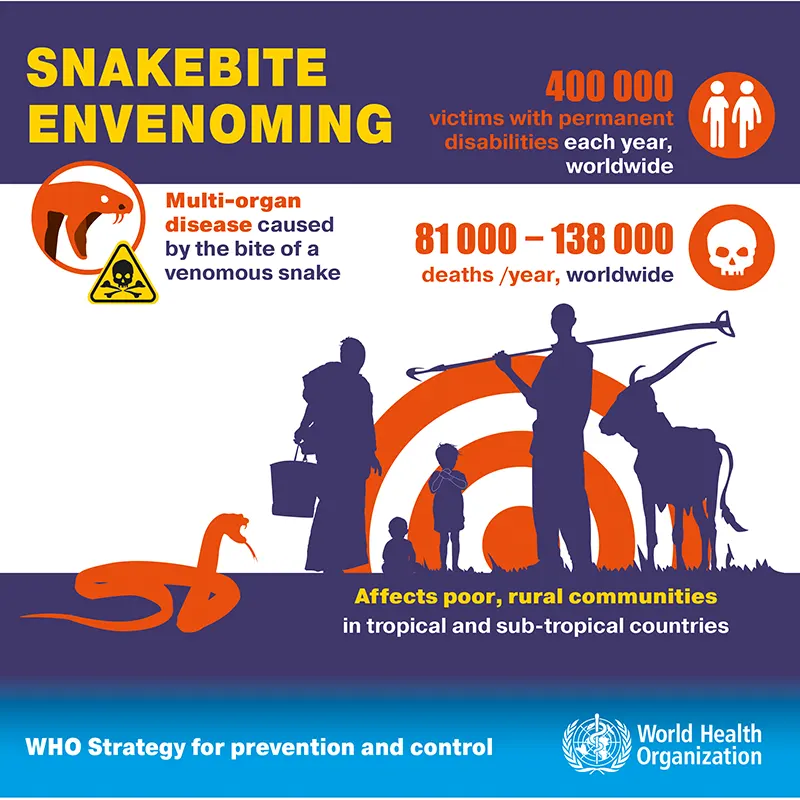
Figure 1. Snake-bites: appraisal of the global situation. Source: WHO website
Conventionally, the risk of snakebite envenoming was believed to be limited to rural and wild areas where wild snakes are naturally distributed. However, as extreme weather events grow more frequent worldwide, natural disasters such as floods and landslides severely disrupt snakes’ natural habitats and drive snakes to migrate into human settlements — a phenomenon now recognized as a key trigger for sharp, localized surges in snakebite cases.
In the summer of 2026, continuous heavy rainfall triggered severe flooding in parts of Guangxi, China. Localized low-lying areas saw commercial snake farms inundated, releasing captive-bred snakes—including highly venomous species like cobras—into surrounding villages and agricultural fields. As reports of accidental snakebites among local villagers emerged, the challenges of snakebite prevention and clinical management in the affected areas have grown significantly. This incident has once again drawn public and scientific attention to the hazards of snake venom, as well as the toxicological and immunological research underpinning snakebite treatment.
Why can a seemingly localized snakebite rapidly escalate into a life-threatening, severe systemic condition? What pathological cascades are triggered once snake venom enters the human body? And how does antivenom — widely recognized as the first-line life-saving treatment for snakebite envenoming — neutralize these toxins and reverse tissue damage?
Snake venom is not a single, uniform substance; rather, it is a complex biological cocktail comprising dozens of active proteins and peptides. In-depth studies into its components and mechanisms of action do not just drive clinical advancements in envenomation management; they also continue to yield pivotal discoveries across immunology, proteomics, and novel drug discovery.
Snake venom is a predation and defense tool shaped by millions of years of evolutionary pressure. In essence, it is a mixture of secretory proteins stored in the venom glands. While venom composition varies dramatically across different species, the core toxic components can be categorized into four major protein superfamilies:
SVMPs are the primary toxic components in most Viperidae and Crotalinae (pit viper) venoms, belonging to the zinc-dependent proteolytic enzyme family. They specifically degrade structural proteins within the extracellular matrix (ECM) of vascular endothelial cells—such as collagen, laminin, and fibronectin—directly compromising vascular wall integrity. This leads to plasma extravasation, localized edema, and extensive hemorrhage. Concurrently, SVMPs damage surrounding tissue cells, exacerbating localized necrosis and inflammatory cascades, which is a major driver of localized tissue ulceration and necrosis in snakebite patients.
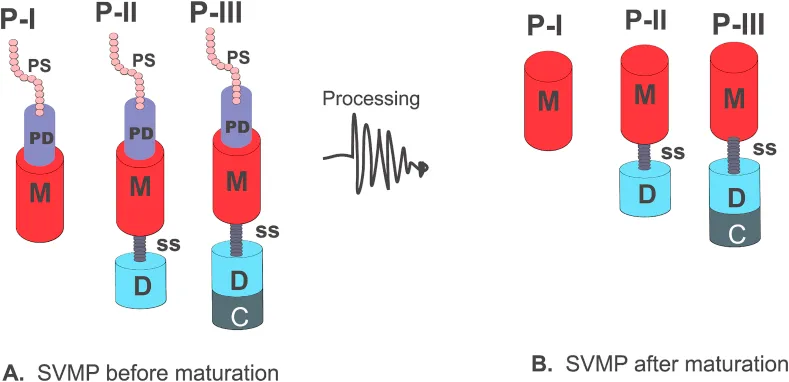
Figure 2. Schematic representation of typical SVMP structures: (A) Immature SVMP, (B) Processed SVMP (lacking PS and PD domains). Source: 10.1016/j.toxcx.2020.100052
Ubiquitous across almost all snake venoms, PLA2s catalyze the hydrolysis of glycerophospholipids. By breaking down the phospholipid bilayer of cell membranes, they disrupt cellular integrity while inducing mast cell degranulation. This releases histamines and pro-inflammatory cytokines to trigger acute local and systemic inflammatory responses. Throughout evolutionary history, PLA2 isoforms from different snake species have diverged to exhibit distinct neurotoxic, myotoxic, or anticoagulant activities, providing the biochemical basis for the highly diverse clinical manifestations of snakebites.
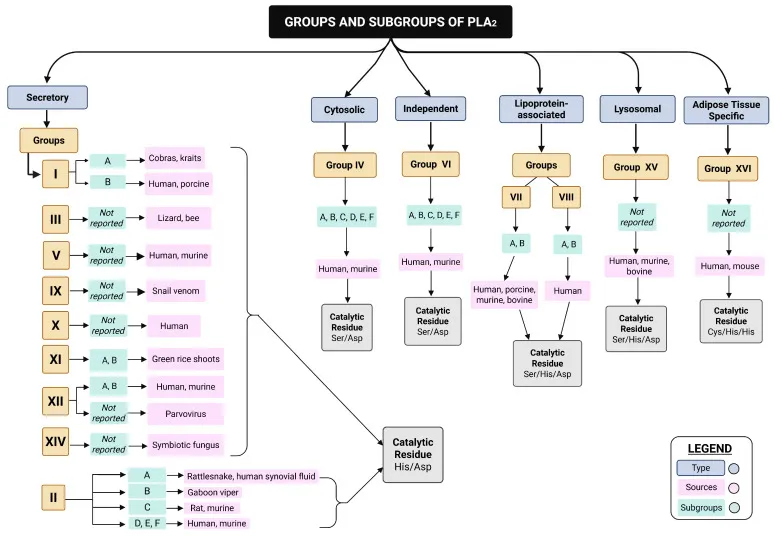
Figure 3. Groups and subgroups of Phospholipase A2 (PLA2). Source: 10.3390/biom15111583
3FTxs are the hallmark toxins of Elapidae venoms, named after their tertiary structure which features three prominent β-stranded "finger-like" loops. These toxins bind with exceptional affinity to nicotinic acetylcholine receptors (nAChRs) at the neuromuscular junction, blocking signal transmission to skeletal muscles and culminating in flaccid paralysis. In severe cases, this leads to respiratory muscle paralysis and asphyxiation, making 3FTxs the primary lethal factor in neurotoxic envenomation.
This group includes thrombin-like enzymes (TLEs), clotting factor activators, and platelet modulators, among others. These toxins directly target key nodes in the human coagulation cascade, disrupting hemostasis. Some hyperactivate coagulation factors to trigger disseminated intravascular coagulation (DIC)-like consumptive coagulopathy; others directly inhibit coagulation, ultimately causing spontaneous systemic hemorrhage or thromboembolic occlusion of vital organs.
Through long-term evolutionary divergence, different snake species have developed highly distinct venom profiles. Not only do the types of toxins vary, but the relative abundance and isoform structures of these proteins differ significantly, targeting distinct physiological systems and resulting in unique envenomation profiles:
| Venom Classification | Primary Physiological Target | Key Clinical Manifestations | Representative Species |
|---|---|---|---|
| Neurotoxic Venom | Nervous system, neuromuscular junction | Flaccid muscle paralysis, respiratory depression, neurological deficits | Cobras, Banded Kraits, Many-banded Kraits |
| Hemotoxic Venom | Vascular endothelium, coagulation cascade | Systemic hemorrhage, coagulation dysfunction, and hemorrhagic shock | Vipers, Sharp-nosed Pit Vipers |
| Cytotoxic Venom | Tissue cells, extracellular matrix (ECM) | Severe local swelling, tissue necrosis, ulceration, localized organ damage | Green Pit Vipers, King Cobras |
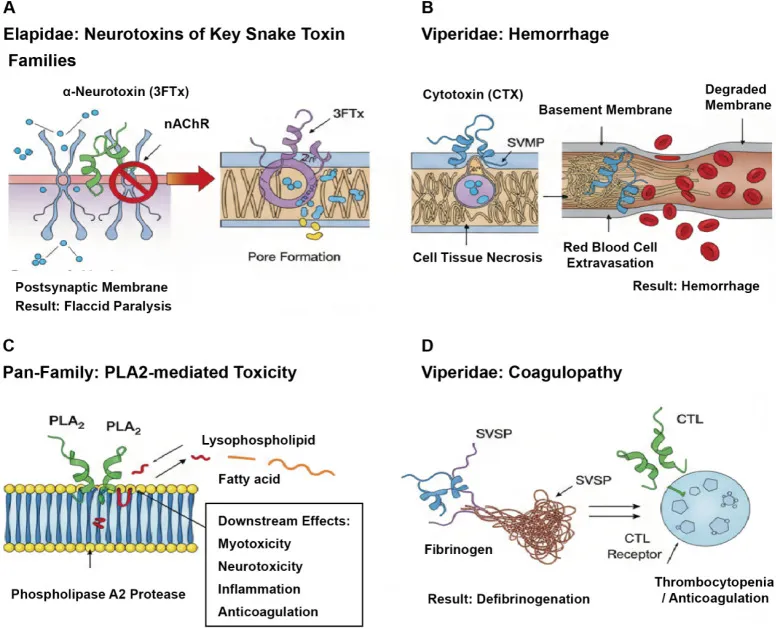
Figure 4. Mechanisms of action of major snake venom toxin families. (A) Cobra toxins, (B) Viper toxins, (C) Pan-toxin family, (D) Hemostatic toxins. Source: 10.1021/acsptsci.6c00130
Upon envenomation, the venom is injected into subcutaneous or muscular tissues via the snake's fangs. Small-molecule peptides and active proteins rapidly enter the lymphatic and blood circulation through interstitial spaces, dispersing via bodily fluids to various organs. During systemic distribution, each toxin class specifically recognizes and binds to its corresponding target molecule in the human body. Through enzymatic cleavage, competitive receptor antagonism, or aberrant signaling cascade activation, the toxins progressively disrupt cellular and organ homeostasis, leading to localized and systemic clinical symptoms. The pathological timeline can be summarized as:
Snakebite → Snake venom proteins invade tissue & circulatory system → Specific binding to human target molecules → Disruption of normal physiological functions → Onset of local injury & systemic envenomation symptoms
The sheer complexity of snake venom dictates the central objective of modern venom research: identifying which specific components drive toxicity, determining their precise molecular targets in the human body, and designing highly specific antibody molecules to block these interactions.
Through decades of research, scientists have successfully mapped the key functional epitopes and neutralization mechanisms of various core toxins using highly specific antibody tools. For example, by utilizing monoclonal antibodies (mAbs) targeting specific epitopes (such as 95Mat5, SNX-B03, LNX-D09, and C08), researchers can precisely target and block:The catalytic domain of SVMPs; The receptor-binding region of 3FTxs; The enzymatic active site of PLA2, and The functional site of TLEs.
The characterization of these mechanisms has shifted antibody screening and therapeutic design away from traditional, crude "whole-venom immunization" and toward targeted, rational design. Centered around these key molecular targets, modern fundamental venom research focuses on the following directions:
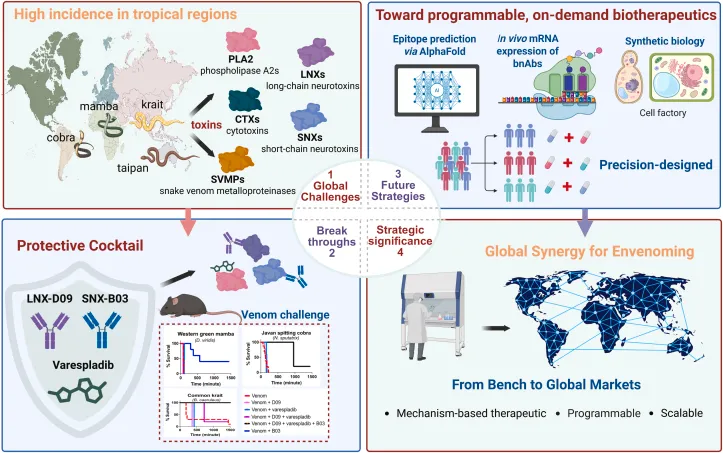
Figure 5. Development strategies for broad-spectrum antivenoms. Source: 10.1016/j.apsb.2025.05.019
Antivenoms remain the only clinically recognized definitive therapy for snakebite envenomation, and their primary active ingredients are specific antibodies directed against various venom components. In biological research and therapeutic discovery, antibodies neutralize and clear toxins through three synergistic mechanisms, with antibodies targeting key functional epitopes exhibiting the highest neutralization potency:
The antigen-binding fragment (Fab) of the antibody molecule precisely recognizes specific epitopes on the surface of venom proteins, forming stable immune complexes. For instance, the site-specific recombinant antibody 95Mat5 targets the catalytic center of SVMPs with high precision, while SNX-B03 specifically binds to 3FTxs. This high specificity ensures that antibodies neutralize toxic components without interfering with the function of endogenous human proteins.
Once bound, the antibody exerts steric hindrance, physically masking the active site or receptor-binding domain of the toxin to halt the pathological cascade at its source.
The formation of antibody-toxin immune complexes significantly accelerates the clearance of toxins from the circulatory system. Beyond antibodies targeting single toxins, broadly neutralizing antibodies (such as D09) that target conserved epitopes, alongside standardized immunological assay platforms built on recombinant antibodies like Al0G, provide foundational tools for broad-spectrum antivenom development and the creation of rapid diagnostic tests (e.g., double-antibody sandwich ELISA, colloidal gold lateral flow assays).
The snake escapes and subsequent snakebite incidents during the floods in Guangxi are not isolated, localized accidents. Instead, they represent a typical microcosm of how extreme weather amid global climate change disrupts species habitats and amplifies public health risks. This event has once again sounded the alarm for the public regarding snakebite prevention and control, while validating from an applied perspective the real-world value of studying snake venom mechanisms and advancing antibody development technologies. For the scientific community, every snakebite incident underscores a critical and evolving research topic: how to understand snake venom more accurately and block its effects more precisely.
From venom proteomic profiling and toxin functional characterization to "toxin-target" mechanisms of action and the screening and engineering optimization of neutralizing antibodies, modern snake venom research is transitioning from empirical accumulation toward mechanistic elucidation and precision intervention. Driven by advancements in proteomics, structural biology, and antibody engineering, an increasing number of key toxins are being identified. In parallel, highly potent neutralizing antibodies continue to be developed, laying a critical foundation for next-generation antivenom therapeutics, rapid diagnostics, and broad-spectrum antivenom strategies.
Importantly, snake venom research does not just improve the clinical capacity and outcomes of snakebite envenoming management; it also continuously drives advances in immunology, protein engineering, and biopharmaceutical R&D. Looking ahead, as more mechanisms of toxin action are elucidated and higher-performance antibody tools are developed, snake venom research will act as an increasingly vital bridge between basic scientific exploration and clinical translation.
abinScience provides multiple research-grade snake venom antibodies and recombinant proteins for snake venom mechanism research, antibody development and antivenom studies. Selected products are as follows:
| Catalog No. | Product Name |
|---|---|
| ZA538033 | Anti-Snake Venom Neutralizing Recombinant Antibody (95Mat5) |
| ZA538043 | Anti-Snake Venom Recombinant Antibody (C08) |
| ZA538053 | Anti-Snake Venom Recombinant Antibody (D09) |
| ZA538013 | Anti-Snake Venom Neutralizing Recombinant Antibody (LNX-D09) |
| ZA538023 | Anti-Snake Venom Neutralizing Recombinant Antibody (SNX-B03) |
| ZA049013 | Anti-South American/Mojave rattlesnake crotoxin Recombinant Antibody (Al0G) |
| ZA204014 | Anti-Snake SVMP/Alfimeprase Polyclonal Antibody |
| ZA204012 | Snake SVMP/Alfimeprase Recombinant Protein (C-His) |
+86-027-65523339
中国武漢市深敦寺路666号C棟、武漢、430206


 中文
中文 English
 한국어
한국어 日本語
日本語 Español
 Français
 Русский