
 中文
 English
 한국어
 日本語
 Español
 Français
 Русский
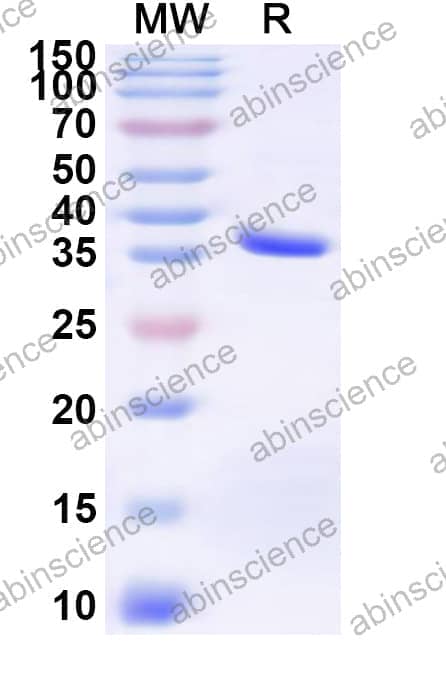

| 카탈로그 번호 | HC041014 | ||||||||
|---|---|---|---|---|---|---|---|---|---|
| 설명 |
Anti-Human BEST1 Polyclonal Antibody (HC041014) is a rabbit polyclonal antibody detecting Bestrophin-1; TU15B; Vitelliform macular dystrophy protein 2; BEST1; VMD2 in ELISA, IHC, WB. Suitable for Human.
Highlights
|
||||||||
| 종 반응성 | Human | ||||||||
| 응용 분야 | ELISA, IHC, WB | ||||||||
| 숙주 종 | Rabbit | ||||||||
| 클론성 | Polyclonal | ||||||||
| 이소타입 | IgG | ||||||||
| 면역원 | E. coli - derived recombinant human BEST1 (Arg47-Asp70&Arg200-Asp228&Thr250-Asp270). | ||||||||
| 타겟 | Bestrophin-1; TU15B; Vitelliform macular dystrophy protein 2; BEST1; VMD2 | ||||||||
| 내독소 수준 | Please contact with the lab for this information. | ||||||||
| 정제 | Purified by antigen affinity column. | ||||||||
| 등록번호 | O76090 | ||||||||
| 형태 | Liquid | ||||||||
| 저장 완충액 | 0.01M PBS, pH 7.4, 50% Glycerol, 0.05% Proclin 300. 데이터시트 인쇄본 또는 로트별 COA에 기재된 구체적인 완충액 정보를 참조하세요. |
||||||||
| 제품 사용 정보 |
| ||||||||
| 안정성 및 저장 | Use a manual defrost freezer and avoid repeated freeze thaw cycles. Store at 2 to 8°C for frequent use. Store at -20 to -80°C for twelve months from the date of receipt. | ||||||||
| 배경 | Bestrophin-1 (BEST1) is a ~67 kDa protein. Ligand-gated anion channel that allows the movement of anions across cell membranes when activated by calcium (Ca2+). Allows the movement of chloride and hydrogencarbonate. Found in a partially open conformation leading to significantly smaller chloride movement. Upon F2R/PAR-1 activation, the sequestered calcium is released into the cytosol of astrocytes, leading to the (Ca2+)-dependent release of L-glutamate into the synaptic cleft that targets the neuronal postsynaptic GRIN2A/NMDAR receptor resulting in the synaptic plasticity regulation. Upon activation of the norepinephrine-alpha-1 adrenergic receptor signaling pathway, transports as well D-serine than L-glutamate in a (Ca2+)-dependent manner, leading to activation of adjacent NMDAR receptors and therefore regulates the heterosynaptic long-term depression and metaplasticity during initial memory acquisition. 1. Sun, H. et al. (2002) Proceedings of the National Academy of Sciences of the United States of America 99, 4008-13. PMID: 11904445 2. Tsunenari, T. et al. (2003) The Journal of biological chemistry 278, 41114-25. PMID: 12907679 3. Burgess, R. et al. (2008) American journal of human genetics 82, 19-31. PMID: 18179881 4. Qu, Z. et al. (2008) American journal of physiology. Cell physiology 294, C1371-7. PMID: 18400985 5. Davidson, AE. et al. (2009) American journal of human genetics 85, 581-92. PMID: 19853238 6. Davidson, AE. et al. (2011) Investigative ophthalmology & visual science 52, 3730-6. PMID: 21330666 7. Johnson, AA. et al. (2015) Investigative ophthalmology & visual science 56, 4619-30. PMID: 26200502 8. Lee, CS. et al. (2015) Investigative ophthalmology & visual science 56, 8141-50. PMID: 26720466 9. Owji, AP. et al. (2022) Nature communications 13, 3836. PMID: 35789156 | ||||||||
| 참고사항 | For research use only |
문의하기
+86-027-65523339
중국 우한시 심둔사로 666번지 C동, 우한, 430206


