
 中文
 English
 한국어
 日本語
 Español
 Français
 Русский


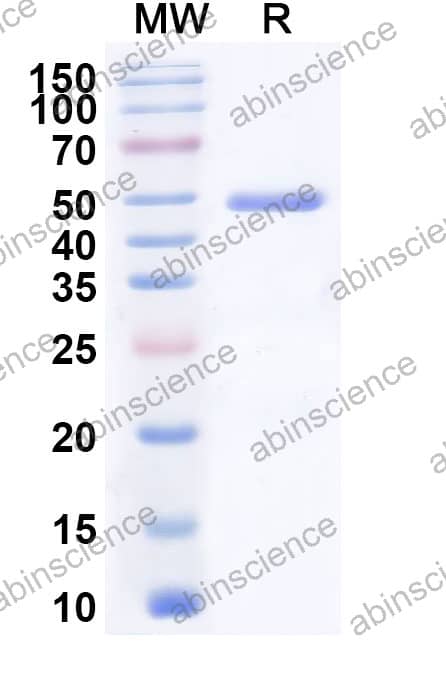

| 카탈로그 번호 | MB164014 | ||||||||
|---|---|---|---|---|---|---|---|---|---|
| 설명 |
Anti-Mouse EFNA1 Polyclonal Antibody (MB164014) is a rabbit polyclonal antibody detecting EFNA1 in ELISA, IHC, WB. Suitable for Mouse, Rat.
Highlights
|
||||||||
| 종 반응성 | Mouse, Rat | ||||||||
| 응용 분야 | ELISA, IHC, WB | ||||||||
| 숙주 종 | Rabbit | ||||||||
| 클론성 | Polyclonal | ||||||||
| 이소타입 | IgG | ||||||||
| 면역원 | E. coli - derived recombinant Mouse EFNA1 (Met1-Ser182). | ||||||||
| 타겟 | Ephrin-A1 (EPH-related receptor tyrosine kinase ligand 1) (LERK-1) (Immediate early response protein B61) [Cleaved into: Ephrin-A1, secreted form] | ||||||||
| 정제 | Purified by antigen affinity column. | ||||||||
| 등록번호 | P52793 | ||||||||
| 형태 | Liquid | ||||||||
| 저장 완충액 | 0.01M PBS, pH 7.4, 50% Glycerol, 0.05% Proclin 300. 데이터시트 인쇄본 또는 로트별 COA에 기재된 구체적인 완충액 정보를 참조하세요. |
||||||||
| 제품 사용 정보 |
| ||||||||
| 안정성 및 저장 | Use a manual defrost freezer and avoid repeated freeze thaw cycles. Store at 2 to 8°C for frequent use. Store at -20 to -80°C for twelve months from the date of receipt. | ||||||||
| 배경 | Ephrin-A1 (EFNA1) is a ~23 kDa protein. Cell surface GPI-bound ligand for Eph receptors, a family of receptor tyrosine kinases which are crucial for migration, repulsion and adhesion during neuronal, vascular and epithelial development. Binds promiscuously Eph receptors residing on adjacent cells, leading to contact-dependent bidirectional signaling into neighboring cells. Involved in angiogenesis, regulating vascular endothelial cell differentiation and migration through activation of EPHA2. Acts as a ligand for EPHA3, inhibiting epithelial-to-mesenchymal transition of cardiac cells and playing a role in heart development. May also contribute to dendritic spine morphogenesis. 1. Hunter, SG. et al. (2006) Molecular and cellular biology 26, 4830-42. PMID: 16782872 2. Fang, WB. et al. (2008) The Journal of biological chemistry 283, 16017-26. PMID: 18387945 3. Frieden, LA. et al. (2010) Developmental dynamics : an official publication of the American Association of Anatomists 239, 3226-34. PMID: 20960543 4. Fu, WY. et al. (2007) Nature neuroscience 10, 67-76. PMID: 17143272 | ||||||||
| 참고사항 | For research use only. |
문의하기
+86-027-65523339
중국 우한시 심둔사로 666번지 C동, 우한, 430206


