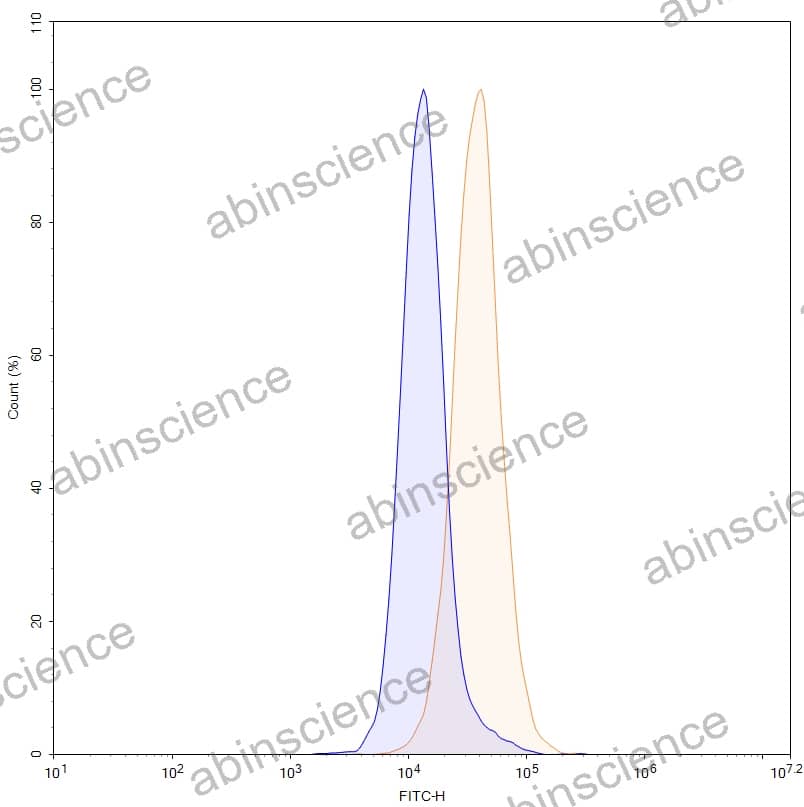
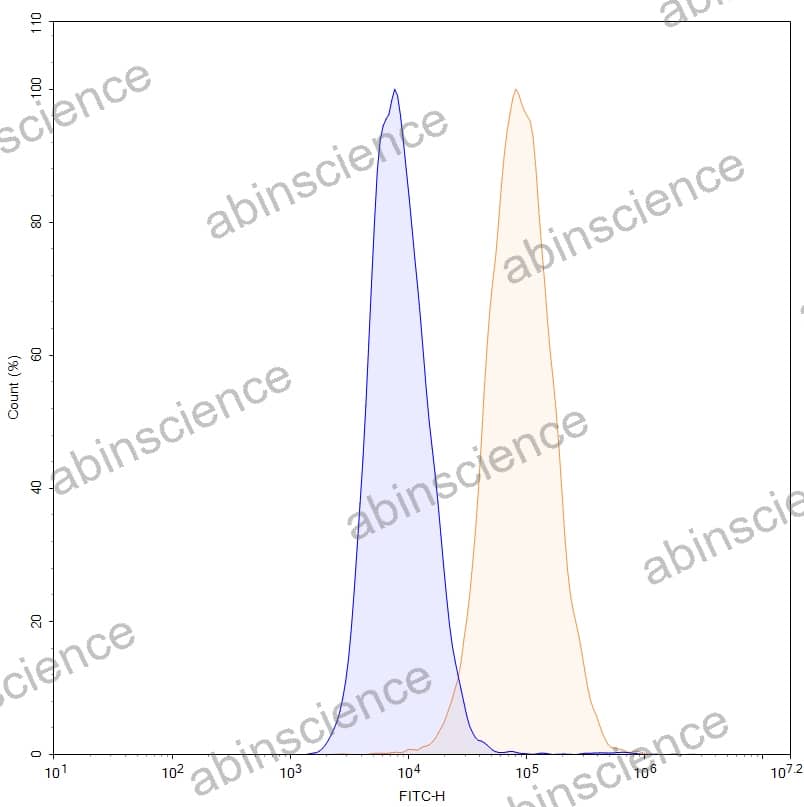
TROP2 (Trophoblast Cell Surface Antigen 2 / TACSTD2 / EGP-1) is a transmembrane glycoprotein broadly overexpressed across many epithelial cancers — including triple-negative breast cancer (TNBC), urothelial carcinoma, NSCLC, and HR+/HER2- breast cancer. The anti-TROP2 ADC Sacituzumab govitecan (Trodelvy) is FDA-approved for metastatic TNBC and urothelial cancer, and Datopotamab deruxtecan (Dato-DXd) is advancing through late-stage trials for NSCLC. TROP2 has become one of the most clinically validated ADC targets in oncology. abinScience offers recombinant TROP2 proteins, anti-TROP2 antibodies, biosimilar reference standards, and ELISA kits.
TROP2 Biology and ADC Target Properties
TROP2 is a ~36 kDa type I transmembrane protein with a single extracellular thyroglobulin type-1 domain. It functions as a calcium signal transducer and promotes tumor cell proliferation, migration, and invasion through intracellular signaling involving cyclin D1, ERK, and β-catenin pathways. TROP2 is related to EpCAM (TACSTD1/TROP1) — they share ~50% sequence homology — but has distinct expression patterns and signaling functions.
TROP2 is an ideal ADC target because it combines several favorable properties: broad and high tumor expression across many epithelial cancer types, limited normal tissue expression (low-level expression on some epithelial surfaces), and efficient receptor-mediated internalization upon antibody binding — essential for intracellular payload delivery. Like HER2, the bystander killing effect of membrane-permeable payloads (SN-38 in Trodelvy, DXd in Dato-DXd) extends efficacy to TROP2-low neighboring cells.
Key Research Applications
ADC Development & Internalization Recombinant TROP2 proteins for anti-TROP2 antibody screening and characterization. TROP2-expressing stable cell lines for ADC internalization assays, cytotoxicity studies, and payload release kinetics.
Biosimilar & Comparability Sacituzumab govitecan biosimilar reference standards for analytical comparability, ADC characterization (DAR, linker-payload analysis), and potency bioassays. Supporting the growing pipeline of anti-TROP2 ADC biosimilar programs.
IHC & Patient Stratification Anti-TROP2 antibodies validated for IHC on FFPE tissue. TROP2 IHC is used to assess tumor expression levels for patient stratification in anti-TROP2 ADC clinical trials and to characterize tumor heterogeneity.
PK/ADA & Bioanalytical Assays Anti-TROP2 antibody pairs and TROP2 calibrator proteins for PK ELISA (measuring total antibody and ADC), ADA assays, and free TROP2 pharmacodynamic biomarker quantification.
TROP2 Product Selection Guide
| Application |
Recommended Product |
Format |
| SPR/BLI binding kinetics |
Recombinant TROP2 protein |
Avi-tagged or biotinylated |
| ADC internalization / cytotoxicity |
TROP2-expressing stable cell line |
Engineered overexpression |
| IHC (FFPE tissue) |
Anti-TROP2 monoclonal antibody |
Unconjugated, IHC-validated |
| Flow cytometry |
Anti-TROP2/TACSTD2 antibody |
PE or APC conjugated |
| TROP2 vs EpCAM selectivity |
TROP2 + EpCAM proteins |
His-tagged (matched format) |
| PK/ADA ELISA |
Anti-TROP2 antibody pair + calibrator |
Capture/detection pair |
| Analytical comparability |
Sacituzumab govitecan biosimilar |
Research-grade RUO |
TROP2 FAQs
What is the difference between TROP2 and EpCAM (TROP1)?
TROP2 (TACSTD2) and EpCAM (TACSTD1/TROP1) are paralogous proteins sharing ~50% sequence homology. Both are expressed on epithelial cells, but they have distinct expression patterns and functions. TROP2 is more highly overexpressed in aggressive cancers (TNBC, urothelial) and has stronger association with tumor invasion and metastasis. EpCAM is more broadly expressed on normal epithelia, making it a less favorable ADC target due to on-target off-tumor toxicity. Anti-TROP2 therapeutic antibodies must demonstrate selectivity over EpCAM.
What is the difference between Sacituzumab govitecan and Datopotamab deruxtecan?
Sacituzumab govitecan (Trodelvy) uses the topoisomerase I inhibitor SN-38 (active metabolite of irinotecan) as its payload, with a cleavable CL2A linker and a DAR of ~7.6. Datopotamab deruxtecan (Dato-DXd) uses the topoisomerase I inhibitor DXd (the same payload as in Enhertu/T-DXd), with a cleavable GGFG linker and a DAR of ~4. The two ADCs differ in antibody, payload potency, linker chemistry, DAR, and bystander killing potential, resulting in different efficacy and toxicity profiles across tumor types.
Which tumors express TROP2 most strongly?
TROP2 is overexpressed in the majority of epithelial cancers. The highest expression is seen in TNBC (~85-90% positive), urothelial/bladder cancer (~80%), NSCLC adenocarcinoma (~65%), endometrial cancer, cervical cancer, and head and neck squamous cell carcinoma. Expression is generally lower in gastric and colorectal cancers. TROP2 expression is assessed by IHC (H-score or percentage positive cells), though standardized companion diagnostic scoring is not yet established across all indications.
Does TROP2 expression on normal tissue cause ADC toxicity?
TROP2 is expressed at low levels on normal epithelial cells in the skin, salivary glands, esophagus, and lung. The main dose-limiting toxicity of anti-TROP2 ADCs is neutropenia (from payload release) and diarrhea (from SN-38 in Trodelvy, similar to irinotecan). Skin rash and mucositis can also occur, potentially related to TROP2 expression on normal skin and mucosal epithelia. Despite normal tissue expression, the therapeutic window is maintained because tumor TROP2 levels are typically 10-100× higher than normal tissue.
How do I assess TROP2 expression by IHC?
Use an anti-TROP2 monoclonal antibody on FFPE sections with heat-induced antigen retrieval (citrate pH 6.0 or Tris-EDTA pH 9.0). TROP2 staining is typically membranous. Scoring can use either H-score (intensity 0-3 × percentage positive cells, range 0-300) or a simplified scale (0, 1+, 2+, 3+). Include a known TROP2-positive TNBC section as positive control and normal skin or salivary gland as a low-expression reference. Note that unlike HER2, a standardized companion diagnostic scoring system for TROP2 is still evolving.
Key References
1. Bardia A, et al. (2021) Sacituzumab govitecan in metastatic triple-negative breast cancer. N Engl J Med. 384(16):1529-1541. PMID: 33882206
2. Goldenberg DM, et al. (2015) Trop-2 is a novel target for solid cancer therapy. Oncotarget. 6(26):22496-22512. PMID: 26101915
3. Tagawa ST, et al. (2021) Sacituzumab govitecan in metastatic urothelial carcinoma (TROPHY-U-01). J Clin Oncol. 39(22):2474-2485. PMID: 33929895


 中文
中文 English
 한국어
한국어 日本語
日本語 Español
 Français
 Русский