Please refer to the specific buffer information in the hardcopy of datasheet or the lot-specific COA.
Product Usage Information
Application
Dilution
ELISA
1:5000-1:20000
IHC
1:50-1:500
WB
1:500-1:2000
Stability and Storage
Use a manual defrost freezer and avoid repeated freeze thaw cycles. Store at 2 to 8°C for frequent use. Store at -20 to -80°C for twelve months from the date of receipt.
Alternate Names
S-adenosylhomocysteine hydrolase-like protein 1, DC-expressed AHCY-like molecule, IP(3)Rs binding protein released with IP(3), IRBIT, Putative adenosylhomocysteinase 2, S-adenosyl-L-homocysteine hydrolase 2, AdoHcyase 2, AHCYL1, DCAL, IRBIT, XPVKONA
Background
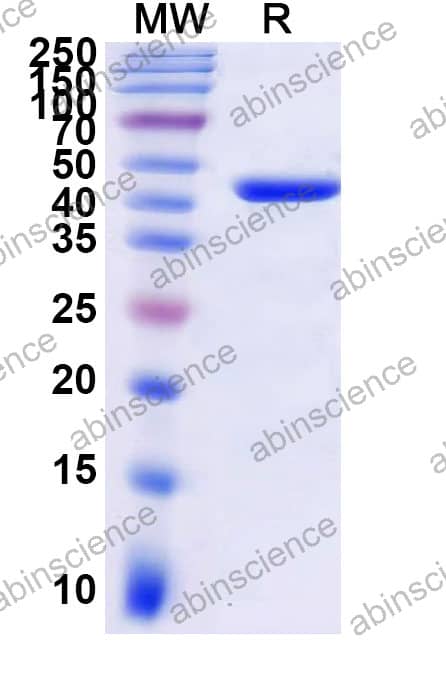
S-adenosylhomocysteine hydrolase-like protein 1 (AHCYL1) is a ~58 kDa protein. Multifaceted cellular regulator which coordinates several essential cellular functions including regulation of epithelial HCO3(-) and fluid secretion, mRNA processing and DNA replication. Regulates ITPR1 sensitivity to inositol 1,4,5-trisphosphate, competing for the common binding site and acting as endogenous 'pseudoligand' whose inhibitory activity can be modulated by its phosphorylation status. Promotes the formation of contact points between the endoplasmic reticulum (ER) and mitochondria, facilitating transfer of Ca(2+) from the ER to mitochondria. Under normal cellular conditions, functions cooperatively with BCL2L10 to limit ITPR1-mediated Ca(2+) release but, under apoptotic stress conditions, dephosphorylated which promotes dissociation of both AHCYL1 and BCL2L10 from mitochondria-associated endoplasmic reticulum membranes, inhibits BCL2L10 interaction with ITPR1 and leads to increased Ca(2+) transfer to mitochondria which promotes apoptosis. In the pancreatic and salivary ducts, at resting state, attenuates inositol 1,4,5-trisphosphate-induced calcium release by interacting with ITPR1.

 中文
中文 English
 한국어
한국어 日本語
日本語 Español
 Français
 Русский