中文
中文 English
 한국어
한국어 日本語
日本語 Español
 Français
 Русский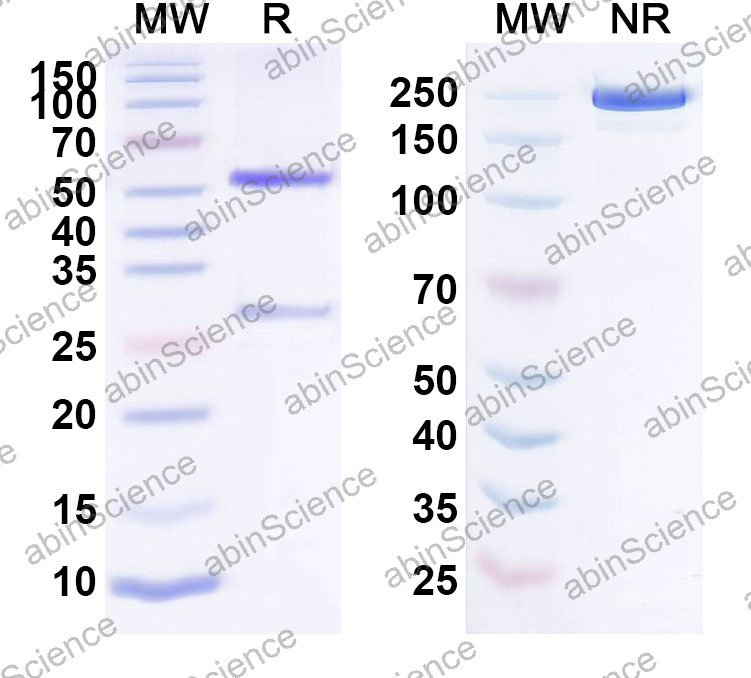
| Catalog No. | HS858025 |
|---|---|
| Description |
Anti-Human HIF1A Monoclonal Antibody (1A713) [1A713] (HS858025) is a mouse monoclonal antibody detecting HIF1A in ELISA, IHC, WB. Suitable for Human.
Highlights
|
| Species reactivity | Human |
| Applications | ELISA, IHC, WB |
| Host species | Mouse |
| Clonality | Monoclonal |
| Isotype | IgG |
| Clone ID | 1A713 |
| Immunogen | E. coli - derived recombinant human HIF1A (Asp55-Val342). |
| Target | Hypoxia-inducible factor 1-alpha, HIF-1-alpha, HIF1-alpha, ARNT-interacting protein, Basic-helix-loop-helix-PAS protein MOP1, Class E basic helix-loop-helix protein 78, bHLHe78, Member of PAS protein 1, PAS domain-containing protein 8, HIF1A |
| Endotoxin level | < 10 EU/mg |
| Purity | >95% as determined by SDS-PAGE. |
| Purification | Protein A/G purified from cell culture supernatant. |
| Accession | Q16665 |
| Form | Liquid |
| Storage buffer | 0.01M PBS pH 7.4. Please refer to the specific buffer information in the hardcopy of datasheet or the lot-specific COA. |
| Stability and Storage | Use a manual defrost freezer and avoid repeated freeze thaw cycles. Store at 2 to 8°C for frequent use. Store at -20 to -80°C for twelve months from the date of receipt. |
| Background | Hypoxia-inducible factor 1-alpha (HIF1A) is a ~92 kDa protein. Functions as a master transcriptional regulator of the adaptive response to hypoxia. Under hypoxic conditions, activates the transcription of over 40 genes, including erythropoietin, glucose transporters, glycolytic enzymes, vascular endothelial growth factor, HILPDA, and other genes whose protein products increase oxygen delivery or facilitate metabolic adaptation to hypoxia. Plays an essential role in embryonic vascularization, tumor angiogenesis and pathophysiology of ischemic disease. Heterodimerizes with ARNT; heterodimer binds to core DNA sequence 5'-TACGTG-3' within the hypoxia response element (HRE) of target gene promoters. Activation requires recruitment of transcriptional coactivators such as CREBBP and EP300. 1. Jaakkola, P. et al. (2001) Science (New York, N.Y.) 292, 468-72. PMID: 11292861 2. Masson, N. et al. (2001) The EMBO journal 20, 5197-206. PMID: 11566883 3. Bae, SH. et al. (2004) Biochemical and biophysical research communications 324, 394-400. PMID: 15465032 4. Choi, SM. et al. (2006) The Journal of biological chemistry 281, 34056-63. PMID: 16973622 5. Berta, MA. et al. (2007) Biochemical and biophysical research communications 360, 646-52. PMID: 17610843 6. Kim, EJ. et al. (2008) Arteriosclerosis, thrombosis, and vascular biology 28, 1796-802. PMID: 18658046 7. Gimm, T. et al. (2010) FASEB journal : official publication of the Federation of American Societies for Experimental Biology 24, 4443-58. PMID: 20624928 8. Shan, B. et al. (2012) Endocrine-related cancer 19, 13-27. PMID: 22009797 9. Xu, C. et al. (2018) PLoS pathogens 14, e1007259. PMID: 30125331 10. Bhattacharya, S. et al. (1999) Genes & development 13, 64-75. PMID: 9887100 |
| Note | For research use only. |
SDS-PAGE for Anti-Human HIF1A Monoclonal Antibody (1A713)


Contact us for custom quotes, bulk requests and any other issues.
Mail: [email protected]
+86-27-65523339
Building C, No. 666, Shen Dun Si Lu, Wuhan, 430206, China