Please ensure Javascript is enabled for purposes of website accessibility
Home > Products > Antibodies > Primary antibodies

Anti-XIAP Polyclonal Antibody (HX165014)

Price(USD):
Spec:
  • 50ug
  • 100ug
Number:
Get quote
  • Overview

  • Images

  • References

  • Datasheet

  • SDS

Overview
Catalog No.HX165014
Description
Anti-XIAP Polyclonal Antibody (HX165014) is a rabbit polyclonal antibody detecting XIAP in ELISA, IHC, WB. Suitable for Human, Mouse, and Rat.
Highlights
  • Affinity Purified — Minimal background and high purity for reliable results.
  • Multi-Application — Validated across multiple applications.
  • Multi-Species — Cross-reactive for translational research.
Species reactivityHuman
ApplicationsELISA, IHC, WB
Host speciesRabbit
IsotypeIgG
Clonality Polyclonal
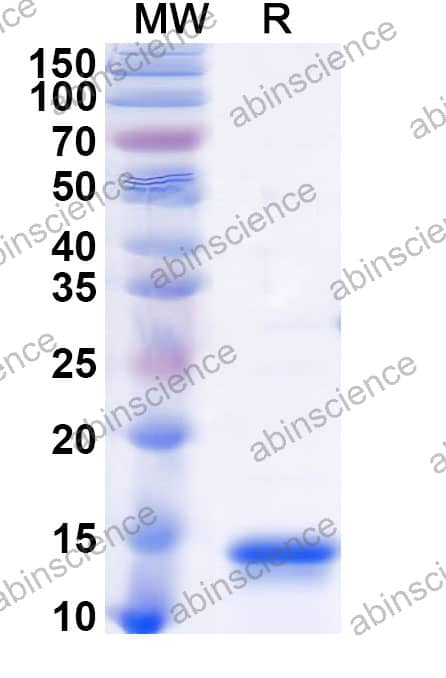
Immunogen E. coli - derived recombinant Human XIAP (Met1-Ser497).
Target ILP, IAP-like protein, X-linked inhibitor of apoptosis protein, IAP-3, hILP, X-linked IAP, Baculoviral IAP repeat-containing protein 4, Inhibitor of apoptosis protein 3, RING-type E3 ubiquitin transferase XIAP, E3 ubiquitin-protein ligase XIAP, API3, XIAP, hIAP-3, hIAP3, BIRC4, IAP3
Purification Purified by antigen affinity column.
Accession P98170
Form Liquid
Storage buffer 0.01M PBS, pH 7.4, 50% Glycerol, 0.05% Proclin 300.

Please refer to the specific buffer information in the hardcopy of datasheet or the lot-specific COA.

Product Usage Information
Application Dilution
ELISA 1:5000-1:20000
IHC 1:50-1:500
WB 1:500-1:2000
Stability and Storage Use a manual defrost freezer and avoid repeated freeze thaw cycles. Store at 2 to 8°C for frequent use. Store at -20 to -80°C for twelve months from the date of receipt.
Background

E3 ubiquitin-protein ligase XIAP is a ~56 kDa protein. Multi-functional protein which regulates not only caspases and apoptosis, but also modulates inflammatory signaling and immunity, copper homeostasis, mitogenic kinase signaling, cell proliferation, as well as cell invasion and metastasis. Acts as a direct caspase inhibitor. Directly bind to the active site pocket of CASP3 and CASP7 and obstructs substrate entry. Inactivates CASP9 by keeping it in a monomeric, inactive state. Acts as an E3 ubiquitin-protein ligase regulating NF-kappa-B signaling and the target proteins for its E3 ubiquitin-protein ligase activity include: RIPK1, RIPK2, MAP3K2/MEKK2, DIABLO/SMAC, AIFM1, CCS, PTEN and BIRC5/survivin.

1. Chai, J. et al. (2001) Cell 104, 769-80. PMID: 11257230
2. Huang, Y. et al. (2001) Cell 104, 781-90. PMID: 11257231
3. Suzuki, Y. et al. (2001) Proceedings of the National Academy of Sciences of the United States of America 98, 8662-7. PMID: 11447297
4. MacFarlane, M. et al. (2002) The Journal of biological chemistry 277, 36611-6. PMID: 12121969
5. Shiozaki, EN. et al. (2003) Molecular cell 11, 519-27. PMID: 12620238
6. Lu, M. et al. (2007) Molecular cell 26, 689-702. PMID: 17560374
7. Wilkinson, JC. et al. (2008) Molecular and cellular biology 28, 237-47. PMID: 17967870
8. Van Themsche, C. et al. (2009) The Journal of biological chemistry 284, 20462-6. PMID: 19473982
9. Brady, GF. et al. (2010) Molecular and cellular biology 30, 1923-36. PMID: 20154138
10. Lewis, EM. et al. (2011) Biochemistry 50, 11084-96. PMID: 22103349
Note For research use only.
Images
References
Formula
Mass (g) = Concentration (mol/L) × Volume (L) × MW (g/mol)
Enter any 2 of Mass, Concentration, Volume + Molecular Weight to solve for the unknown.
Mass
=
Concentration
×
Volume
Molecular Weight *
g/mol
Formula
C₁ × V₁ = C₂ × V₂
Enter any 3 of the 4 values to solve for the unknown.
Stock Solution
C₁ (Stock Conc.)
×
V₁ (Stock Vol.)
=
Working Solution
C₂ (Working Conc.)
×
V₂ (Working Vol.)
Recommendation

Contact us for custom quotes, bulk requests and any other issues.

Mail: support@abinScience.com

Distributor list