Last month, with the technical support of abinScience, several antibody- and protein-based studies were published in high-impact journals including Autophagy and Materials Today Bio. The research covered areas such as acute ischemic stroke, African swine fever, and post-sepsis cognitive impairment, advancing our understanding of disease pathway mechanisms and therapeutic target identification. This month's literature digest brings you a curated overview of the latest key advances from research teams around the world.
Title: Molecularly Self-Assembled Nanoplatforms for Targeted ROS-Scavenging and Neuroinflammation Alleviation in Acute Ischemic Stroke Journal: Materials Today Bio Impact Factor: 10.2 Institution: Army Medical University
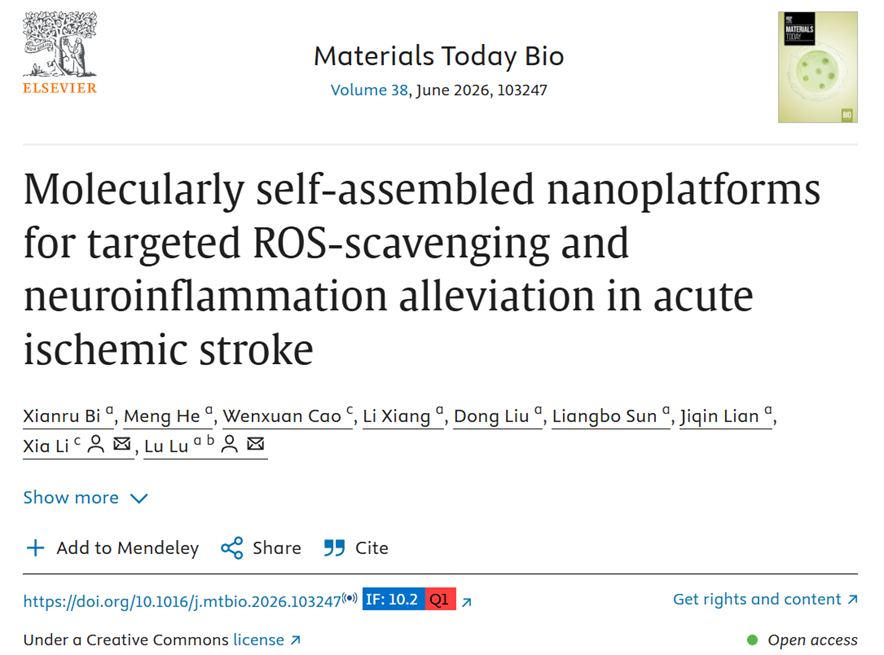
Cerebral ischemia-reperfusion injury (CIRI) following recanalization in acute ischemic stroke (AIS) remains a major driver of neuronal death. Its pathological mechanisms involve a cascading amplification of oxidative stress and neuroinflammation, while conventional drug delivery systems struggle to effectively cross the blood-brain barrier (BBB) and simultaneously modulate multiple pathological pathways. To address this challenge, the study adopted an integrative philosophy combining traditional herbal medicine with Western pharmacology, co-assembling baicalein (BLN)—a natural flavonoid derived from Scutellaria baicalensis—with rapamycin (RAP) into carrier-free binary nanoparticles (BR NPs) via self-assembly. These were further functionalized with DSPE-PEG₂ₖ-Angiopep-2 to yield targeted ABR NPs. The resulting nanoplatform achieved a total drug loading of approximately 77.01% with excellent colloidal stability, enabling efficient BBB penetration and neuronal targeting via LRP1 receptor-mediated endocytosis. In vitro studies demonstrated that ABR NPs possessed broad-spectrum, potent ROS-scavenging activity and markedly promoted microglial polarization from the pro-inflammatory M1 phenotype toward the anti-inflammatory M2 phenotype. In a mouse MCAO model, ABR NPs reduced infarct volume from 37.88% to just 7.84%, significantly outperforming individual drug treatments and non-targeted controls, while effectively suppressing neuronal apoptosis and reducing pro-inflammatory cytokine levels. These findings establish that ABR NPs achieve precise brain-targeted therapy through a dual-pathway synergistic mechanism (ROS scavenging + neuroinflammation suppression), offering a promising new avenue for the clinical translation of CIRI treatment.
abinScience supplied the Stable Receptor-Associated Protein (RAP) LRP1 Inhibitor (Cat. No. HB705022) used in this study. This inhibitor played a critical role in validating the cellular uptake mechanism: when PC12 neurons and bEnd.3 endothelial cells were pre-treated with RAP, uptake of ABR NPs dropped significantly to levels comparable to non-targeted PEG NPs, while uptake of free FITC and PEG NPs was unaffected. This control experiment directly demonstrated that Angiopep-2-functionalized ABR NPs are internalized via LRP1 receptor-mediated endocytosis rather than passive diffusion, providing mechanistic evidence for why Angiopep-2 modification enhances BBB crossing and neuronal targeting efficiency.
Title: African swine fever virus I10L protein inhibits autolysosome formation by disrupting RAB7-HOPS complex-dependent SNARE complex assembly Journal: Autophagy Impact Factor: 14.3 Institution: College of Veterinary Medicine, Shandong Agricultural University
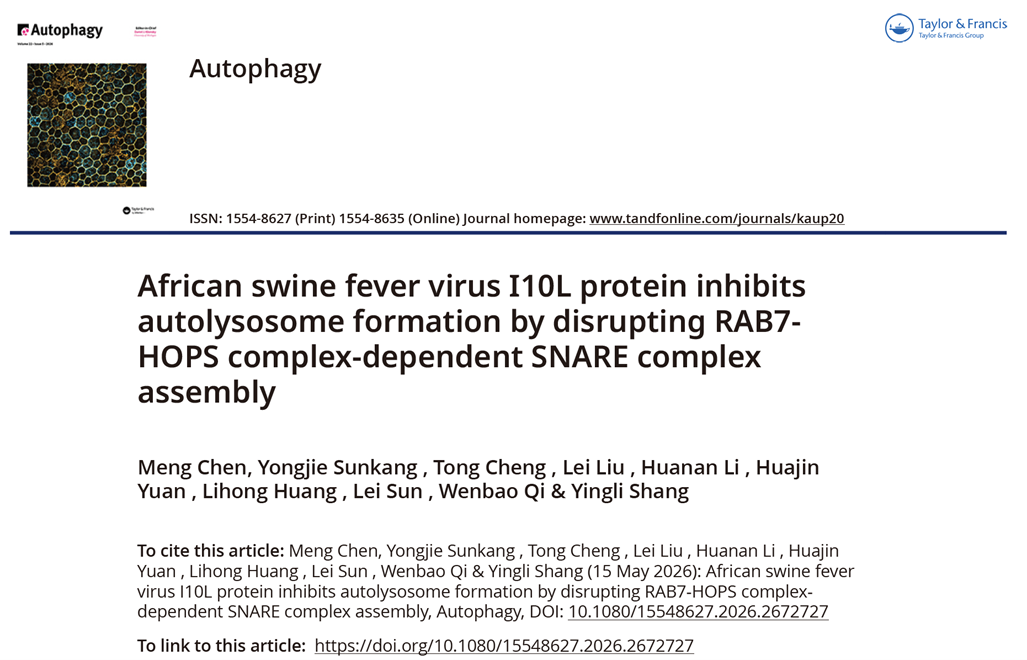
African swine fever (ASF) is a highly lethal infectious disease caused by African swine fever virus (ASFV), for which no effective vaccine or treatment currently exists. Autophagy is an important host defense mechanism against pathogens, yet viruses frequently hijack it to facilitate their own replication. The specific molecular mechanisms by which ASFV evades autophagy, however, remain poorly understood. This study focused on the I10L protein encoded within the right variable region of the ASFV genome, revealing that it markedly suppresses autophagic flux and leads to extensive autophagosome accumulation. Mechanistically, I10L localizes to late endosomal/lysosomal membranes and directly binds RAB7, competitively blocking the assembly of the RAB7-HOPS complex and thereby impairing the SNARE complex assembly required for autophagosome-lysosome fusion, ultimately preventing autolysosome formation. Deletion of I10L substantially attenuated viral replication and restored autophagic flux. Collectively, this study uncovers an immune evasion strategy in which ASFV exploits I10L to manipulate the RAB7-HOPS axis and escape lysosomal degradation, providing new insights for antiviral target development.
abinScience supplied the Anti-ASFV I10L Monoclonal Antibody (1A016) (Cat. No. VK445015) used in this study. The antibody was validated for specificity and reactivity in both western blot and immunofluorescence formats. In experiments using ASFV-infected primary porcine alveolar macrophages (PAMs), this antibody was used alongside an anti-RAB7 antibody to perform co-immunoprecipitation (co-IP) of the endogenous proteins, directly confirming the interaction between I10L and endogenous RAB7 under authentic ASFV infection conditions. Complementary immunofluorescence staining further revealed the co-localization of the two proteins in infected cells.
Title: Effects of Lactate on Improving Cognitive Function and Survival Rate in a Mouse Model of Post-Sepsis Cognitive Impairment Journal: Actas Esp Psiquiatr Impact Factor: 1.6 Institution: Department of Anesthesiology, Affiliated Hospital of Nantong University
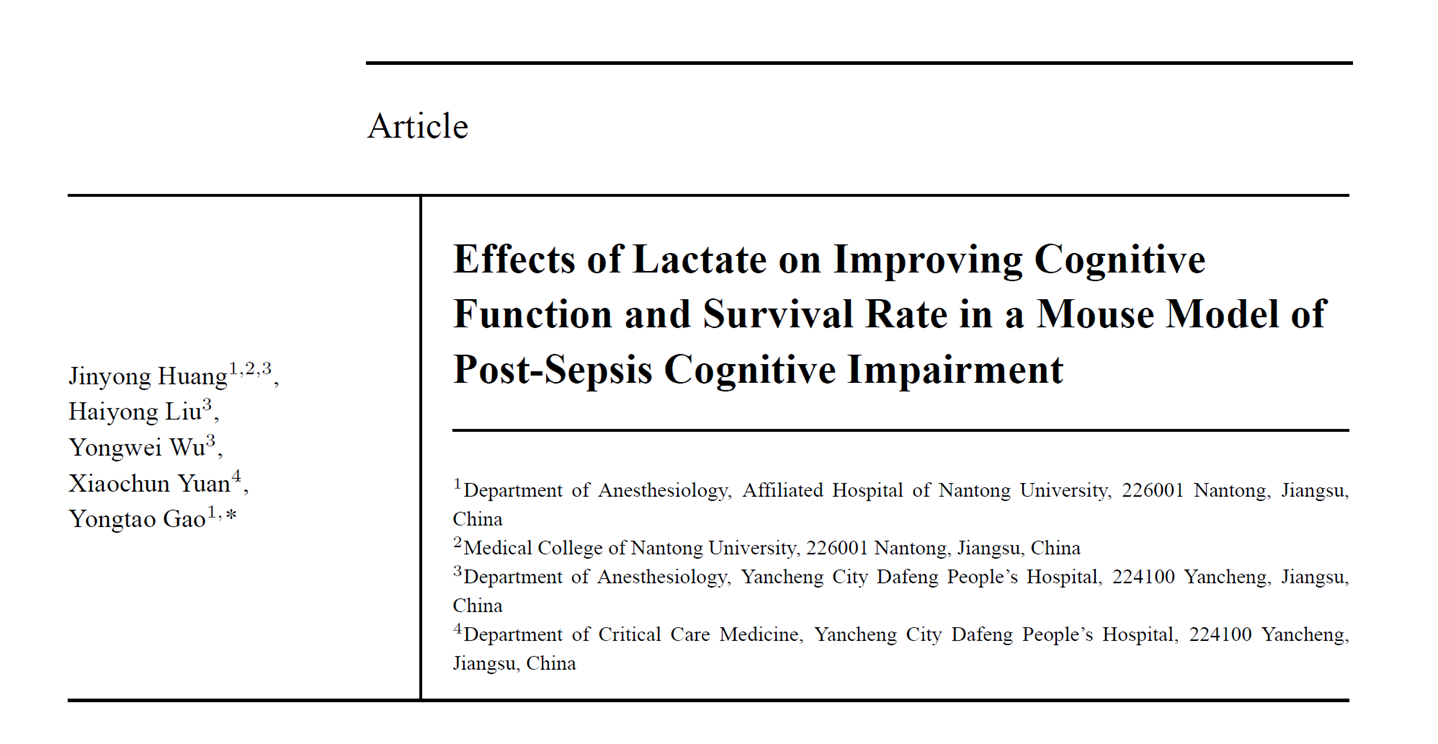
Post-sepsis cognitive impairment (PSCI) is a major challenge in critical care medicine, manifesting as persistent memory deficits, attention impairment, and executive dysfunction in sepsis survivors, with no effective clinical interventions currently available. Lactate, a glycolytic end product traditionally regarded as a marker of poor prognosis, has more recently been recognized as serving a dual role as both an energy substrate and a signaling molecule. This study employed cecal ligation and puncture (CLP) to establish a mouse model of PSCI and investigated the neuroprotective effects and underlying mechanisms of exogenous lactate supplementation. Lactate treatment significantly improved survival rates and body weight recovery in septic mice, as well as cognitive performance across multiple behavioral assessments. At the molecular level, lactate suppressed the HMGB1/RAGE signaling axis, reduced neuronal apoptosis, lowered levels of brain injury biomarkers, attenuated excessive glial activation, modulated the neuroinflammatory microenvironment, and alleviated oxidative stress. In addition, lactate upregulated the expression of multiple neurotransmitter receptors, suggesting a restorative effect on synaptic plasticity. Taken together, lactate demonstrates significant neuroprotective potential against PSCI by improving cerebral energy metabolism, suppressing neuroinflammation, and reducing oxidative stress.
abinScience supplied the Anti-GluN2B Antibody (Cat. No. HC330013) used in this study. GluN2B is a critical subunit of the NMDA-type glutamate receptor and plays a central role in synaptic plasticity and the formation and maintenance of learning and memory. The antibody was used in western blot experiments to assess changes in GluN2B protein expression in brain tissue from septic mice, with results showing that lactate treatment upregulated GluN2B levels. This finding, together with parallel measurements of GluA1 (an AMPA receptor subunit) and D1R (dopamine D1 receptor), constitutes the key evidence that lactate modulates neurotransmitter receptor expression, providing direct molecular support for the synaptic plasticity mechanism underlying lactate-mediated cognitive improvement.


 中文
中文 English
 한국어
한국어 日本語
日本語 Español
 Français
 Русский


