In December, multiple groundbreaking studies supported by abinScience antibodies and proteins were published in top-tier journals such as PNAS and American Journal of Physiology-Cell Physiology. These studies focus on critical areas including natural antigen-presenting vesicles (APVs) and diabetes, covering disease mechanism elucidation, target screening, and other core research fields. The high-purity recombinant proteins and antibodies provided by abinScience have offered essential material support for these projects, enabling key breakthroughs. In this literature update, let's review these important advances from frontline laboratories.
No.1
Title: Recruiting ESCRT to single-chain heterotrimer peptide MHCI releases antigen-presenting vesicles that stimulate T cells selectively
Journal: Proceedings of the National Academy of Sciences (PNAS)
Impact Factor: 9.1
Affiliation: Gladstone Institute of Virology
Natural antigen-presenting vesicles (APVs) can modulate immune responses and represent a promising direction for cell-free immunotherapy. However, current preparation methods suffer from low yield and poor stability. In this study, researchers added an ESCRT/ALIX-binding region (EABR) sequence to the cytoplasmic tail of single-chain heterotrimeric peptide-MHC I (SCT pMHCI), inducing APV assembly and release in non-immune cells. They validated its universality across different pMHCI variants and its ability to stimulate T cells in vitro. The results showed that the EABR sequence efficiently induced the release of functional APVs, which specifically stimulated T cells expressing cognate T-cell receptors to secrete IFN-γ, providing a new platform for targeted immune modulation in cell-free immunotherapy.
abinScience provided the anti-HLA-A2-peptide (SLLMWITQV) complex (3M4E5) antibody (Cat. No.: HM832023) for this study, used to specifically recognize the intact NYESO1:HLA-A*02:01 complex. It was employed to verify whether the target pMHCI complex was properly displayed on the APV surface. In indirect and sandwich ELISAs, it served as either a capture or detection antibody to quantitatively assess the expression levels of the target pMHCI complex on APVs generated by different constructs (e.g., SCT, SCD, HC).
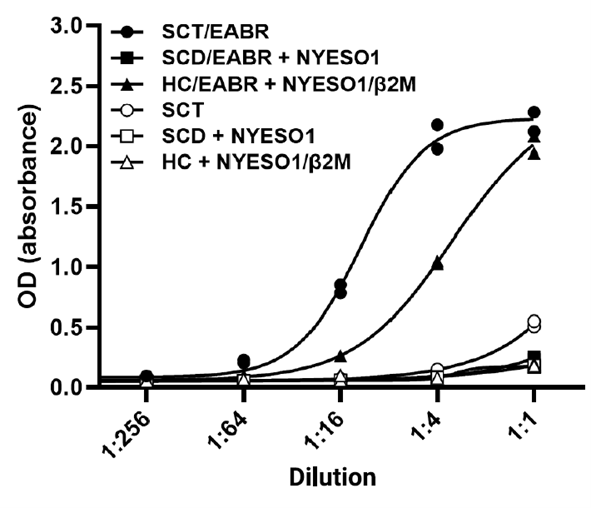
Figure 1. EABR addition to SCT pMHCI promotes budding of the complete, intended pMHCI complex on APVs
No.2
Title: The eIF5A hypusination inhibitor GC7 improves tolerance of pancreatic beta cells to ischemia/reperfusion
Journal: American Journal of Physiology-Cell Physiology
Impact Factor: 4.7
Affiliation: Université Côte d'Azur, France
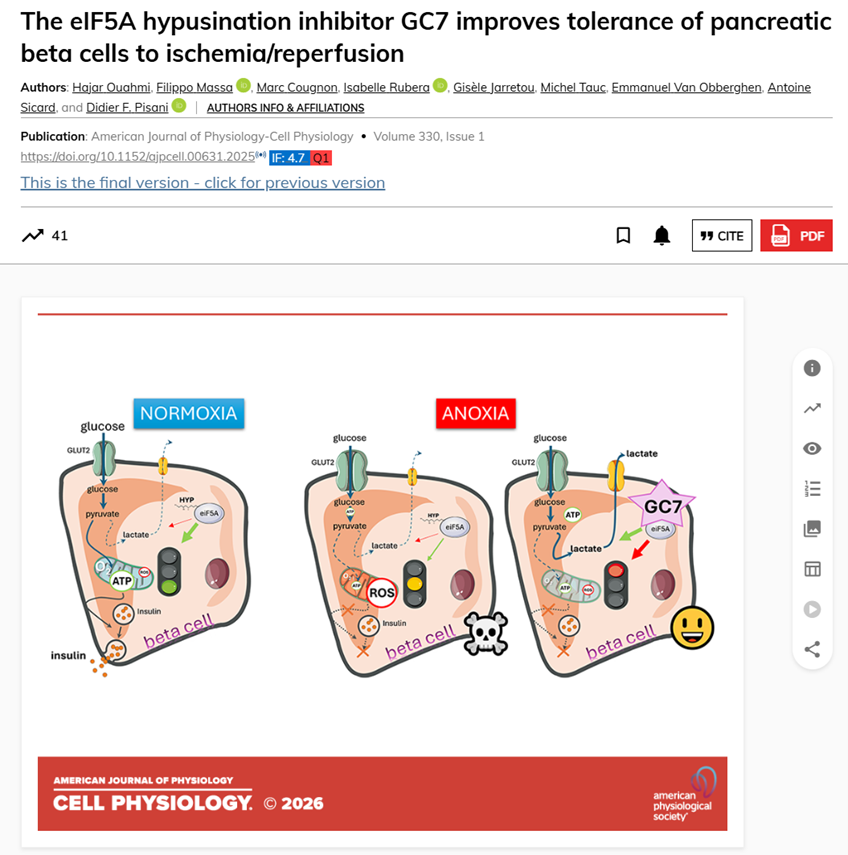
Pancreatic islet transplantation is an effective treatment for type 1 diabetes, but ischemia/reperfusion injury and oxidative stress cause substantial beta-cell loss, limiting therapeutic success. Using rat INS-1 and mouse MIN6 beta-cell lines as models, this study investigated the protective effects of the eIF5A hypusination inhibitor GC7 in a simulated ischemia/reperfusion environment, analyzing metabolism, survival, and oxidative stress markers. The results showed that GC7 shifted beta-cell metabolism from oxidative phosphorylation to anaerobic glycolysis, significantly reducing oxidative stress and increasing cell survival by more than 50%, offering a potential strategy to improve islet transplantation outcomes.
abinScience provided the anti-Hypusine rabbit monoclonal antibody (Cat. No.: YP587013) for this study, used to detect hypusination levels of the eIF5A protein. This was central to confirming GC7's inhibitory effect on eIF5A hypusination—the key mechanistic premise of the study (GC7 exerts its protective role by inhibiting eIF5A hypusination)—laying the foundation for subsequent analyses of GC7's impact on beta-cell metabolism, survival, and resistance to ischemia/reperfusion injury.
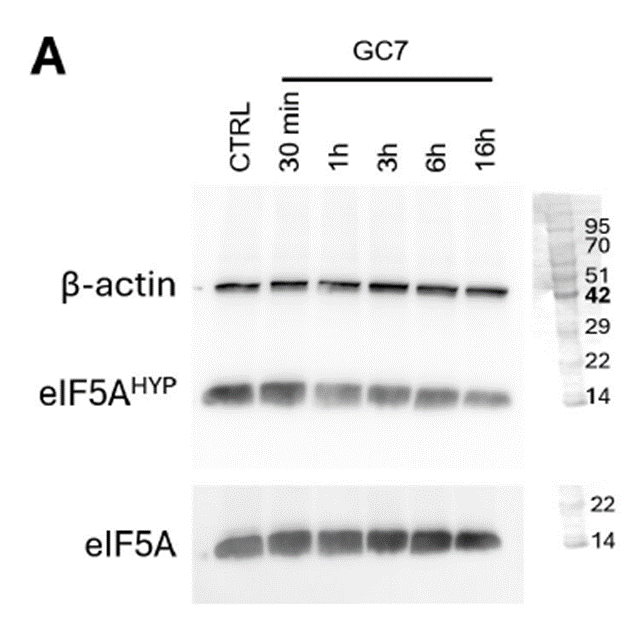
Figure 2. Time-dependent inhibition of eIF5A hypusination by GC7 and its cellular effect in INS-1 cells.
Literature Citation Reward Program
To express gratitude for the support and trust of researchers, abinScience is excited to launch a Literature Citation Reward Program! Whether you are a pioneer in life sciences or a scholar dedicated to laboratory exploration, you can apply for generous rewards by publishing articles in SCI journals using abinScience's full range of products!


 中文
中文 English
 한국어
한국어 日本語
日本語 Español
 Français
 Русский


