Please ensure Javascript is enabled for purposes of website accessibility
Home > Products > Antibodies > Primary antibodies

Anti-Human PSMA3 Polyclonal Antibody (HA494014)

Price(USD):
Spec:
  • 20ug
  • 50ug
  • 100ug
Number:
Get quote
  • Overview

  • Images

  • References

  • Datasheet

  • SDS

Overview
Catalog No.HA494014
Description
Anti-Human PSMA3 Polyclonal Antibody (HA494014) is a rabbit polyclonal antibody detecting PSMA3 in ELISA, IHC, WB. Suitable for Rattus norvegicus, Bovine, Mus musculus, and Human.
Highlights
  • Affinity Purified — Minimal background and high purity for reliable results.
  • Multi-Application — Validated across multiple applications.
  • Multi-Species — Cross-reactive for translational research.
Species reactivityHuman, Mouse, Rat
ApplicationsELISA, IHC, WB
Host speciesRabbit
IsotypeIgG
Clonality Polyclonal
Immunogen E. coli - derived recombinant Human PSMA3 (Met1-Met255).
Target PSMA3
Purification Purified by antigen affinity column.
Accession P25788
Form Liquid
Storage buffer 0.01M PBS, pH 7.4, 50% Glycerol, 0.05% Proclin 300.

Please refer to the specific buffer information in the hardcopy of datasheet or the lot-specific COA.

Product Usage Information
Application Dilution
ELISA 1:5000-1:20000
IHC 1:50-1:500
WB 1:500-1:2000
Stability and Storage Use a manual defrost freezer and avoid repeated freeze thaw cycles. Store at 2 to 8°C for frequent use. Store at -20 to -80°C for twelve months from the date of receipt.
Alternate NamesProteasome subunit alpha type-3, Macropain subunit C8, Multicatalytic endopeptidase complex subunit C8, Proteasome component C8, Proteasome subunit alpha-7, alpha-7, PSMA3
Background

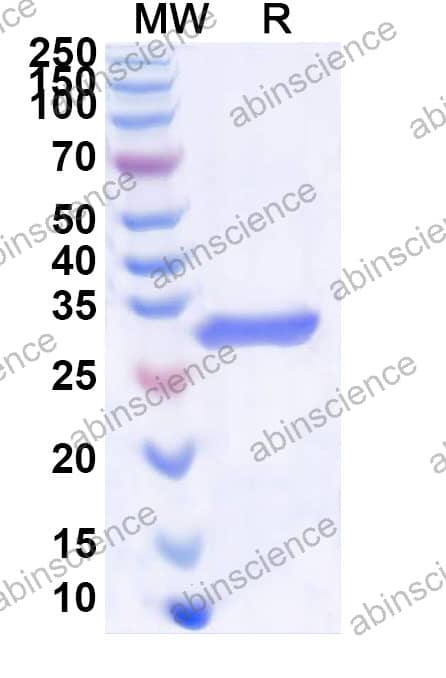
Proteasome subunit alpha type-3 (PSMA3) is a ~28 kDa protein. Component of the 20S core proteasome complex involved in the proteolytic degradation of most intracellular proteins. This complex plays numerous essential roles within the cell by associating with different regulatory particles. Associated with two 19S regulatory particles, forms the 26S proteasome and thus participates in the ATP-dependent degradation of ubiquitinated proteins. The 26S proteasome plays a key role in the maintenance of protein homeostasis by removing misfolded or damaged proteins that could impair cellular functions, and by removing proteins whose functions are no longer required. Associated with the PA200 or PA28, the 20S proteasome mediates ubiquitin-independent protein degradation.

Note For research use only.
Images
References
Formula
Mass (g) = Concentration (mol/L) × Volume (L) × MW (g/mol)
Enter any 2 of Mass, Concentration, Volume + Molecular Weight to solve for the unknown.
Mass
=
Concentration
×
Volume
Molecular Weight *
g/mol
Formula
C₁ × V₁ = C₂ × V₂
Enter any 3 of the 4 values to solve for the unknown.
Stock Solution
C₁ (Stock Conc.)
×
V₁ (Stock Vol.)
=
Working Solution
C₂ (Working Conc.)
×
V₂ (Working Vol.)
Recommendation

Contact us for custom quotes, bulk requests and any other issues.

Mail: support@abinScience.com

Distributor list