
 中文
中文 English
 한국어
한국어 日本語
日本語 Español
 Français
 Русский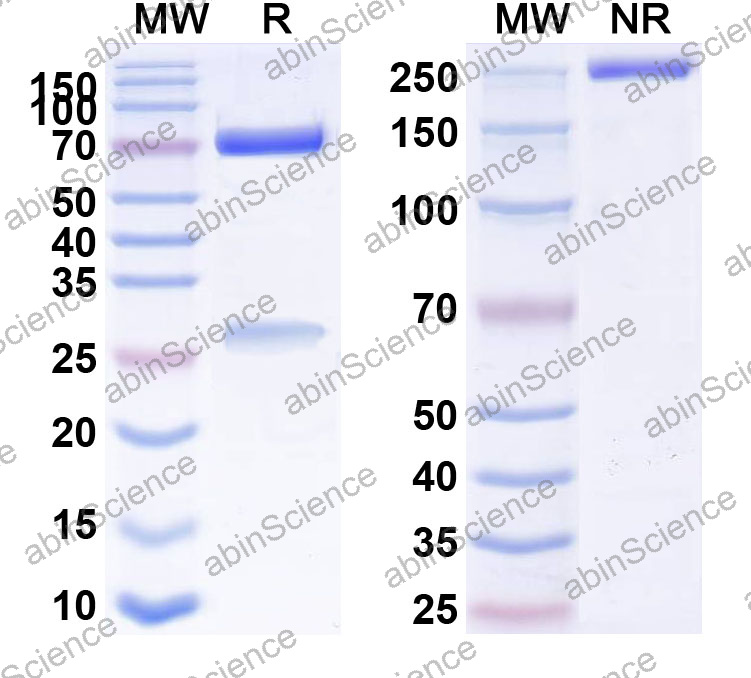
| Catalog No. | HY039025 |
|---|---|
| Description |
Anti-Human TP53/p53 Monoclonal Antibody (1A488) [1A488] (HY039025) is a mouse monoclonal antibody detecting TP53 in ELISA, IHC, WB. Suitable for Human.
Highlights
|
| Species reactivity | Human |
| Applications | ELISA, IHC, WB |
| Host species | Mouse |
| Clonality | Monoclonal |
| Isotype | IgG |
| Clone ID | 1A488 |
| Immunogen | E. coli - derived recombinant human TP53/p53 (Asp7-Asp393). |
| Target | Cellular tumor antigen p53, Antigen NY-CO-13, Phosphoprotein p53, Tumor suppressor p53, TP53 |
| Purification | Protein A/G purified from cell culture supernatant. |
| Accession | P04637 |
| Form | Liquid |
| Storage buffer | 0.01M PBS pH 7.4 Please refer to the specific buffer information in the hardcopy of datasheet or the lot-specific COA. |
| Stability and Storage | Use a manual defrost freezer and avoid repeated freeze thaw cycles. Store at 2 to 8°C for frequent use. Store at -20 to -80°C for twelve months from the date of receipt. |
| Background | Cellular tumor antigen p53 (TP53) is a ~43 kDa protein. Multifunctional transcription factor that induces cell cycle arrest, DNA repair or apoptosis upon binding to its target DNA sequence. Acts as a tumor suppressor in many tumor types; induces growth arrest or apoptosis depending on the physiological circumstances and cell type. Negatively regulates cell division by controlling expression of a set of genes required for this process. One of the activated genes is an inhibitor of cyclin-dependent kinases. Apoptosis induction seems to be mediated either by stimulation of BAX and FAS antigen expression, or by repression of Bcl-2 expression. 1. Guo, A. et al. (2000) Nature cell biology 2, 730-6. PMID: 11025664 2. Bergamaschi, D. et al. (2003) Nature genetics 33, 162-7. PMID: 12524540 3. Louria-Hayon, I. et al. (2003) The Journal of biological chemistry 278, 33134-41. PMID: 12810724 4. An, W. et al. (2004) Cell 117, 735-48. PMID: 15186775 5. Ghosh, A. et al. (2004) Molecular and cellular biology 24, 7987-97. PMID: 15340061 6. Zhao, Y. et al. (2007) The Journal of biological chemistry 282, 11969-81. PMID: 17317671 7. Taira, N. et al. (2007) Molecular cell 25, 725-38. PMID: 17349958 8. Allton, K. et al. (2009) Proceedings of the National Academy of Sciences of the United States of America 106, 11612-6. PMID: 19556538 9. Huarte, M. et al. (2010) Cell 142, 409-19. PMID: 20673990 10. Wu, L. et al. (2011) The Journal of biological chemistry 286, 2236-44. PMID: 20959462 |
| Note | For research use only. |
SDS-PAGE for Anti-Human TP53/p53 Monoclonal Antibody (1A488)


Contact us for custom quotes, bulk requests and any other issues.
Mail: [email protected]
+86-27-65523339
Building C, No. 666, Shen Dun Si Lu, Wuhan, 430206, China


