
 中文
中文 English
 한국어
한국어 日本語
日本語 Español
 Français
 Русский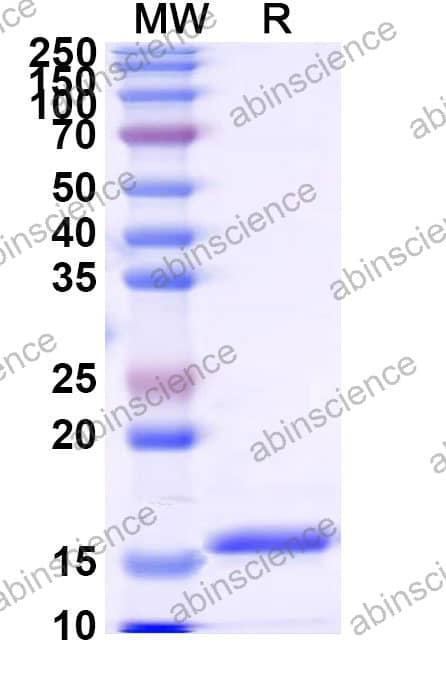

| Catalog No. | HA499014 | ||||||||
|---|---|---|---|---|---|---|---|---|---|
| Description |
Anti-Human BAZ1A Polyclonal Antibody (HA499014) is a rabbit polyclonal antibody detecting BAZ1A in ELISA, IHC, WB. Suitable for Mus musculus and Human.
Highlights
|
||||||||
| Species reactivity | Human, Mouse | ||||||||
| Applications | ELISA, IHC, WB | ||||||||
| Host species | Rabbit | ||||||||
| Clonality | Polyclonal | ||||||||
| Isotype | IgG | ||||||||
| Immunogen | E. coli - derived recombinant Human BAZ1A (Leu549-Arg666). | ||||||||
| Target | BAZ1A | ||||||||
| Purification | Purified by antigen affinity column. | ||||||||
| Accession | Q9NRL2 | ||||||||
| Form | Liquid | ||||||||
| Storage buffer | 0.01M PBS, pH 7.4, 50% Glycerol, 0.05% Proclin 300. Please refer to the specific buffer information in the hardcopy of datasheet or the lot-specific COA. |
||||||||
| Product Usage Information |
| ||||||||
| Stability and Storage | Use a manual defrost freezer and avoid repeated freeze thaw cycles. Store at 2 to 8°C for frequent use. Store at -20 to -80°C for twelve months from the date of receipt. | ||||||||
| Alternate Names | Bromodomain adjacent to zinc finger domain protein 1A, ATP-dependent chromatin-remodeling protein, ATP-utilizing chromatin assembly and remodeling factor 1, hACF1, CHRAC subunit ACF1, Williams syndrome transcription factor-related chromatin-remodeling factor 180, WCRF180, hWALp1, BAZ1A, ACF1, WCRF180, HSPC317 | ||||||||
| Background | Bromodomain adjacent to zinc finger domain protein 1A (BAZ1A) is a ~178 kDa protein. Regulatory subunit of the ATP-dependent ACF-1 and ACF-5 ISWI chromatin remodeling complexes, which form ordered nucleosome arrays on chromatin and slide edge- and center-positioned histone octamers away from their original location on the DNA template to facilitate access to DNA during DNA-templated processes such as DNA replication, transcription, and repair. Both complexes regulate the spacing of nucleosomes along the chromatin and have the ability to slide mononucleosomes to the center of a DNA template in an ATP-dependent manner. The ACF-1 ISWI chromatin remodeling complex has a lower ATP hydrolysis rate than the ACF-5 ISWI chromatin remodeling complex. Has a role in sensing the length of DNA which flank nucleosomes, which modulates the nucleosome spacing activity of the ACF-5 ISWI chromatin remodeling complex. Involved in DNA replication and together with SMARCA5/SNF2H is required for replication of pericentric heterochromatin in S-phase. 1. Yang, JG. et al. (2006) Nature structural & molecular biology 13, 1078-83. PMID: 17099699 2. Oppikofer, M. et al. (2017) EMBO reports 18, 1697-1706. PMID: 28801535 3. Kukimoto, I. et al. (2004) Molecular cell 13, 265-77. PMID: 14759371 4. Collins, N. et al. (2002) Nature genetics 32, 627-32. PMID: 12434153 5. Ewing, AK. et al. (2007) Molecular endocrinology (Baltimore, Md.) 21, 1791-806. PMID: 17519354 | ||||||||
| Note | For research use only. |
Western blot analysis was performed using anti-BAZ1A polyclonal antibody at 1ug/mL on various samples.
Lane 1: Mouse spleen lysate
Contact us for custom quotes, bulk requests and any other issues.
Mail: [email protected]
+86-27-65523339
Building C, No. 666, Shen Dun Si Lu, Wuhan, 430206, China


