中文
 English
 한국어
 日本語
 Español
 Français
 Русский

| Catalog No. | HA503014 | ||||||||
|---|---|---|---|---|---|---|---|---|---|
| Description |
Anti-Human CHEK1 Polyclonal Antibody (HA503014) is a rabbit polyclonal antibody detecting CHEK1 in ELISA, IHC, WB. Suitable for Rattus norvegicus, Gallus gallus, Mus musculus, and Human.
Highlights
|
||||||||
| Species reactivity | Human, Mouse, Rat | ||||||||
| Applications | ELISA, IHC, WB | ||||||||
| Host species | Rabbit | ||||||||
| Clonality | Polyclonal | ||||||||
| Isotype | IgG | ||||||||
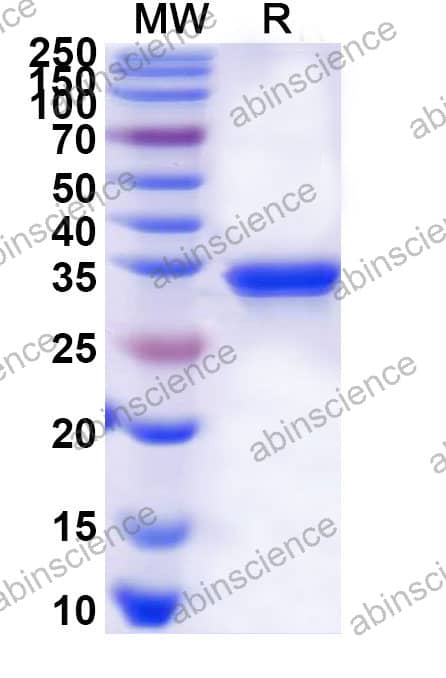
| Immunogen | E. coli - derived recombinant Human CHEK1 (Met1-Asn266). | ||||||||
| Target | CHEK1 | ||||||||
| Purification | Purified by antigen affinity column. | ||||||||
| Accession | O14757 | ||||||||
| Form | Liquid | ||||||||
| Storage buffer | 0.01M PBS, pH 7.4, 50% Glycerol, 0.05% Proclin 300. Please refer to the specific buffer information in the hardcopy of datasheet or the lot-specific COA. |
||||||||
| Product Usage Information |
| ||||||||
| Stability and Storage | Use a manual defrost freezer and avoid repeated freeze thaw cycles. Store at 2 to 8°C for frequent use. Store at -20 to -80°C for twelve months from the date of receipt. | ||||||||
| Alternate Names | Serine/threonine-protein kinase Chk1, 2.7.11.1, CHK1 checkpoint homolog, Cell cycle checkpoint kinase, Checkpoint kinase-1, CHEK1, CHK1 | ||||||||
| Background | Serine/threonine-protein kinase Chk1 (CHEK1) is a ~54 kDa protein. Serine/threonine-protein kinase which is required for checkpoint-mediated cell cycle arrest and activation of DNA repair in response to the presence of DNA damage or unreplicated DNA. May also negatively regulate cell cycle progression during unperturbed cell cycles. This regulation is achieved by a number of mechanisms that together help to preserve the integrity of the genome. Recognizes the substrate consensus sequence [R-X-X-S/T]. Binds to and phosphorylates CDC25A, CDC25B and CDC25C. 1. Feijoo, C. et al. (2001) The Journal of cell biology 154, 913-23. PMID: 11535615 2. Zhao, H. et al. (2002) Proceedings of the National Academy of Sciences of the United States of America 99, 14795-800. PMID: 12399544 3. Heffernan, TP. et al. (2002) Molecular and cellular biology 22, 8552-61. PMID: 12446774 4. Chen, MS. et al. (2003) Molecular and cellular biology 23, 7488-97. PMID: 14559997 5. Pichierri, P. et al. (2004) The EMBO journal 23, 1178-87. PMID: 14988723 6. Krämer, A. et al. (2004) Nature cell biology 6, 884-91. PMID: 15311285 7. Huang, X. et al. (2005) Proceedings of the National Academy of Sciences of the United States of America 102, 1065-70. PMID: 15650047 8. Sørensen, CS. et al. (2005) Nature cell biology 7, 195-201. PMID: 15665856 9. Yu, X. et al. (2020) Journal of hematology & oncology 13, 40. PMID: 32357935 | ||||||||
| Note | For research use only. |
Western blot analysis was performed using anti-CHEK1 polyclonal antibody at 1ug/mL on various samples.
Lane 1: NIH3T3 cell lysate
Lane 2: PC-12 cell lysate
Contact us for custom quotes, bulk requests and any other issues.
Mail: [email protected]
Contact Us
+86-27-65523339
Building C, No. 666, Shen Dun Si Lu, Wuhan, 430206, China