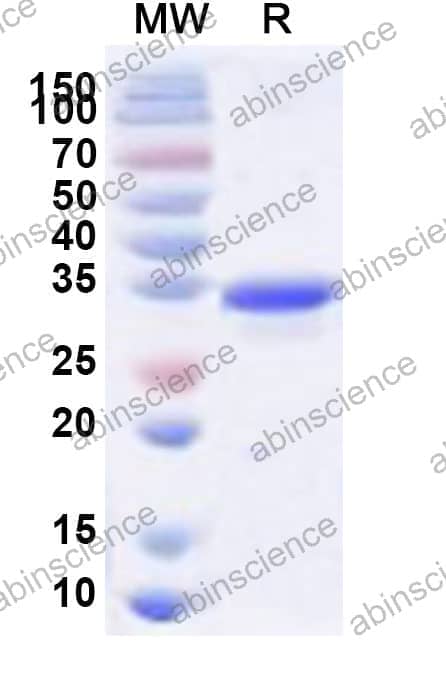
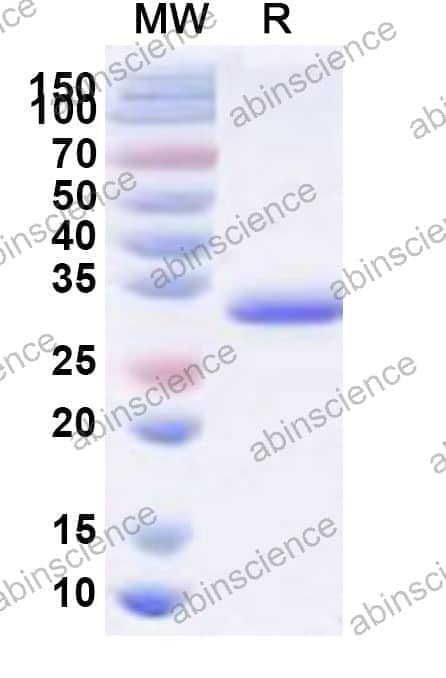
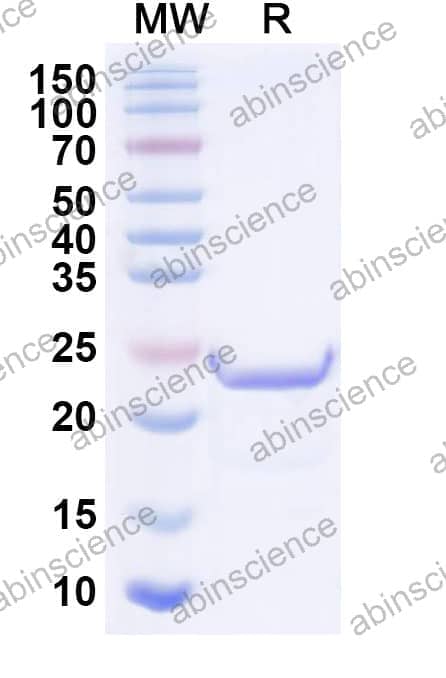
| Alternate Names | Genome polyprotein, Leader protein, L, Capsid protein VP0, VP4-VP2, Capsid protein VP4, P1A, Virion protein 4, Capsid protein VP2, P1B, Virion protein 2, Capsid protein VP3, P1C, Virion protein 3, Capsid protein VP1, P1D, Virion protein 1, Protein 2A, P2A, Protein 2B, P2B, Protein 2C, P2C, EC:3.6.4.13, Protein 3A, P3A, VPg, P3B, Protein 3B, Protease 3C, P3C, EC:3.4.22.28, Picornain 3C, RNA-directed RNA polymerase, RdRp, EC:2.7.7.48, 3D polymerase, 3Dpol, Protein 3D, 3D |
|---|
| Background | Genome polyprotein (VP1) is a ~256 kDa protein. Forms a complex with host RAN and probably binds to exportins carrying activated MAPK in order to mediate the hyperphosphorylation of host Phe/Gly containing nuclear pore proteins (Nups) resulting in cessation of active nucleocytoplasmic transport (Probable). Proteins with NLS signals fail to import, cellular mRNAs fail to export, and some proteins small enough for diffusion are not retained anymore (efflux). The resulting inhibition of cellular protein synthesis serves to ensure maximal viral gene expression and to evade host immune response. The leader protein also inhibits host interferon regulatory factor 3 (IRF3) dimerization, thereby blocking the transcriptional activation of IFN genes. Binds to host RNase L thereby preventing its activation by 2'-5' oligoadenylates in order to counteract the antiviral interferon-inducible OAS/RNase L pathway. 1. Ricour, C. et al. (2009) The Journal of general virology 90, 177-86. PMID: 190882872. Sorgeloos, F. et al. (2013) PLoS pathogens 9, e1003474. PMID: 238259543. Drappier, M. et al. (2018) PLoS pathogens 14, e1006989. PMID: 29652922 |
|---|

 中文
中文 English
 한국어
한국어 日本語
日本語 Español
 Français
 Русский