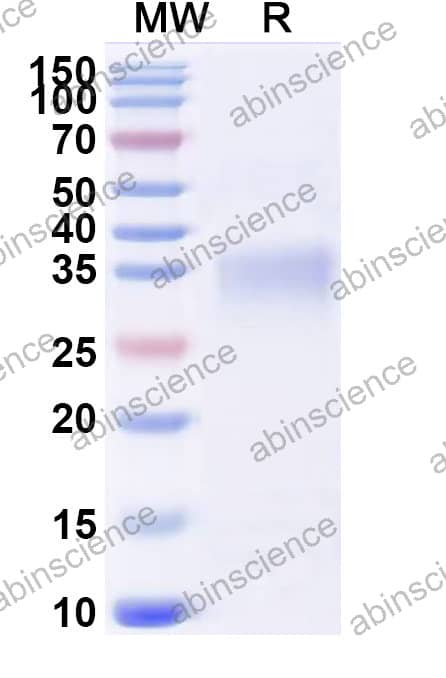
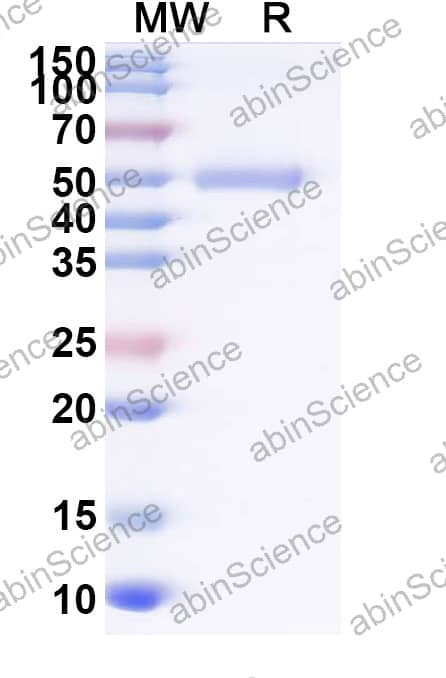
ELISA, Immunogen, SDS-PAGE, WB, Bioactivity testing in progress
Species
Tupaia chinensis (Chinese tree shrew)
Nature
Recombinant
Target
CD366, HAVCR2, HAVcr-2, Hepatitis A virus cellular receptor 2, T-cell immunoglobulin and mucin domain-containing protein 3, T-cell immunoglobulin mucin receptor 3, T-cell membrane protein 3, TIM-3, TIM3, TIMD-3, TIMD3
Endotoxin level
Remove endotoxin and sterilization is required for cell assay.
Purity
>90% as determined by SDS-PAGE.
Predicted molecular weight
21.17 kDa
Form
Lyophilized
Storage buffer
Lyophilized from a solution in PBS pH 7.4, 1 mM EDTA, 4% Trehalose, 1% Mannitol.
Please refer to the specific buffer information in the hardcopy of datasheet or the lot-specific COA.
Reconstitution
Reconstitute in sterile water for a stock solution. A copy of datasheet will be provided with the products, please refer to it for details.
Shipping
In general, proteins are provided as lyophilized powder/frozen liquid. They are shipped out with dry ice/blue ice unless customers require otherwise.
Stability and Storage
Use a manual defrost freezer and avoid repeated freeze thaw cycles. Store at 2 to 8°C for frequent use. Store at -20 to -80°C for twelve months from the date of receipt.
Alternate Names
CD366, HAVCR2, HAVcr-2, Hepatitis A virus cellular receptor 2, T-cell immunoglobulin and mucin domain-containing protein 3, T-cell immunoglobulin mucin receptor 3, T-cell membrane protein 3, TIM-3, TIM3, TIMD-3, TIMD3
Background
Hepatitis A virus cellular receptor 2 (CD366/TIM-3) is a ~33 kDa protein. Cell surface receptor implicated in modulating innate and adaptive immune responses. Generally accepted to have an inhibiting function. Reports on stimulating functions suggest that the activity may be influenced by the cellular context and/or the respective ligand. Regulates macrophage activation. Inhibits T-helper type 1 lymphocyte (Th1)-mediated auto- and alloimmune responses and promotes immunological tolerance.
1. Gorman, JV. et al. (2014) Immunologic research 59, 56-65. PMID: 24825777
2. Monney, L. et al. (2002) Nature 415, 536-41. PMID: 11823861
3. Sánchez-Fueyo, A. et al. (2003) Nature immunology 4, 1093-101. PMID: 14556005
4. Clayton, KL. et al. (2014) Journal of immunology (Baltimore, Md. : 1950) 192, 782-91. PMID: 24337741
5. Tomkowicz, B. et al. (2015) PloS one 10, e0140694. PMID: 26492563
6. Gautron, AS. et al. (2014) European journal of immunology 44, 2703-2711. PMID: 24838857
7. Zhu, C. et al. (2005) Nature immunology 6, 1245-52. PMID: 16286920
8. Leitner, J. et al. (2013) PLoS pathogens 9, e1003253. PMID: 23555261

 中文
 English
 한국어
 日本語
 Español
 Français
 Русский