中文
 English
 한국어
 日本語
 Español
 Français
 Русский


| Catalog No. | HV786043 | ||||
|---|---|---|---|---|---|
| Description |
Anti-PINK1 Recombinant Antibody (N4/49) (HV786043) is a mouse monoclonal antibody detecting PINK1 in IHC, WB.
Highlights
|
||||
| Applications | IHC, WB | ||||
| Host species | Mouse | ||||
| Clonality | Monoclonal | ||||
| Isotype | IgG2a, kappa | ||||
| Clone ID | N4/49 | ||||
| Target | PINK1, BRPK, Serine/threonine-protein kinase PINK1, mitochondrial, PTEN-induced putative kinase protein 1 | ||||
| Endotoxin level | < 10 EU/mg as determined by LAL method. | ||||
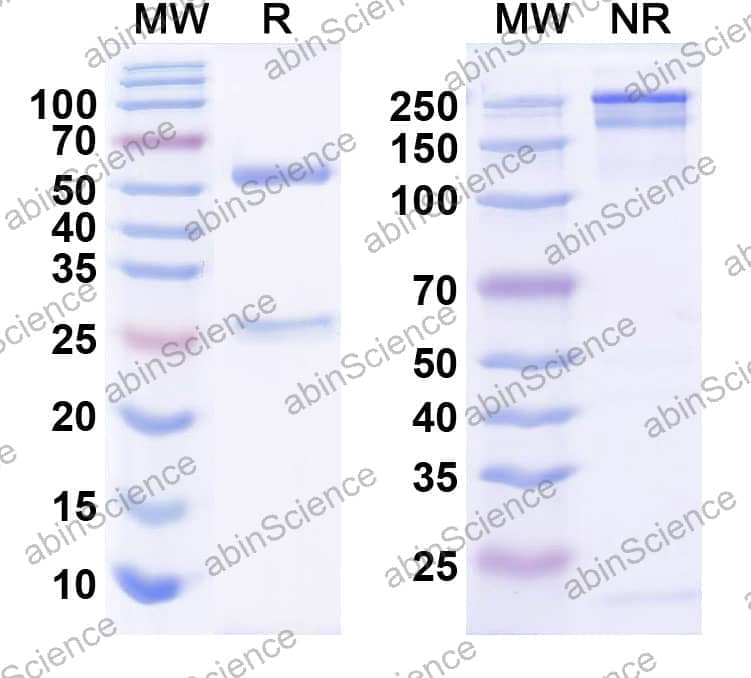
| Purity | >95% as determined by SDS-PAGE. | ||||
| Purification | Protein A/G purified from cell culture supernatant. | ||||
| RRID | Anti-PINK1 Antibody (N4/49) (abinScience Cat# HV786043, RRID:AB_3728715) |
||||
| Form | Liquid | ||||
| Storage buffer | 0.01M PBS pH 7.4. Please refer to the specific buffer information in the hardcopy of datasheet or the lot-specific COA. |
||||
| Product Usage Information |
| ||||
| Stability and Storage | Use a manual defrost freezer and avoid repeated freeze-thaw cycles. Store at 4°C short term (1-2 weeks). Store at -20°C 12 months. Store at -80°C long term. | ||||
| Background | Serine/threonine-protein kinase PINK1, mitochondrial is a ~62 kDa protein. Serine/threonine-protein kinase which acts as a sensor of mitochondrial damage and protects against mitochondrial dysfunction during cellular stress. It phosphorylates mitochondrial proteins to coordinate mitochondrial quality control mechanisms that remove and replace dysfunctional mitochondrial components. In healthy mitochondria, PINK1 is translocated across the mitochondrial outer membrane (MOM) via the translocase of the outer membrane (TOM) complex, and inserted into the mitochondrial inner membrane (MIM) via the translocase of the inner membrane (TIM23) complex where it is cleaved and released into the cytosol. Depending on the severity of mitochondrial damage, activity ranges from preventing apoptosis and stimulating mitochondrial biogenesis to eliminating severely damaged mitochondria via PINK1-PRKN-dependent mitophagy. When cellular stress results in irreversible mitochondrial damage, PINK1 accumulates at the outer mitochondrial membrane (OMM) where it phosphorylates pre-existing polyubiquitin chains at 'Ser-65', recruits PRKN from the cytosol to the OMM and activates PRKN by phosphorylation at 'Ser-65'; activated PRKN then ubiquitinates VDAC1 and other OMM proteins to initiate mitophagy. 1. Callegari, S. et al. (2025) Science (New York, N.Y.) 388, 303-310. PMID: 40080546 2. Nakajima, A. et al. (2003) Cancer letters 201, 195-201. PMID: 14607334 3. Valente, EM. et al. (2004) Science (New York, N.Y.) 304, 1158-60. PMID: 15087508 4. Yang, Y. et al. (2008) Proceedings of the National Academy of Sciences of the United States of America 105, 7070-5. PMID: 18443288 5. Kim, Y. et al. (2008) Biochemical and biophysical research communications 377, 975-80. PMID: 18957282 6. Xiong, H. et al. (2009) The Journal of clinical investigation 119, 650-60. PMID: 19229105 7. Vives-Bauza, C. et al. (2010) Proceedings of the National Academy of Sciences of the United States of America 107, 378-83. PMID: 19966284 8. Matsuda, N. et al. (2010) The Journal of cell biology 189, 211-21. PMID: 20404107 9. Yuan, XL. et al. (2010) Brain research 1351, 229-237. PMID: 20547144 10. Geisler, S. et al. (2010) Autophagy 6, 871-8. PMID: 20798600 | ||||
| Note | For research use only. |
SDS-PAGE for Anti-PINK1 Antibody (N4/49)
Contact us for custom quotes, bulk requests and any other issues.
Mail: [email protected]
Contact Us
+86-27-65523339
Building C, No. 666, Shen Dun Si Lu, Wuhan, 430206, China