中文
 English
 한국어
 日本語
 Español
 Français
 Русский


| Catalog No. | VK407023 | ||||
|---|---|---|---|---|---|
| Description |
Anti-Langya virus/LayV G/Glycoprotein Recombinant Antibody (SAA2452) (VK407023) is a mouse monoclonal antibody detecting Glycoprotein in ELISA, FCM, IF. Suitable for Langya virus (LayV), Mojiang virus (MojV).
Highlights
|
||||
| Species reactivity | Langya virus (LayV), Mojiang virus (MojV) | ||||
| Applications | ELISA, FCM, IF | ||||
| Host species | Mouse | ||||
| Clonality | Monoclonal | ||||
| Isotype | IgG | ||||
| Clone ID | SAA2452 | ||||
| Target | attachment glycoprotein, G | ||||
| Endotoxin level | < 10 EU/mg as determined by LAL method. | ||||
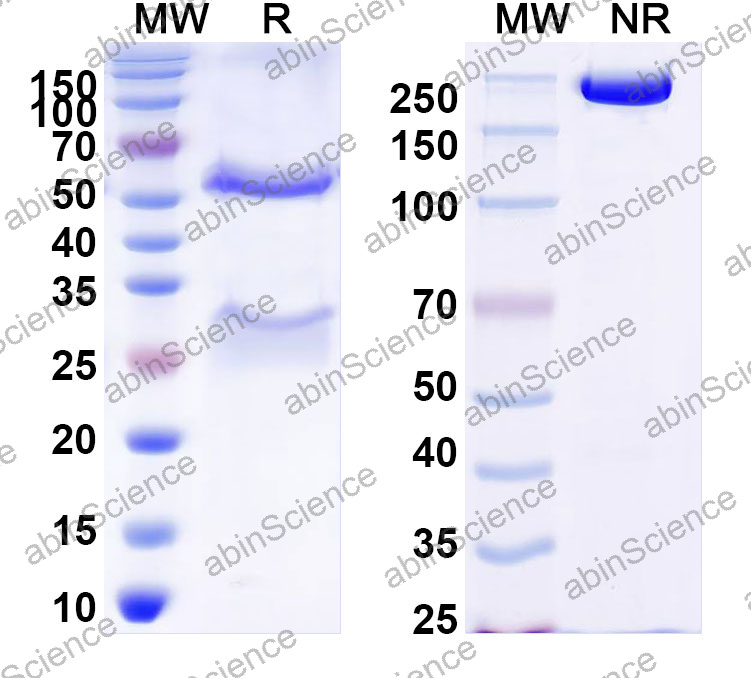
| Purity | >95% as determined by SDS-PAGE. | ||||
| Purification | Protein A/G purified from cell culture supernatant. | ||||
| Form | Liquid | ||||
| Storage buffer | 0.01M PBS pH 7.4. Please refer to the specific buffer information in the hardcopy of datasheet or the lot-specific COA. |
||||
| Product Usage Information |
| ||||
| Stability and Storage | Use a manual defrost freezer and avoid repeated freeze thaw cycles. Store at 2 to 8°C for frequent use. Store at -20 to -80°C for twelve months from the date of receipt. | ||||
| Background | Envelope glycoprotein (GP) is a ~74 kDa protein. Trimeric GP1,2 complexes form the virion surface spikes and mediate the viral entry processes, with GP1 acting as the receptor-binding subunit and GP2 as the membrane fusion subunit. At later times of infection, down-regulates the expression of various host cell surface molecules that are essential for immune surveillance and cell adhesion. Down-modulates several integrins including ITGA1, ITGA2, ITGA3, ITGA4, ITGA5, ITGA6, ITGAV and ITGB1. This decrease in cell adhesion molecules may lead to cell detachment, contributing to the disruption of blood vessel integrity and hemorrhages developed during infection (cytotoxicity) (Probable). Interacts with host TLR4 and thereby stimulates the differentiation and activation of monocytes leading to bystander death of T-lymphocytes. 1. Simmons, G. et al. (2002) Journal of virology 76, 2518-28. PMID: 11836430 2. Takada, A. et al. (2000) Virology 278, 20-6. PMID: 11112476 3. Iampietro, M. et al. (2017) PLoS pathogens 13, e1006397. PMID: 28542576 4. Edri, A. et al. (2018) Frontiers in immunology 9, 1428. PMID: 30013549 5. Vande Burgt, NH. et al. (2015) Viruses 7, 5587-602. PMID: 26516900 6. Brinkmann, C. et al. (2016) Journal of virology 90, 11075-11086. PMID: 27707924 7. González-Hernández, M. et al. (2018) Journal of virology 92. PMID: 29669839 8. Rizk, MG. et al. (2017) Journal of virology 91. PMID: 28878074 | ||||
| Note | For research use only. |
SDS-PAGE for Anti-Langya virus/LayV G/Glycoprotein Antibody (SAA2452)
Contact us for custom quotes, bulk requests and any other issues.
Mail: [email protected]
Contact Us
+86-27-65523339
Building C, No. 666, Shen Dun Si Lu, Wuhan, 430206, China