
 中文
中文 English
 한국어
한국어 日本語
日本語 Español
 Français
 Русский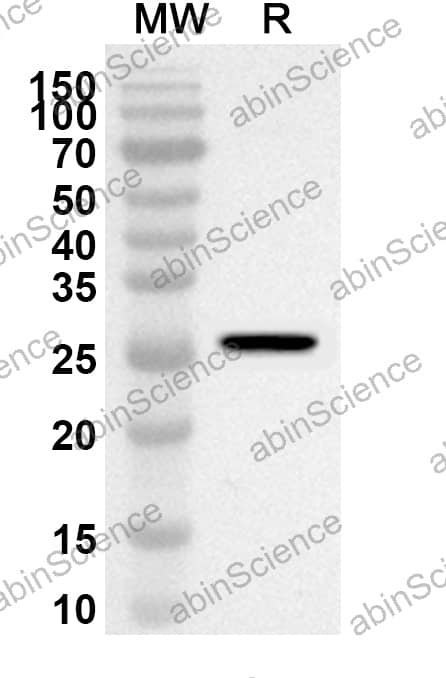
| Catalog No. | HC275014 | ||||||||
|---|---|---|---|---|---|---|---|---|---|
| Description |
Anti-CD150/SLAMF1 Polyclonal Antibody (HC275014) is a rabbit polyclonal antibody detecting SLAMF1 in ELISA, IHC, WB. Suitable for Human.
Highlights
|
||||||||
| Species reactivity | Human | ||||||||
| Applications | ELISA, IHC, WB | ||||||||
| Host species | Rabbit | ||||||||
| Isotype | IgG | ||||||||
| Clonality | Polyclonal | ||||||||
| Immunogen | E. coli - derived recombinant Human CD150/SLAMF1 (Phe19-Lys236). | ||||||||
| Target | SLAM family member 1, IPO-3, CDw150, SLAMF1, SLAM, CD150, Signaling lymphocytic activation molecule | ||||||||
| Purification | Purified by antigen affinity column. | ||||||||
| Accession | Q13291 | ||||||||
| Form | Liquid | ||||||||
| Storage buffer | 0.01M PBS, pH 7.4, 50% Glycerol, 0.05% Proclin 300. Please refer to the specific buffer information in the hardcopy of datasheet or the lot-specific COA. |
||||||||
| Product Usage Information |
| ||||||||
| Stability and Storage | Use a manual defrost freezer and avoid repeated freeze thaw cycles. Store at 2 to 8°C for frequent use. Store at -20 to -80°C for twelve months from the date of receipt. | ||||||||
| Background | Signaling lymphocytic activation molecule (CD150/SLAMF1) is a ~37 kDa protein. Self-ligand receptor of the signaling lymphocytic activation molecule (SLAM) family. SLAM receptors triggered by homo- or heterotypic cell-cell interactions are modulating the activation and differentiation of a wide variety of immune cells and thus are involved in the regulation and interconnection of both innate and adaptive immune response. Activities are controlled by presence or absence of small cytoplasmic adapter proteins, SH2D1A/SAP and/or SH2D1B/EAT-2. SLAMF1-induced signal-transduction events in T-lymphocytes are different from those in B-cells. Two modes of SLAMF1 signaling seem to exist: one depending on SH2D1A (and perhaps SH2D1B) and another in which protein-tyrosine phosphatase 2C (PTPN11)-dependent signal transduction operates. 1. Howie, D. et al. (2002) Blood 99, 957-65. PMID: 11806999 2. Li, C. et al. (2003) The Journal of biological chemistry 278, 3852-9. PMID: 12458214 3. Réthi, B. et al. (2006) Blood 107, 2821-9. PMID: 16317102 4. Yurchenko, MY. et al. (2010) Immunology and cell biology 88, 565-74. PMID: 20231852 5. Berger, SB. et al. (2010) Nature immunology 11, 920-7. PMID: 20818396 | ||||||||
| Note | For research use only. |
Western blot analysis was performed using anti-CD150/SLAMF1 polyclonal antibody at 1ug/mL on recombinant CD150/SLAMF1 (Catalog No. HC275012).


Contact us for custom quotes, bulk requests and any other issues.
Mail: support@abinScience.com
+86-27-65523339
Building C, No. 666, Shen Dun Si Lu, Wuhan, 430206, China


