Please ensure Javascript is enabled for purposes of website accessibility
Home > Products > Antibodies > Primary antibodies

Anti-Human MEFV Polyclonal Antibody (HB572014)

Price(USD):
Spec:
  • 50ug
  • 100ug
Number:
Get quote
  • Overview

  • Images

  • References

  • Datasheet

  • SDS

Overview
Catalog No.HB572014
Description
Anti-Human MEFV Polyclonal Antibody (HB572014) is a rabbit polyclonal antibody detecting Pyrin; Marenostrin; MEFV; MEF; TRIM20 in ELISA, IHC, WB. Suitable for Human.
Highlights
  • Affinity Purified — Minimal background and high purity for reliable results.
  • Multi-Application — Validated across multiple applications.
Species reactivityHuman
ApplicationsELISA, IHC, WB
Host speciesRabbit
IsotypeIgG
Clonality Polyclonal
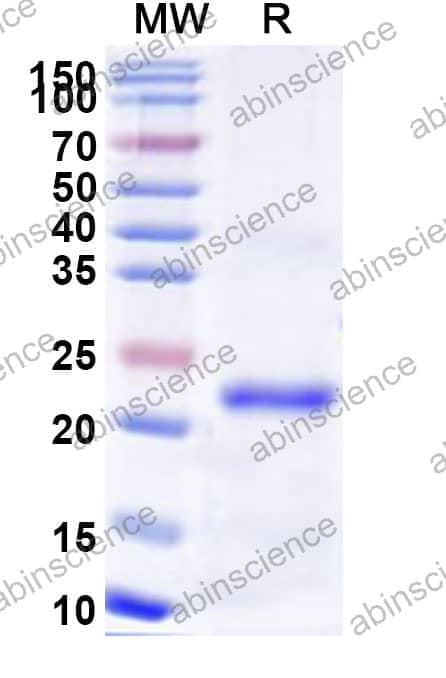
Immunogen E. coli - derived recombinant human MEFV (Glu589-Asp781).
Target Pyrin; Marenostrin; MEFV; MEF; TRIM20
Endotoxin level Please contact with the lab for this information.
Purification Purified by antigen affinity column.
Accession O15553
Form Liquid
Storage buffer 0.01M PBS, pH 7.4, 50% Glycerol, 0.05% Proclin 300.

Please refer to the specific buffer information in the hardcopy of datasheet or the lot-specific COA.

Product Usage Information
Application Dilution
ELISA 1:5000-1:20000
IHC 1:50-1:500
WB 1:500-1:2000
Stability and Storage Use a manual defrost freezer and avoid repeated freeze thaw cycles. Store at 2 to 8°C for frequent use. Store at -20 to -80°C for twelve months from the date of receipt.
Background

Pyrin (MEFV) is a ~86 kDa protein. Involved in the regulation of innate immunity and the inflammatory response in response to IFNG/IFN-gamma. Organizes autophagic machinery by serving as a platform for the assembly of ULK1, Beclin 1/BECN1, ATG16L1, and ATG8 family members and recognizes specific autophagy targets, thus coordinating target recognition with assembly of the autophagic apparatus and initiation of autophagy. Acts as an autophagy receptor for the degradation of several inflammasome components, including CASP1, NLRP1 and NLRP3, hence preventing excessive IL1B- and IL18-mediated inflammation. However, it can also have a positive effect in the inflammatory pathway, acting as an innate immune sensor that triggers PYCARD/ASC specks formation, caspase-1 activation, and IL1B and IL18 production. Together with AIM2, also acts as a mediator of pyroptosis, necroptosis and apoptosis (PANoptosis), an integral part of host defense against pathogens, in response to bacterial infection.

1. Centola, M. et al. (2000) Blood 95, 3223-31. PMID: 10807793
2. Mansfield, E. et al. (2001) Blood 98, 851-9. PMID: 11468188
3. Yu, JW. et al. (2006) Cell death and differentiation 13, 236-49. PMID: 16037825
4. Chae, JJ. et al. (2006) Proceedings of the National Academy of Sciences of the United States of America 103, 9982-7. PMID: 16785446
5. Papin, S. et al. (2007) Cell death and differentiation 14, 1457-66. PMID: 17431422
6. Yu, JW. et al. (2007) Molecular cell 28, 214-27. PMID: 17964261
7. Chae, JJ. et al. (2008) Blood 112, 1794-803. PMID: 18577712
8. Waite, AL. et al. (2009) Experimental biology and medicine (Maywood, N.J.) 234, 40-52. PMID: 19109554
9. Waite, AL. et al. (2009) PloS one 4, e6147. PMID: 19584923
10. Kimura, T. et al. (2015) The Journal of cell biology 210, 973-89. PMID: 26347139
Note For research use only
Images
References
Formula
Mass (g) = Concentration (mol/L) × Volume (L) × MW (g/mol)
Enter any 2 of Mass, Concentration, Volume + Molecular Weight to solve for the unknown.
Mass
=
Concentration
×
Volume
Molecular Weight *
g/mol
Formula
C₁ × V₁ = C₂ × V₂
Enter any 3 of the 4 values to solve for the unknown.
Stock Solution
C₁ (Stock Conc.)
×
V₁ (Stock Vol.)
=
Working Solution
C₂ (Working Conc.)
×
V₂ (Working Vol.)
Recommendation

Contact us for custom quotes, bulk requests and any other issues.

Mail: [email protected]

Distributor list