
 中文
中文 English
 한국어
한국어 日本語
日本語 Español
 Français
 Русский


| Catalog No. | HY524012 |
|---|---|
| Description |
Recombinant Human CXCL10/IP-10 Protein, N-His (HY524012) expressed in E. coli, spanning Val22-Pro98. Purity: >90% by SDS-PAGE.
Highlights
|
| Expression system | E. coli |
| Accession | P02778 |
| Protein length | Val22-Pro98 |
| Applications | ELISA, Immunogen, SDS-PAGE, WB, Bioactivity testing in progress |
| Species | Homo sapiens (Human) |
| Nature | Recombinant |
| Tested applications | WB |
| Endotoxin level | Please contact with the lab for this information. |
| Purity | >90% as determined by SDS-PAGE. |
| Predicted molecular weight | 10.94 kDa |
| Form | Lyophilized |
| Storage buffer | Lyophilized from a solution in PBS pH 7.4, 0.02% NLS, 1 mM EDTA, 4% Trehalose, 1% Mannitol. Please refer to the specific buffer information in the hardcopy of datasheet or the lot-specific COA. |
| Reconstitution | Reconstitute in sterile water for a stock solution. Adjust the volume of sterile water so that, after reconstitution, the final stock concentration matches the value indicated on the product label or datasheet. RECONSTITUTION PROTOCOL 1. Allow the product to be reconstituted and the reconstitution diluent to reach room temperature. 2. Tap or briefly centrifuge the product vial before opening to dislodge any lyophilized material that may be dispersed on the wall or cap of the vial. 3. Use the diluent and stock concentration recommended in the product datasheet. If preparing a stock concentration higher than recommended, contact Technical Service. 4. After adding the diluent, re-cap the vial and invert gently by hand or place on a slow rocking platform to allow the reconstitution diluent to coat all the surfaces inside the vial. Note: Do not mix by vortexing or by pipetting the material up and down. 5. Allow the vial to sit at room temperature with gentle agitation for at least 15 minutes before aliquotting or using. 6. Store the reconstituted material in single use aliquots in polypropylene or siliconized tubes. Aliquots of 10 μL or larger are recommended. |
| Shipping | In general, proteins are provided as lyophilized powder/frozen liquid. They are shipped out with dry ice/blue ice unless customers require otherwise. |
| Stability and Storage | Use a manual defrost freezer and avoid repeated freeze thaw cycles. Store at 2 to 8°C for frequent use. Store at -20 to -80°C for twelve months from the date of receipt. |
| Alternate Names | Gamma-IP10, C-X-C motif chemokine 10, INP10, 10 kDa interferon gamma-induced protein, Small-inducible cytokine B10, SCYB10, IP-10, CXCL10 |
| Background | C-X-C motif chemokine 10 (CXCL10/IP-10) is a ~10 kDa protein. Pro-inflammatory cytokine that is involved in a wide variety of processes such as chemotaxis, differentiation, and activation of peripheral immune cells, regulation of cell growth, apoptosis and modulation of angiostatic effects. Plays thereby an important role during viral infections by stimulating the activation and migration of immune cells to the infected sites. Mechanistically, binding of CXCL10 to the CXCR3 receptor activates G protein-mediated signaling and results in downstream activation of phospholipase C-dependent pathway, an increase in intracellular calcium production and actin reorganization. In turn, recruitment of activated Th1 lymphocytes occurs at sites of inflammation. Activation of the CXCL10/CXCR3 axis also plays an important role in neurons in response to brain injury for activating microglia, the resident macrophage population of the central nervous system, and directing them to the lesion site. 1. Romagnani, P. et al. (2001) Blood 97, 601-7. PMID: 11157474 2. Sidahmed, AM. et al. (2012) Cytokine 59, 433-41. PMID: 22652417 3. Angiolillo, AL. et al. (1995) The Journal of experimental medicine 182, 155-62. PMID: 7540647 4. Smit, MJ. et al. (2003) Blood 102, 1959-65. PMID: 12750173 5. Gao, JM. et al. (2009) Acta pharmacologica Sinica 30, 193-201. PMID: 19151743 6. Cheeran, MC. et al. (2003) Journal of virology 77, 4502-15. PMID: 12663757 |
| Note | For research use only. |
SDS-PAGE for Recombinant Human CXCL10/IP-10 Protein, N-His
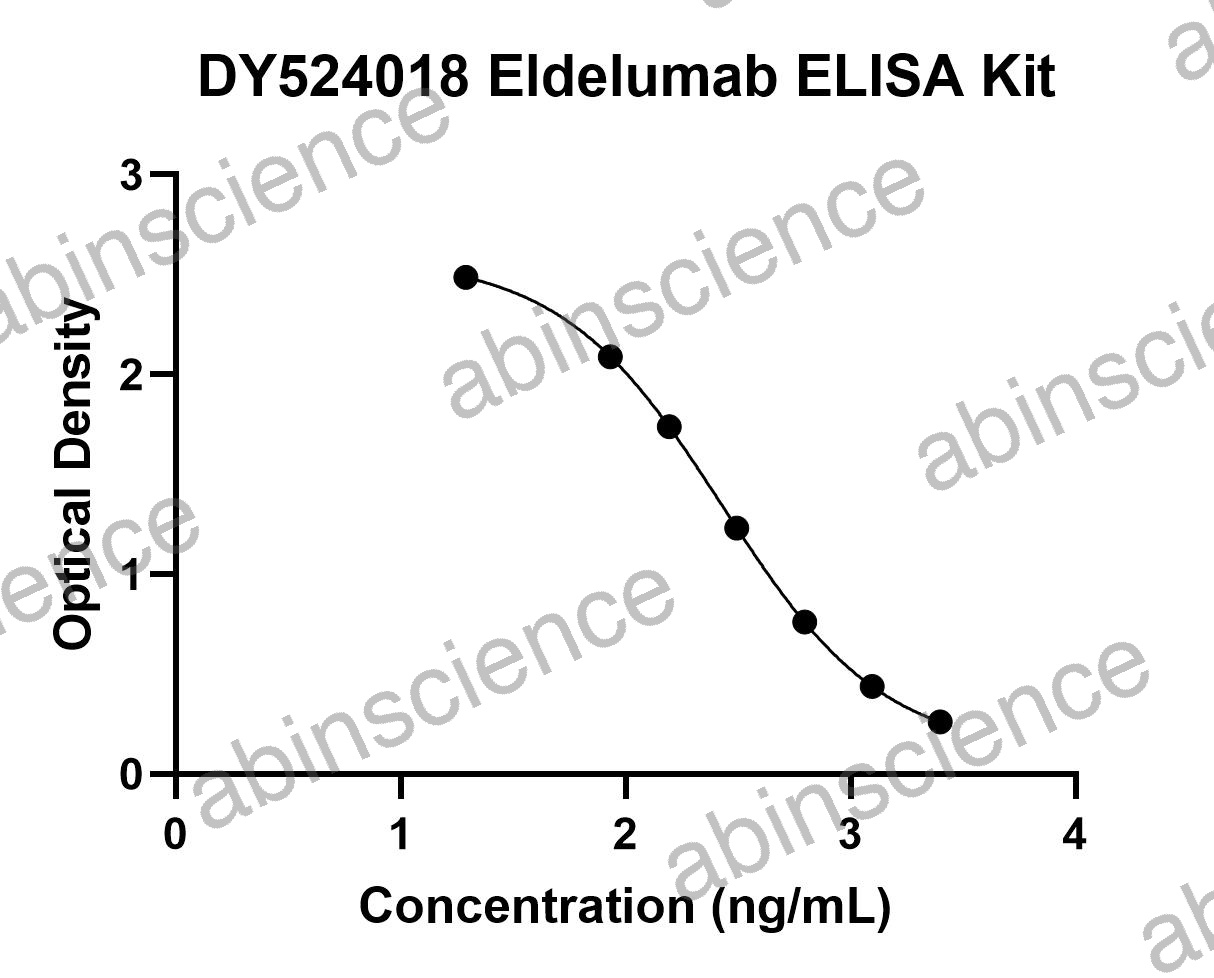
Detects Eldelumab in indirect ELISAs.
Detected by Anti-CXCL10/IP-10 monoclonal antibody (Catalog No: HF813016)



Contact us for custom quotes, bulk requests and any other issues.
Mail: [email protected]
+86-27-65523339
Building C, No. 666, Shen Dun Si Lu, Wuhan, 430206, China


