
 中文
中文 English
 한국어
한국어 日本語
日本語 Español
 Français
 Русский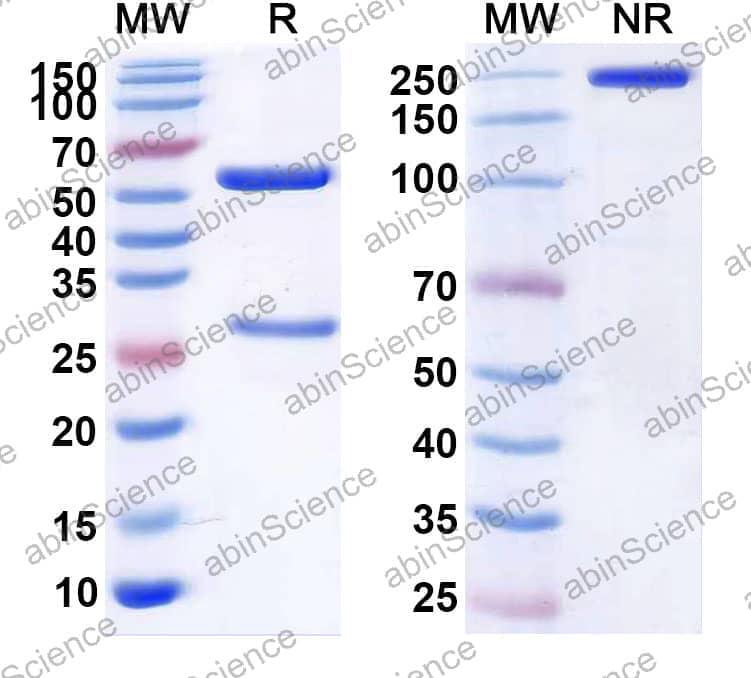
| Catalog No. | HY196056 |
|---|---|
| Species reactivity | Human |
| Applications | ELISA, Bioactivity: FACS, Functional assay, Research in vivo |
| Host species | Human |
| Clonality | Monoclonal |
| Isotype | IgG |
| Clone ID | CE-355621 |
| Biological activity | CE-355621 (0.01-100 nM, 4 h) can efficiently block the binding of c-Met to HGF and induce c-Met degradation in A549 cells [1]. CE-355621 (0.01 nM-10 nM, 24 h) significantly inhibits c-Met activation in U87MG cells [1]. CE-355621 (0.01-10 ug/mL, 48 h) can induce c-Met degradation in U87MG cells [1]. Western Blot Analysis [1] Cell Line: U87MG cells Concentration: 0.01 nM-10 nM Incubation Time: 24 h Result: Significantly inhibited activation of c-Met. Western Blot Analysis [1] Cell Line: U87MG cells Concentration: 0.01-10 ug/mL Incubation Time: 48 h Result: Reduced the level of c-Met. CE-355621 (25-200 ug, i.p., on day 0, 2, 3, 6 and 8) significantly delays tumor growth in female CD-1 nu/nu mice bearing U87MG xenografts [1]. CE-355621 (400 ug, i.p., on day 7 and 14) significantly inhibits tumor growth in female CD-1 nu/nu mice bearing GTL-16 xenografts [1]. CE-355621 (200 ug, i.p., single dose, on day 7) can effectively inhibit tumor volume growth and uptake of 18 F-FDG in female nude (nu/nu) mice bearing U87MG xenografts [2]. |
| Expression system | Mammalian cells |
| Target | Tyrosine-protein kinase Met, Hepatocyte growth factor receptor, Proto-oncogene c-Met, Scatter factor receptor, HGF receptor, SF receptor, HGF/SF receptor, MET |
| Endotoxin level | < 10 EU/mg |
| Purity | >95% purity as determined by SDS-PAGE. |
| Purification | Protein A/G purified from cell culture supernatant. |
| Accession | P08581 |
| Form | Liquid |
| Storage buffer | 0.01M PBS pH 7.4 Please refer to the specific buffer information in the hardcopy of datasheet or the lot-specific COA. |
| Stability and Storage | Use a manual defrost freezer and avoid repeated freeze thaw cycles. Store at 2 to 8°C for frequent use. Store at -20 to -80°C for twelve months from the date of receipt. |
| Alternate Names | CE-355621, CE355621, CE355621 |
| Background | Hepatocyte growth factor receptor (MET/HGFR) is a ~155 kDa protein. Receptor tyrosine kinase that transduces signals from the extracellular matrix into the cytoplasm by binding to hepatocyte growth factor/HGF ligand. Regulates many physiological processes including proliferation, scattering, morphogenesis and survival. Ligand binding at the cell surface induces autophosphorylation of MET on its intracellular domain that provides docking sites for downstream signaling molecules. Following activation by ligand, interacts with the PI3-kinase subunit PIK3R1, PLCG1, SRC, GRB2, STAT3 or the adapter GAB1. Recruitment of these downstream effectors by MET leads to the activation of several signaling cascades including the RAS-ERK, PI3 kinase-AKT, or PLCgamma-PKC. MET is the therapeutic target of amivantamab (Rybrevant). |
| References | 1. Michaud NR, et al. Biochemical and pharmacological characterization of human c-Met neutralizing monoclonal antibody CE-355621. MAbs. 2012 Nov-Dec;4(6):710-23. [HY196056] 2. Tseng JR, et al. Preclinical efficacy of the c-Met inhibitor CE-355621 in a U87 MG mouse xenograft model evaluated by 18F-FDG small-animal PET. J Nucl Med. 2008 Jan;49(1):129-134. [HY196056] |
| Note | For research use only. Not suitable for clinical or therapeutic use. |
SDS-PAGE for Research Grade Anti-Human MET/c-Met/HGFR (CE-355621)



Contact us for custom quotes, bulk requests and any other issues.
Mail: [email protected]
+86-27-65523339
Building C, No. 666, Shen Dun Si Lu, Wuhan, 430206, China


