
 中文
中文 English
 한국어
한국어 日本語
日本語 Español
 Français
 Русский
| Catalog No. | HW494036 |
|---|---|
| Description |
Sulesomab (HW494036) is a research-grade recombinant antibody targeting CD66. Produced in mammalian cells with native-like glycosylation.
Highlights
|
| Species reactivity | Human |
| Applications | ELISA, Bioactivity: FACS, Functional assay, Research in vivo |
| Host species | Mouse |
| Clonality | Monoclonal |
| Isotype | IgG1, kappa |
| Expression system | Mammalian cells |
| Tested applications | FCM |
| Target | Normal cross-reacting antigen, Carcinoembryonic antigen-related cell adhesion molecule 6, CEACAM6, CD66c, NCA, Non-specific crossreacting antigen |
| Endotoxin level | < 10 EU/mg |
| Purity | >95% purity as determined by SDS-PAGE. |
| Purification | Protein A/G purified from cell culture supernatant. |
| Accession | P40199 |
| Form | Liquid |
| Storage buffer | 0.01M PBS pH 7.4 Please refer to the specific buffer information in the hardcopy of datasheet or the lot-specific COA. |
| Stability and Storage | Use a manual defrost freezer and avoid repeated freeze thaw cycles. Store at 2 to 8°C for frequent use. Store at -20 to -80°C for twelve months from the date of receipt. |
| Alternate Names | IMMU-MN3, Technetium(99mTc)sulesomab, LeukoScan, 167747-19-5 |
| Background | Cell adhesion molecule CEACAM6 (CD66c) is a ~37 kDa protein. Cell surface glycoprotein that plays a role in cell adhesion and tumor progression. Intercellular adhesion occurs in a calcium- and fibronectin-independent manner. Mediates homophilic and heterophilic cell adhesion with other carcinoembryonic antigen-related cell adhesion molecules, such as CEACAM5 and CEACAM8. Heterophilic interaction with CEACAM8 occurs in activated neutrophils. Plays a role in neutrophil adhesion to cytokine-activated endothelial cells. 1. Ordoñez, C. et al. (2000) Cancer research 60, 3419-24. PMID: 10910050 2. Kuroki, M. et al. (2001) Journal of leukocyte biology 70, 543-50. PMID: 11590190 3. Kuijpers, TW. et al. (1992) The Journal of cell biology 118, 457-66. PMID: 1378450 4. Blumenthal, RD. et al. (2005) Cancer research 65, 8809-17. PMID: 16204051 5. Oikawa, S. et al. (1991) The Journal of biological chemistry 266, 7995-8001. PMID: 2022629 6. Oikawa, S. et al. (1989) Biochemical and biophysical research communications 164, 39-45. PMID: 2803308 7. Yamanaka, T. et al. (1996) Protein expression and purification 7, 438-46. PMID: 8776764 |
| Note | For research use only. Not suitable for clinical or therapeutic use. |
| Isotype Control | Mouse IgG1, kappa Recombinant Isotype Control Antibody (MOPC-21) (MV080207) |
SDS-PAGE for Anti-Human CEACAM-5/CD66e Reference Antibody (Sulesomab, RUO)
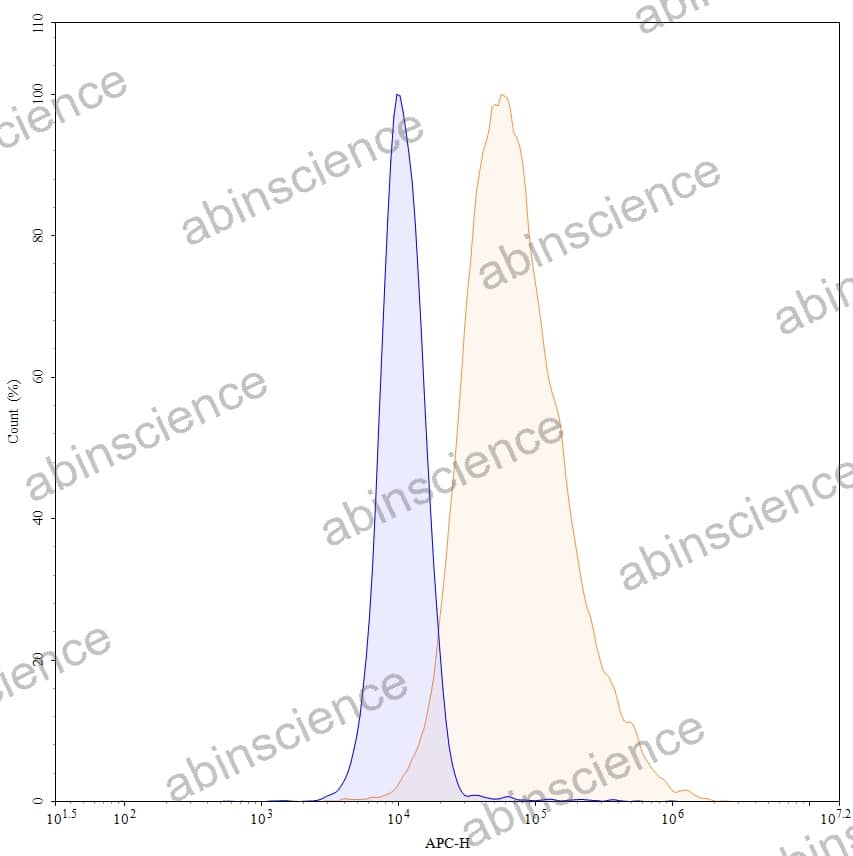
Flow-cytometry using APC anti-human CD66c antibody. BXPC-3 cells were stained with an irrelevant antibody (Blue Histogram) or an APC anti-human CD66c monoclonal antibody (Catalog HW494036, Yellow Histogram) at a concentration of 5 µg/ml for 30 mins at RT. After washing, and cells analysed on a NovoCyte Flow Cytometer.
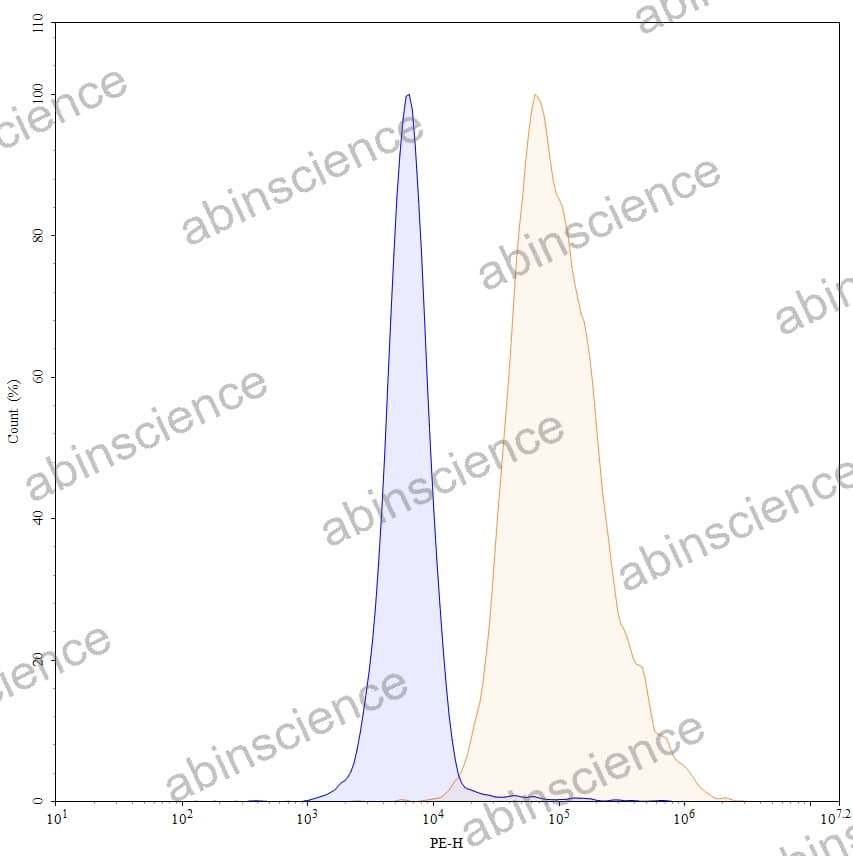
Flow-cytometry using PE anti-human CD66c antibody. BXPC-3 cells were stained with an irrelevant antibody (Blue Histogram) or an PE anti-human CD66c monoclonal antibody (Catalog HW494036, Yellow Histogram) at a concentration of 5 µg/ml for 30 mins at RT. After washing, and cells analysed on a NovoCyte Flow Cytometer.
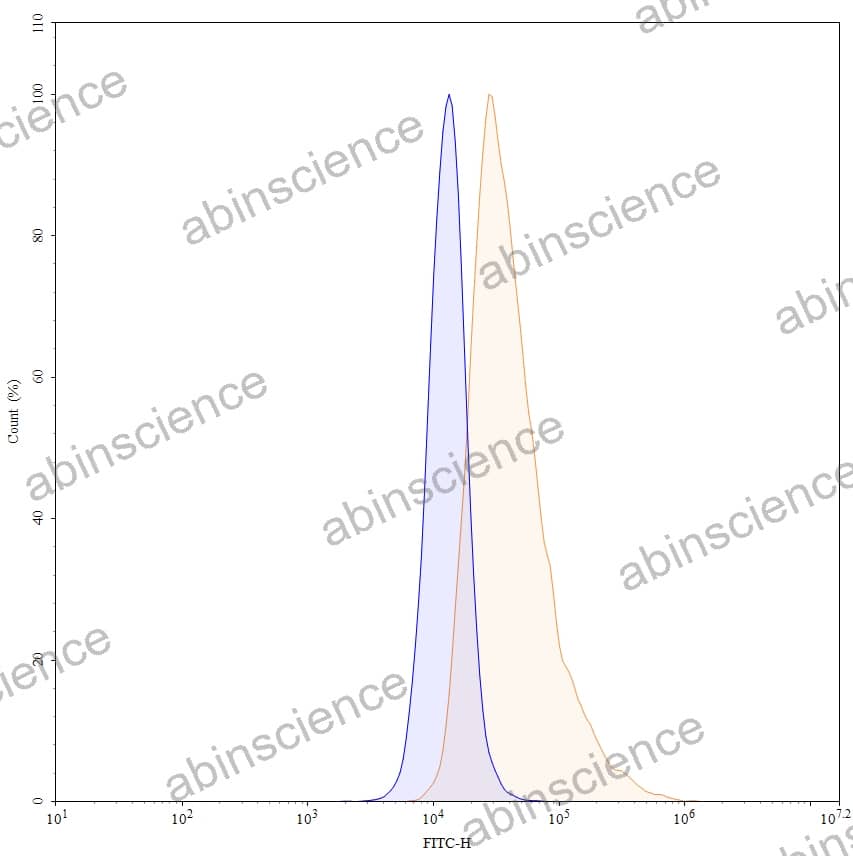
Flow-cytometry using FITC anti-human CD66c antibody. BXPC-3 cells were stained with an irrelevant antibody (Blue Histogram) or an FITC anti-human CD66c monoclonal antibody (Catalog HW494036, Yellow Histogram) at a concentration of 5 µg/ml for 30 mins at RT. After washing, and cells analysed on a NovoCyte Flow Cytometer.


Contact us for custom quotes, bulk requests and any other issues.
Mail: [email protected]
+86-27-65523339
Building C, No. 666, Shen Dun Si Lu, Wuhan, 430206, China


