August 2026 Literature Digest | abinScience Product Citations
In August, a wave of important studies on antibody and protein technologies appeared in leading journals including
Journal of Nanobiotechnology, Cell Reports Medicine, Science Advances, and
Chemical Engineering Journal — several of them supported by key reagents from abinScience. These studies span
non-obstructive azoospermia, chikungunya virus, Arabidopsis, and the tumor immune microenvironment, ranging from molecular biomarker discovery to signaling pathway dissection, and together offer a snapshot of the diversity of current frontline research. This month's digest walks you through these latest advances from labs around the world.
Title: Non-invasive proteomic profiling of seminal plasma extracellular vesicles facilitates precise molecular stratification in non-obstructive azoospermia Journal: Journal of Nanobiotechnology Impact Factor: 15 Institution: Department of Urology, Peking University First Hospital
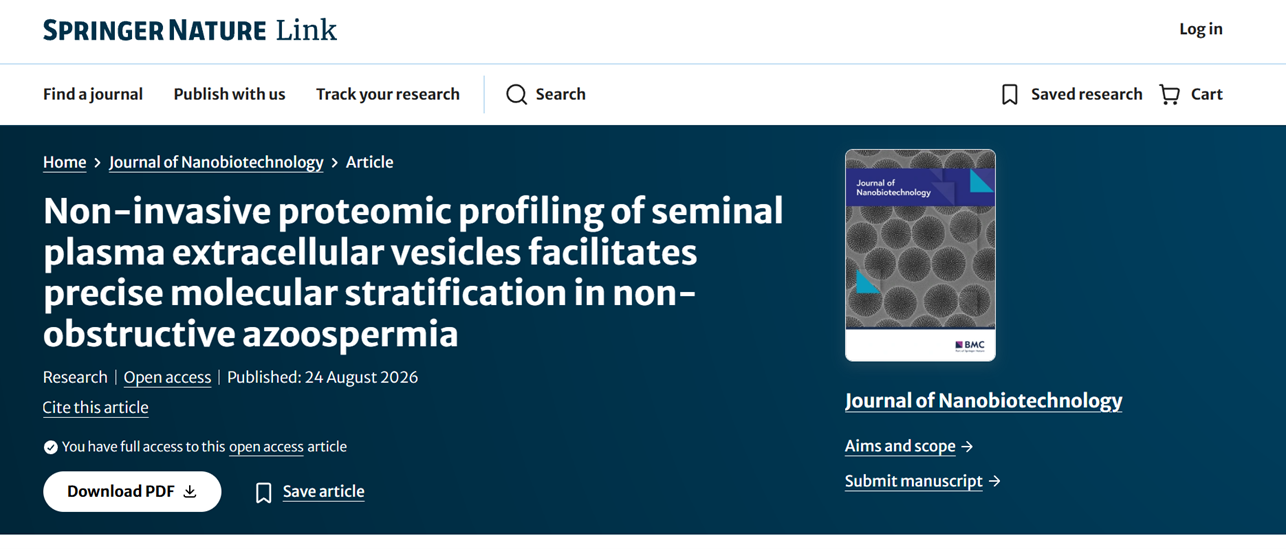
Non-obstructive azoospermia (NOA) is one of the hardest forms of male infertility to diagnose — conventional workups rely on hormone panels, testicular volume, and invasive biopsy, and a non-invasive molecular marker has long been missing. This study focused on seminal plasma extracellular vesicles (SPEVs), performing in-depth proteomic analysis of 173 seminal plasma samples spanning normal spermatogenesis and multiple NOA etiological subtypes. Proteins related to spermatogenesis and energy metabolism were markedly downregulated in NOA patients, while immune- and complement-pathway proteins were upregulated; different etiological subtypes shared common molecular features but also carried subtype-specific markers, and idiopathic NOA could be further split into two mechanistically distinct molecular subtypes. The resulting machine learning model performed well at distinguishing NOA from normal individuals and predicting sperm retrieval outcomes, but generalized less well when predicting testicular histopathology, suggesting the approach still needs validation in larger cohorts.
In the western blot validation of CLPSL1, a candidate marker specific to the idiopathic NOA subgroup,
the researchers used an anti-CLPSL1 primary antibody from abinScience (catalog no. HB388014) as one of the key reagents confirming this proteomics-derived marker.
Title: Capsid inclusion in a CHIKV mRNA vaccine impairs adaptive immune responses Journal: Cell Reports Medicine Impact Factor: 14 Institution: Yunnan Key Laboratory of Cross-Border Infectious Disease Control and Novel Drug Development
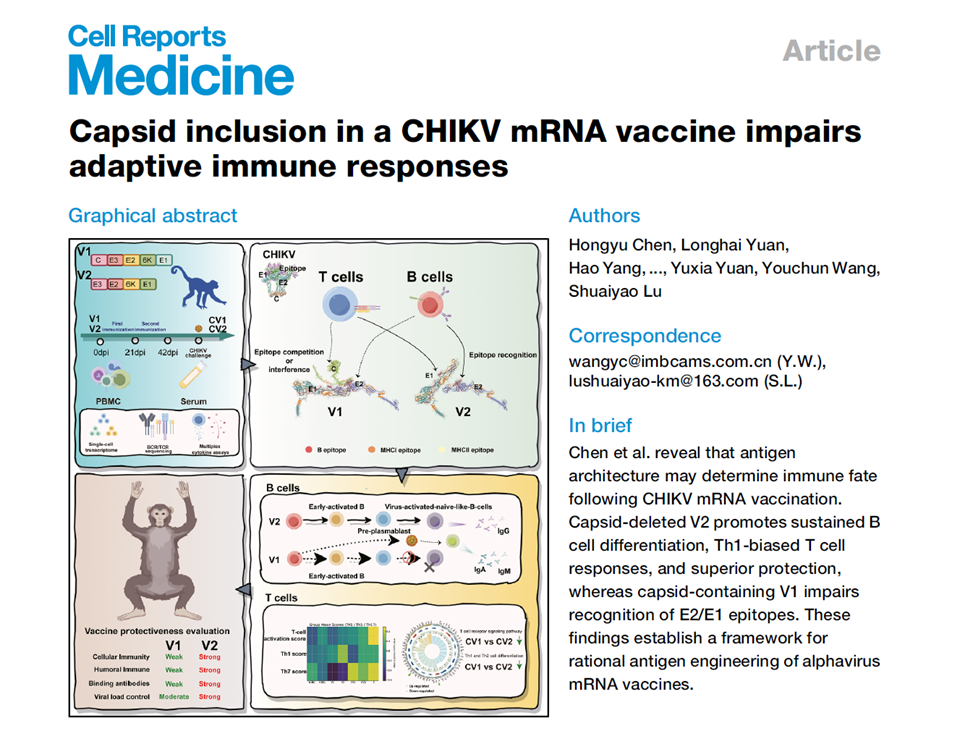
Spread by mosquitoes and expanding in global reach, chikungunya virus (CHIKV) already has several mRNA vaccine candidates in clinical trials, yet mechanistic gaps remain. This study compared two candidate mRNA vaccines — V1, which retains the capsid, and V2, which lacks it — and found that V2, despite its simpler design, induced more durable B-cell activation and a rapidly recallable, IgG-dominant humoral response; after challenge it also drove Th1-skewed expansion of effector CD4+ T cells whose TCR clonotypes closely mirrored those seen in natural infection. V1, by contrast, produced a transient response that was poorly sustained after challenge. Structural predictions further suggested that the capsid protein retained in V1 may mask key neutralizing epitopes on E2/E1 through antigenic competition, dragging down overall immunogenicity. The findings show that antigen architecture — whether or not the capsid is retained — is a decisive factor in the protective efficacy of CHIKV mRNA vaccines, offering a framework for rational design of next-generation candidates.
In western blots quantifying E1/E2 expression from the vaccine constructs and in mouse tissue immunofluorescence assays,
the researchers used an Anti-CHIKV E2 antibody (catalog no. VK572014) and an Anti-CHIKV E1 antibody (catalog no. VK425014) from abinScience, ruling out differences in expression level as a confounding factor and providing essential support for the core "capsid masks neutralizing epitopes" hypothesis.
Title: Ethylene-regulated dimeric ETR1 kinase reveals multi-site EIN2 docking targeted by peptides that delay climacteric ripening Journal: Science Advances Impact Factor: 13.9 Institution: School of Food Science and Engineering, South China University of Technology
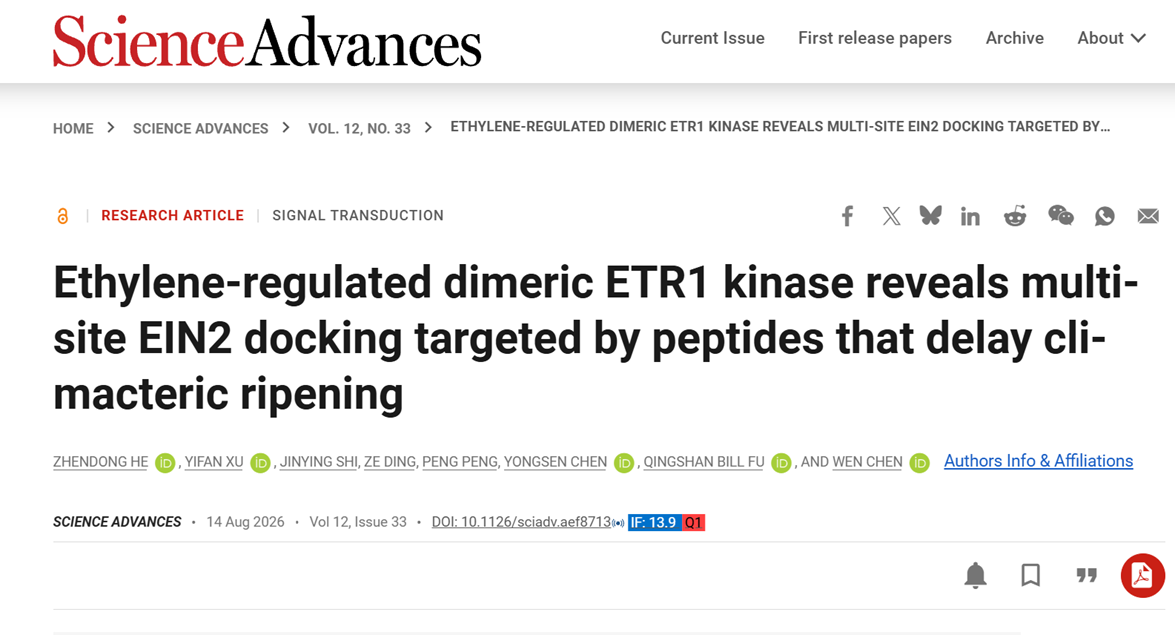
This study examines the interaction between the plant ethylene receptor ETR1 and its downstream transducer EIN2 — it was previously unclear whether the two bind through a single epitope or a broader interface, or how receptor dimerization affects this interaction. Using purified full-length Arabidopsis ETR1 protein, the authors showed that ethylene suppresses histidine autophosphorylation activity only in dimeric — not monomeric — ETR1, establishing dimerization as a prerequisite for coupling hormone sensing to kinase inhibition. BLI and NMR titration identified three docking fragments on the EIN2 C-terminus (the previously known NOP-1, plus two newly discovered fragments, DP1 and DP2), with DP2 binding most tightly; when applied in tomato and mango ripening trials, DP2 delivered the best delay-of-ripening and shelf-life extension results. The study proposes a new model in which EIN2 engages ETR1 through a multi-site interface rather than a single epitope, providing a rational framework for designing fruit-preservation peptides that target the receptor–transducer interface.
In the immunoblot assay detecting ETR1 autophosphorylation,
the researchers used an anti-N1-phosphohistidine antibody from abinScience (3-pHis monoclonal, clone SC56-2, catalog no. YC124053), a key detection tool for demonstrating the core finding that ethylene selectively inhibits the kinase activity of dimeric ETR1.
Title: Immunomodulator triptolide synergizes with black phosphorus nanosheets-mediated calcium overload for mild heat-potentiated cancer immunotherapy Journal: Chemical Engineering Journal Impact Factor: 12.5 Institution: School of Medicine, Shanghai Jiao Tong University
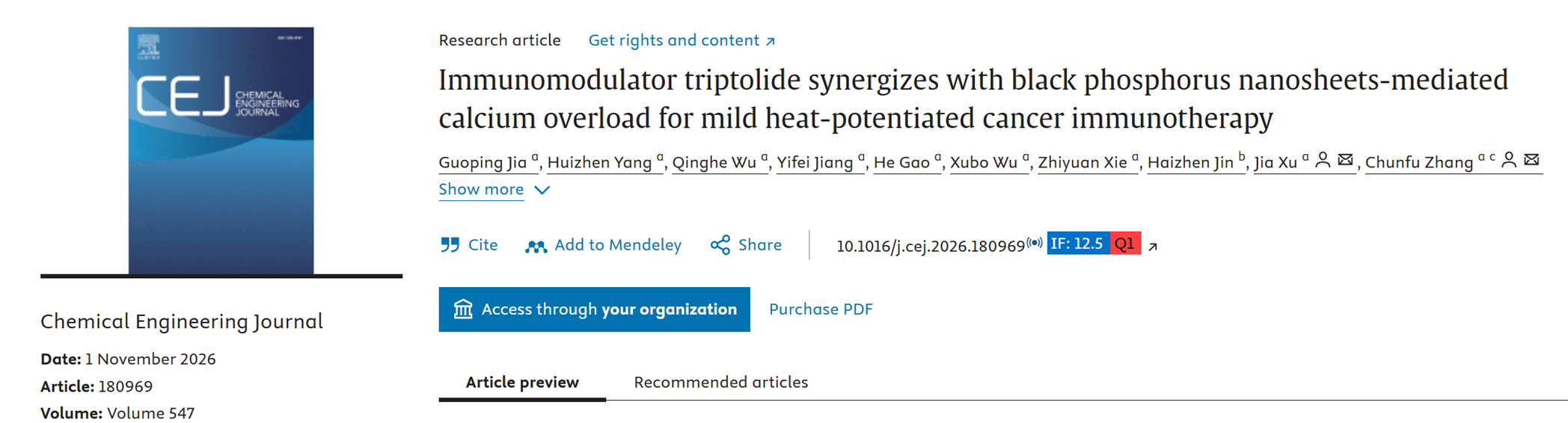
Addressing the bottleneck that mild photothermal therapy (mPTT) often fails to sufficiently activate immunity and control tumor metastasis, this study designed CBT, a multifunctional nanomedicine built on black phosphorus nanosheets that co-delivers calcium ions and the immunomodulator triptolide (TPL). The system uses dual pH/laser responsiveness for on-demand release: laser-induced mild heat combined with calcium influx triggers severe intracellular calcium overload, which suppresses heat shock protein expression to overcome tumor thermotolerance and promotes immunogenic cell death, while TPL independently downregulates tumor cell PD-L1 to block PD-1/PD-L1-mediated immune evasion. In a bilateral tumor-bearing mouse model, this strategy suppressed not only the directly irradiated tumor but also cleared the distant, unirradiated tumor, accompanied by increased CD8+ T-cell infiltration and reduced regulatory T cells and M2 macrophages. The findings show that the synergy between calcium overload and TPL-driven immunomodulation can effectively reverse the immunosuppressive tumor microenvironment, offering a model for combining black-phosphorus-based nanomaterials with active compounds from traditional medicine in "heat-sensitized immunotherapy."
In immunofluorescence staining used to assess changes in HSP70, CRT, HMGB1, and PD-L1 expression following CBT treatment,
the researchers used a mouse polyclonal PD-L1 antibody from abinScience (catalog no. MV974029), a key detection tool supporting the core mechanism that TPL downregulates PD-L1 to block immune evasion.
Title: Botulinum toxin type A attenuates trigeminal neuralgia-like pain by suppressing CGRP release and modulating NaV1.7-associated signaling Journal: The Journal of Headache and Pain Impact Factor: 8.7 Institution: School of Basic Medical Sciences, Lanzhou University

This study investigates the peripheral mechanism by which botulinum toxin type A (BoNT/A) relieves trigeminal neuralgia. Using a mouse model of chronic constriction injury, the researchers showed that BoNT/A significantly raised mechanical pain thresholds and reduced spontaneous pain and anxiety-like behavior. Mechanistically, it lowered CGRP activity and suppressed ERK phosphorylation, which in turn preferentially reduced membrane localization of NaV1.7 (but not NaV1.8), cutting peak sodium current by nearly 80%; pharmacologically blocking the CGRP receptor or the ERK pathway reproduced this effect. The study proposes that the CGRP–ERK–NaV1.7 pathway is the key peripheral mechanism underlying BoNT/A's analgesic effect, pointing to a potential therapeutic target for neuropathic facial pain.
In immunofluorescence and western blot assays detecting the expression and localization of NaV1.7/NaV1.8,
the researchers used a mouse anti-NaV1.7 antibody (HS929033) and a rabbit anti-NaV1.8 antibody (HA286013) from abinScience, used to distinguish the differential expression of the two sodium channel subtypes in trigeminal neuralgia pathology — a key detection tool supporting the core conclusion that BoNT/A acts preferentially on NaV1.7.
Title: Robust high quality-factor out-of-plane nonlocal metasurface-enhanced microcavity for multi-scale biosensing Journal: Photonics Research Impact Factor: 7.1 Institution: Westlake University

Addressing the long-standing tradeoff between "high Q-factor" and "high sensitivity" in micro/nano-photonic biosensors, this study integrates a gold nanocylinder plasmonic metasurface inside a vertical microcavity, using detuned coupling to combine micron-scale Fabry–Pérot resonance with nanoscale surface plasmon resonance — inheriting the high Q-factor of the former and the high surface sensitivity of the latter. Experiments showed that the device achieves a Q-factor as high as 541 at 850 nm, remains robust against structural size variation, and reaches bulk sensitivity and figure-of-merit values at the leading edge of current plasmonic sensors. The authors further applied it to label-free detection of SARS-CoV-2 pseudovirus particles and H3N2 nucleoprotein, achieving detection limits of 82 virus copies/mL and 150 ng/mL respectively — outperforming control devices and most reported commercial platforms. The findings suggest that a detuned-coupling microcavity built on dual nonlocality offers a new device design paradigm for moving beyond the physical constraints of a single resonant mode and achieving highly sensitive, multi-scale biosensing.
In the surface biofunctionalization step of the sensor,
the researchers used bebtelovimab, a SARS-CoV-2 spike protein capture antibody from abinScience (catalog no. VK565196), to specifically capture pseudovirus particles — a key biorecognition element enabling the high-sensitivity virus detection demonstrated in the study.
Title: SHAP-interpretable machine learning integrating exposures and multi-omics reveals immune alterations and biomarkers in COPD–lung cancer comorbidity Journal: Frontiers in Immunology Impact Factor: 7 Institution: First Affiliated Hospital of Zhejiang Chinese Medical University

COPD (chronic obstructive pulmonary disease) and lung cancer (LC) are two highly prevalent respiratory conditions that frequently co-occur in the clinic, yet a systematic understanding linking environmental exposure to molecular mechanism across scales has been lacking. The research team built a sequential analytical framework: first using Global Burden of Disease data to reveal a persistent pattern of co-occurrence between the two conditions worldwide; then applying machine learning with SHAP interpretability to identify smoking, particulate matter pollution, and residential radon exposure as shared major risk factors; followed by immune infiltration analysis and single-cell sequencing, which identified macrophages as the dominant immune cell population shared by both diseases; and finally, cross-omics screening pinpointed TREM1 and ODF2L as shared hub genes, both significantly downregulated in COPD and lung cancer tissue, with macrophage-specific silencing of either gene weakening its tumor-promoting effect on lung cancer cell migration and proliferation. The study concludes that TREM1 and ODF2L are promising macrophage-related biomarkers and therapeutic targets in COPD–lung cancer comorbidity, and that this framework offers a generalizable analytical paradigm for research into chronic respiratory disease comorbidities.
In immunohistochemical staining of clinical lung tissue from normal, COPD, and lung cancer groups,
the researchers used a rabbit anti-TREM1 polyclonal antibody from abinScience (catalog no. HV219014), used to confirm the tissue-level downregulation of TREM1 protein and providing histopathological support for its candidacy as a comorbidity biomarker.


 中文
中文 English
 한국어
한국어 日本語
日本語 Español
 Français
 Русский


