In September, antibodies and protein reagents supplied by abinScience were used in several studies published in international journals including Nature Communications, Redox Biology and Redox Biology. The studies cover esophageal squamous cell carcinoma, pulmonary arterial hypertension, Alzheimer's disease and heart failure with preserved ejection fraction, and include work on molecular biomarker screening, signaling pathway mechanisms and the identification of potential therapeutic targets. This issue of the Literature Digest briefly summarizes these studies for researchers' reference.
No.1
Title: Plasma autoantibody profiling via PhIP-seq and machine learning for diagnosis of esophageal squamous cell carcinoma
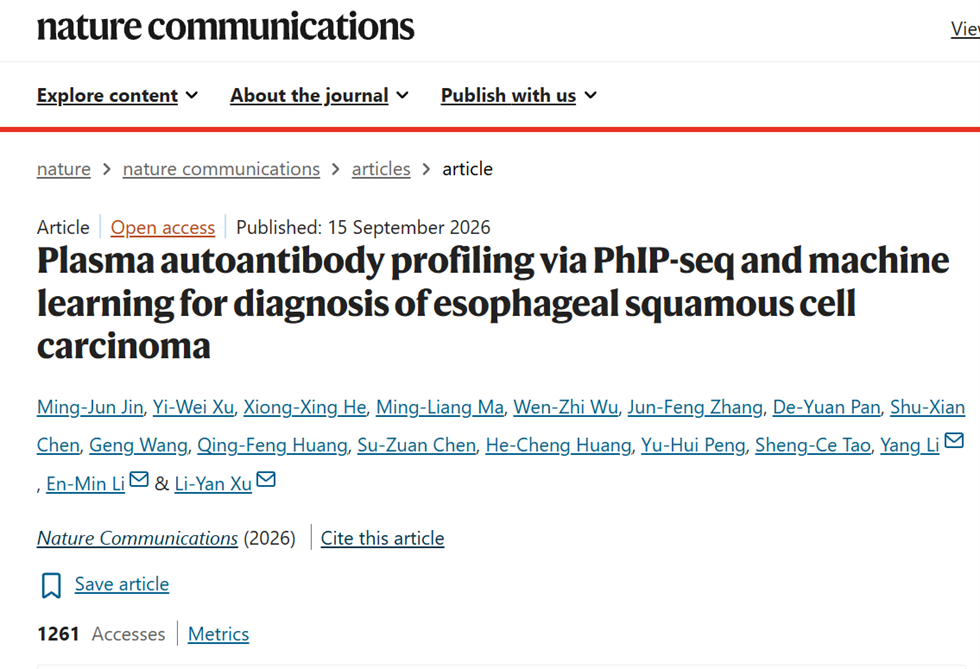
Esophageal squamous cell carcinoma (ESCC) is usually asymptomatic in its early stages and is often diagnosed at an advanced stage. Endoscopic biopsy, the current standard, is invasive and unsuitable for large-scale screening, so non-invasive biomarkers for early detection are needed. Tumor-associated autoantibodies are stable and can appear before clinical symptoms, but previous studies have mostly relied on known antigens and therefore had limited coverage. This study used phage immunoprecipitation sequencing (PhIP-Seq) covering the entire human proteome to perform unbiased autoantibody profiling of more than 1,000 plasma samples from three hospitals. ESCC patients showed an overall increase in autoantibody reactivity, and the differential antigens were enriched in pathways related to epigenetic regulation, transcription and the cytoskeleton. Using three feature selection methods, the researchers identified 18 core antigen peptides (including KMT2C, INPP4B and NY-ESO-1, several of which are reported for the first time) and used them to build an XGBoost diagnostic model. The model showed good discriminative performance in internal validation, external validation and a nested case-control cohort of samples collected before diagnosis, and performed better in early-stage than in late-stage patients. In addition, some peptides differed between patients who did and did not achieve complete response after chemoradiotherapy. The authors consider the model a new approach for non-invasive early screening and treatment monitoring of ESCC, but note that it still requires validation in larger prospective cohorts and on other detection platforms.
abinScience supplied purified recombinant QTRT1 protein (Cat. No. HE035012), which was used as the coating antigen in ELISA to measure anti-QTRT1 autoantibody levels in patient serum. The authors selected two antigens from the 18 core peptides for ELISA validation: NY-ESO-1 (CTAG1A), which has been widely reported, and QTRT1, which had not previously been reported to induce autoantibodies. Serum reactivity to QTRT1 was markedly higher in ESCC patients than in healthy controls, and ELISA readings correlated positively with PhIP-Seq signals.
No.2
Title: Spermidine attenuates monocrotaline-induced pulmonary arterial hypertension with HADHA-associated improvements in fatty acid oxidation and mitochondrial redox homeostasis
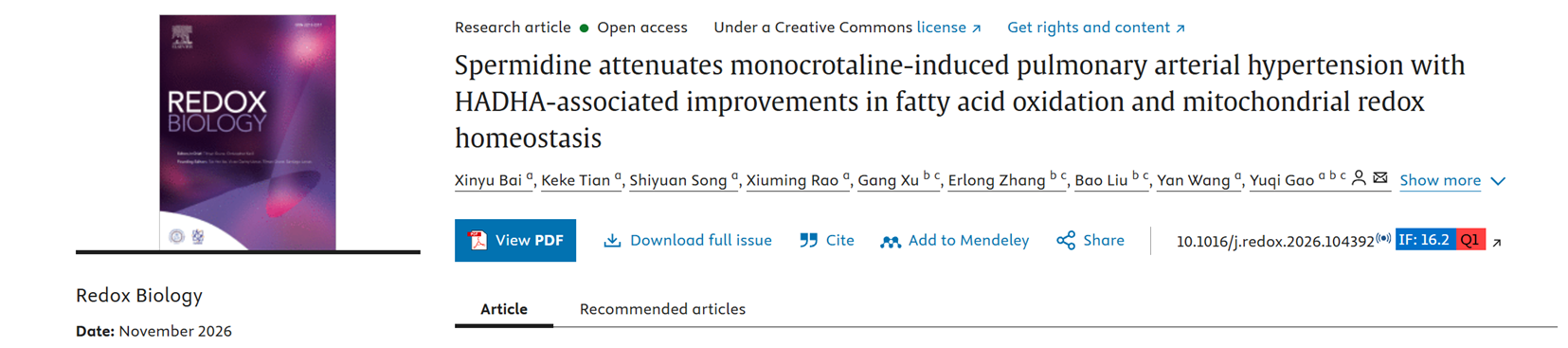
Pulmonary arterial hypertension (PAH) is closely associated with metabolic reprogramming of endothelial cells, impaired mitochondrial quality control and redox imbalance. Spermidine (SPD) is known to have cardiovascular protective effects, but its effect on endothelial metabolism in PAH and its target remain unclear. This study used monocrotaline-induced PAH rats and palmitic acid-stimulated pulmonary microvascular endothelial cells as models, combining metabolomics, lipidomics and molecular biology methods. SPD lowered pulmonary arterial pressure and reduced right ventricular remodeling, vascular remodeling and endothelial injury. Under lipotoxic conditions, SPD reduced lipid accumulation, restored fatty acid β-oxidation (FAO) and mitochondrial respiration, lowered mitochondrial reactive oxygen species and lipid peroxidation, corrected lipid abnormalities dominated by phosphatidylethanolamine, inhibited PLIN2–vimentin-associated endothelial-to-mesenchymal transition, and promoted mitophagy. Biophysical experiments supported direct binding of SPD to HADHA, the α subunit of the mitochondrial trifunctional protein, which stabilized the protein, while HADHA knockdown weakened several of the protective effects of SPD. The authors conclude that HADHA is involved in mediating the protective effect of SPD on the PAH endothelium, although whether SPD directly enhances HADHA enzymatic activity remains to be verified.
abinScience supplied recombinant human HADHA protein (Cat. No. HW371012), which was used in microscale thermophoresis (MST) experiments. The authors fluorescently labeled the protein, incubated it with a concentration gradient of SPD and measured the binding curve, obtaining a dissociation constant in the submicromolar range and demonstrating concentration-dependent direct binding between SPD and HADHA. This experiment holds a key position in the study's chain of evidence: molecular docking and dynamics simulations are computational predictions only, and CETSA, performed in cell lysates, shows only that SPD increases the thermal stability of HADHA and cannot exclude indirect effects mediated by other proteins. MST uses purified recombinant protein and is the only experiment in the study that directly demonstrates physical binding between the two.
No.3
Title: Multi-Omics Analysis Reveals That Aβ42- Me3 Co-Aggregation Induces Mitophagy Blockade in Early Stages of Alzheimer's Disease
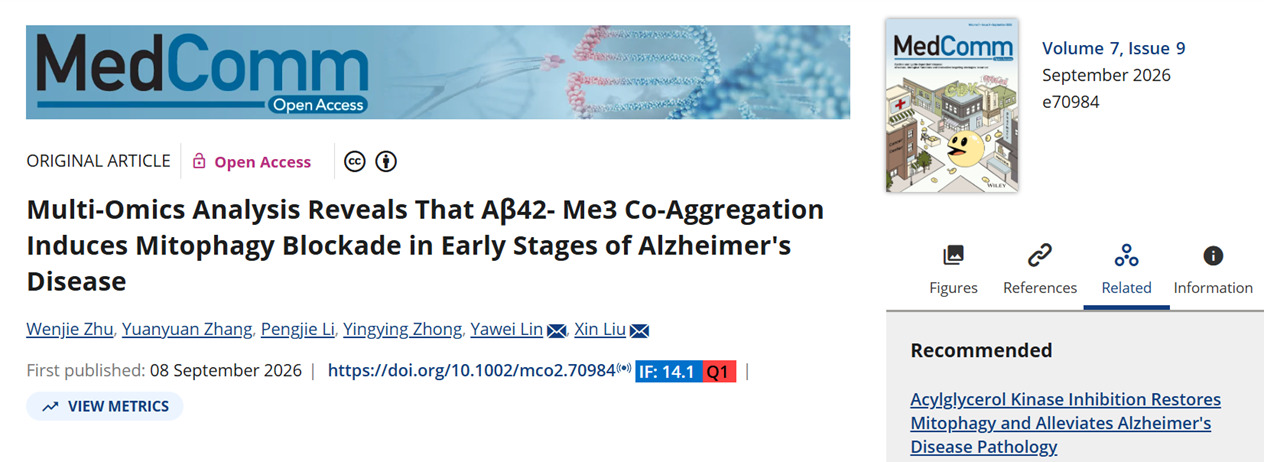
Mitochondrial dysfunction is one of the earliest pathological features of Alzheimer's disease (AD), but how β-amyloid (Aβ) causes mitochondrial damage in the early stages of the disease is not yet clear. This study used APP/PS1 mice and HT22 neuronal cells as models, combining proteomics, targeted metabolomics and in vivo and in vitro genetic interventions. Proteomics showed marked changes in mitochondria-related pathways in the cortex and hippocampus of early-stage AD mice, with malic enzyme 3 (Me3) consistently upregulated across all AD groups; metabolomics indicated that APP overexpression restricted glycolysis and disrupted the TCA cycle. Further experiments confirmed that Me3 colocalizes and directly binds with Aβ42 in mitochondria, with the binding site located in the NAD(P)-binding domain of Me3, leading to reduced enzymatic activity, increased reactive oxygen species, mitochondrial fragmentation and blocked mitophagy. Knockdown of Me3 alleviated these defects in both cells and mice. The authors conclude that Aβ42–Me3 co-aggregation is a key link between Aβ pathology and early mitochondrial dysfunction, and that selectively blocking this interaction is a more suitable intervention strategy than global inhibition of Me3, although the findings still need to be validated in human samples.
abinScience supplied an anti-Me2 (malic enzyme 2) antibody (Cat. No. HB858014), which was used at a 1:1000 dilution for Western blot. The antibody served as a control to detect the expression of Me2, another malic enzyme isoform. In AD mice and APP-overexpressing cells, neither Me1 nor Me2 changed significantly, and only Me3 was upregulated (Figure S4A–D). In addition, in Co-IP experiments the anti-Aβ42 antibody did not pull down Me2, although Me2 was detectable in the input samples. These results ruled out “a general response of the malic enzyme family to Aβ stress” and showed that Aβ42 acts selectively on Me3 rather than on other isoforms. This supports the paper's central conclusion that “the Aβ42–Me3 axis specifically mediates mitochondrial damage” and is one of the premises for the authors' proposed intervention strategy of “targeting the Me3–Aβ42 interaction”.
No.4
Title: Tectorigenin alleviates HFpEF by targeting the EGFR-EGR2-Acot1 axis to improve myocardial lipid metabolism
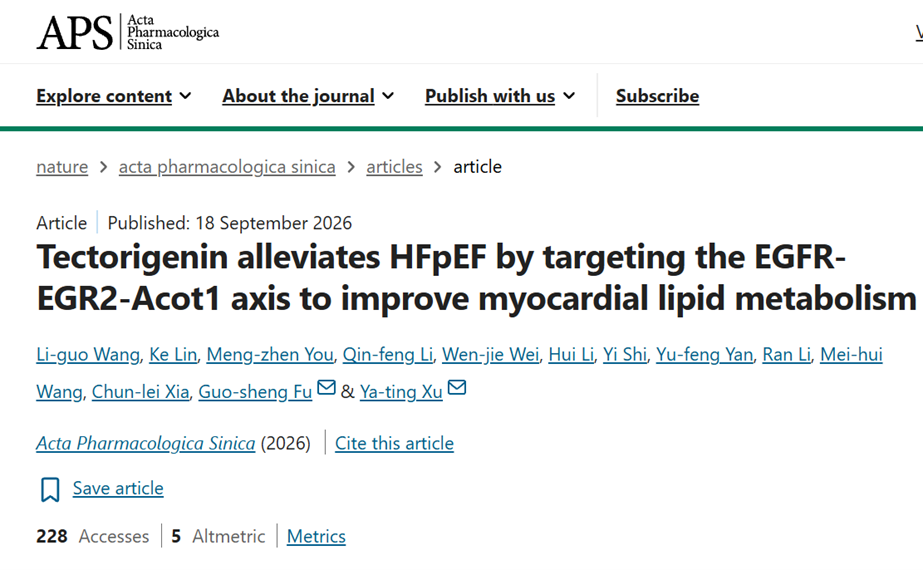
Heart failure with preserved ejection fraction (HFpEF) accounts for about half of all heart failure cases, and effective targeted therapies are currently lacking. Tectorigenin (Tec) is an isoflavone derived from traditional Chinese medicine that has shown multiple cardioprotective effects in previous studies, but its efficacy and mechanism in HFpEF are unclear. This study used HFpEF mice induced by a high-fat diet combined with L-NAME, and palmitic acid-treated cardiomyocytes, as models. Whether administered during disease development or after the model was established, Tec improved diastolic function in mice and reduced myocardial fibrosis, hypertrophy, pulmonary congestion and the decline in exercise tolerance; at the cellular level, it reduced lipotoxicity-induced apoptosis, lipid accumulation and oxidative stress. Transcriptomic analysis showed that Tec mainly improved myocardial fatty acid metabolism and significantly upregulated Acot1, a gene that regulates lipid metabolism. Mechanistically, Tec directly binds EGFR and inhibits its aberrant activation, which downregulates the transcription factor EGR2 and relieves EGR2-mediated transcriptional repression of the Acot1 promoter. Cardiomyocyte-specific knockdown of Acot1 or activation of EGFR weakened the protective effect of Tec, and the same regulatory relationship was observed in human iPSC-derived cardiomyocytes. The authors conclude that Tec improves myocardial lipid metabolism and alleviates HFpEF through the EGFR–EGR2–Acot1 axis.
abinScience supplied recombinant human Acot1 protein (Cat. No. HC138012), which was used in in vitro pull-down experiments. The authors coupled Tec to activated agarose beads and incubated them with the recombinant protein, and no binding was detected; a subsequent CETSA experiment also showed that Tec did not change the thermal stability of Acot1. Although the result was negative, it marks a turning point in the study's logic. Earlier transcriptomic and knockdown experiments had shown that Acot1 is the key molecule through which Tec exerts its protective effect, and this experiment ruled out a direct action of Tec on Acot1, indicating that Acot1 upregulation results from upstream regulation. Based on this conclusion, the authors used network pharmacology to search for the direct target of Tec, identified EGFR, and added EGR2 as the intermediate link, establishing the complete EGFR–EGR2–Acot1 regulatory axis.
To thank researchers for their support and trust, abinScience has launched a Publication Reward Program. Whether you are working at the forefront of life science research or focused on laboratory studies, if you have published an article in an SCI-indexed journal using any abinScience product, you are eligible to apply for a reward.
The higher the impact factor, the greater the reward!
| Impact Factor |
Reward |
| IF < 5 |
CNY 100 JD.com gift card or CNY 200 product voucher |
| 5 ≤ IF < 10 |
CNY 200 JD.com gift card or CNY 400 product voucher |
| 10 ≤ IF < 15 |
CNY 300 JD.com gift card or CNY 600 product voucher |
| 15 ≤ IF < 20 |
CNY 400 JD.com gift card or CNY 800 product voucher |
| 20 ≤ IF |
CNY 500 JD.com gift card or CNY 1,000 product voucher |
How to Apply
- Submit an application: Submit your publication reward application online through abinScience's official channels
- Review: We will complete the review within 5 business days
- Receive your reward: Once approved, your reward will be delivered within 15 business days
Terms and Conditions
- The article must have been published within one year before the application date, including online articles (based on the Published date)
- The applicant must be the first author or corresponding author
- The article must explicitly mention "abinScience" or "abinScience France"
- Each article may be submitted only once, and the impact factor is based on the value at the time of application
- By submitting, you agree that we may quote the full text or figures for display or promotional purposes


 中文
中文 English
 한국어
한국어 日本語
日本語 Español
 Français
 Русский


