Please ensure Javascript is enabled for purposes of website accessibility
Home > Research Area > Autoimmune Diseases > Autoimmune Hepatitis

Autoimmune Hepatitis (AIH) Research Reagents

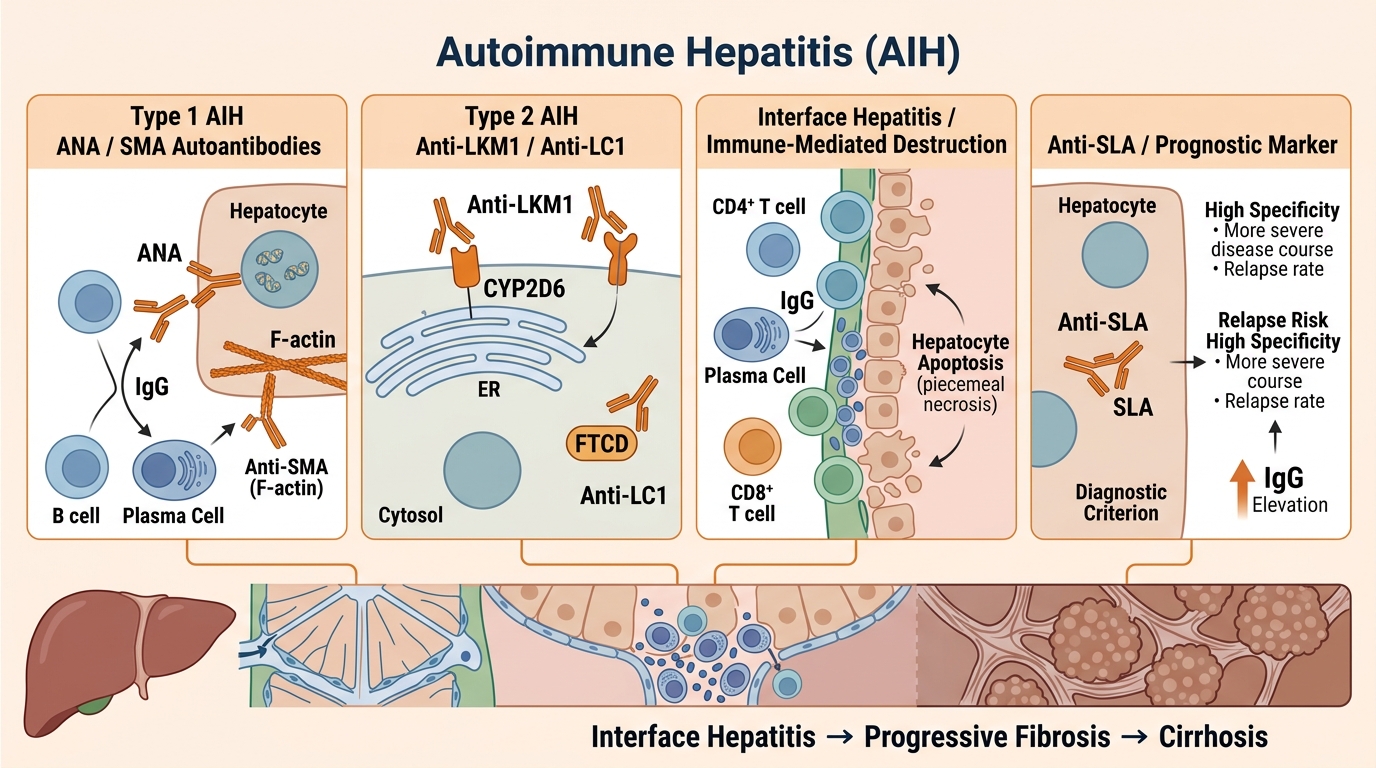
Autoimmune hepatitis (AIH) is a chronic, progressive liver disease characterized by interface hepatitis, hypergammaglobulinemia (elevated IgG), and circulating autoantibodies. Type 1 AIH (~80%) is defined by anti-nuclear antibodies (ANA) and/or anti-smooth muscle antibodies (SMA, targeting F-actin); type 2 AIH (~20%, predominantly pediatric) is defined by anti-liver kidney microsome type 1 (anti-LKM1, targeting CYP2D6) and/or anti-liver cytosol type 1 (anti-LC1, targeting FTCD). Anti-soluble liver antigen (anti-SLA) antibodies, while present in only ~20–30% of patients, are the most specific marker for AIH and predict relapse risk. Untreated AIH progresses to cirrhosis in ~40% of patients within 10 years. Treatment relies on corticosteroids and azathioprine; second-line options include mycophenolate, tacrolimus, and rituximab for refractory disease.

Research Use Only (RUO)Not intended for diagnostic or therapeutic procedures.

Autoimmune Hepatitis Research Reagents — key pathogenic pathways including ANA/SMA autoantibodies in Type 1 AIH, anti-LKM1 (CYP2D6) in Type 2 AIH, interface hepatitis, and IgG elevation

Fig. 1 Key pathogenic pathways in autoimmune hepatitis. Type 1: ANA/SMA autoantibodies target nuclear and cytoskeletal antigens; Type 2: anti-LKM1 targets hepatocyte CYP2D6. Interface hepatitis with lymphoplasmacytic infiltration drives progressive fibrosis. Key research targets highlighted in orange.

abinScience provides validated autoantigen recombinant proteins and antibodies covering all four AIH diagnostic markers — CYP2D6 (anti-LKM1), ACTA2/alpha-SMA, FTCD (anti-LC1), and SLA — each with matched antibody + recombinant protein pairs for ELISA development. Anti-IgG Fc monoclonal antibodies support IgG quantification assays. All products are manufactured by our parent company AtaGenix Laboratories under ISO quality systems. Browse products below or contact us for custom antibody development.

Key Research Targets

CYP2D6 (Anti-LKM1 Autoantigen) — Cytochrome P450 2D6 is the molecular target of anti-LKM1 autoantibodies that define type 2 AIH. CYP2D6 is expressed on hepatocyte endoplasmic reticulum and can be presented on the cell surface, serving as a target for both humoral and T cell-mediated immune attack. Anti-CYP2D6 polyclonal antibody and two human CYP2D6 recombinant proteins (N-His) support anti-LKM1 diagnostic ELISA development, CYP2D6 epitope mapping, and hepatocyte autoantigen characterization.
→ Browse CYP2D6 antibodies & proteins

ACTA2 / Alpha-SMA (Anti-SMA Autoantigen) — Anti-smooth muscle antibodies (SMA) targeting F-actin (ACTA2) are present in ~70% of type 1 AIH patients and, together with ANA, define the serological profile of type 1 AIH. Anti-SMA/ACTA2 polyclonal antibody and human ACTA2 recombinant protein support anti-SMA ELISA development and F-actin autoantibody characterization. Anti-beta-actin/ACTB antibodies (recombinant antibody SAA0339, nanobody SAA1234, and recombinant protein) are also available for cytoskeletal autoimmunity research.
→ Browse ACTA2 / actin antibodies & proteins

FTCD (Anti-LC1 Autoantigen) — Formiminotransferase cyclodeaminase (FTCD) is the molecular target of anti-liver cytosol type 1 (anti-LC1) autoantibodies, which are found in ~30% of type 2 AIH patients and can coexist with or occur independently of anti-LKM1. Anti-FTCD polyclonal antibody and human FTCD recombinant protein (N-His) support anti-LC1 ELISA development and LC1 autoantigen characterization.
→ Browse FTCD antibodies & proteins

SLA (Soluble Liver Antigen) — Anti-SLA autoantibodies are the most specific serological marker for AIH (~99% specificity) and are associated with more severe disease course and higher relapse rates. Present in ~20–30% of AIH patients across both type 1 and type 2, anti-SLA positivity can identify a subset that benefits from earlier immunosuppressive intensification. Anti-SLA polyclonal antibody and human SLA recombinant protein (N-His) support anti-SLA diagnostic assay development and autoantigen characterization.
→ Browse SLA antibodies & proteins

References

1. Mack CL, et al. Diagnosis and management of autoimmune hepatitis in adults and children: 2019 practice guidance and guidelines from the AASLD. Hepatology. 2020;72(2):671-722. DOI

2. EASL Clinical Practice Guidelines: autoimmune hepatitis. J Hepatol. 2015;63(4):971-1004. DOI

288 product results for "Autoimmune Hepatitis"

Options+
Options
Confirm